Language Settings
Select Website Language
newshunt
newshunt

Filters

Channels
Topics
Other Filters

What Aniruddhacharya Said About Women That Sparked Outrage-And Now A Court Case

A controversy surrounding spiritual leader Aniruddhacharya has escalated after a viral video in which he made remarks about young women and marriage triggered widespread outrage. The clip, widely shared in October, prompted accusations that the preacher had made derogatory and stereotype-reinforcing comments about women. The backlash has now culminated in legal action, with the Agra District President of the All India Hindu Mahasabha, Meera Rathore, pursuing a complaint that a court has formally accepted. While proceedings move forward, the focus has shifted sharply to what Aniruddhacharya actually said and why those remarks have provoked such strong reactions. What He Said That Sparked Outrage The controversy centres on a snippet from one of Aniruddhacharya’s sermons, in which he remarked on the character of young women in the context of marriage. The viral clip shows him claiming that “a woman who has relationships with multiple men cannot be of good character”, a line that many viewers condemned as misogynistic and reductive. Critics said the statement reinforced harmful stereotypes about women, fuelling both anger online and formal demands for accountability. Women’s groups argued that such comments from a religious figure carry influence and therefore have the power to legitimise discriminatory attitudes. Aniruddhacharya later insisted the clip was selectively edited and lacked context. He argued that he had made corresponding remarks about men as well, adding that “a man who has relationships with multiple women is considered an adulterer”. Nonetheless, the viral excerpt, stripped of surrounding context, ignited a public backlash that has not subsided. Complaint Escalates After Police Inaction Meera Rathore, a prominent figure in the Hindu Mahasabha’s Agra unit, condemned the sermon, saying the remarks “do not befit a saint”. She initially filed a complaint at Vrindavan police station, but when no FIR was registered, she took the matter to the Chief Judicial Magistrate’s court. The CJM has now accepted the case and will record Rathore’s statement on January 1. Rathore said she had kept her hair untied as a symbolic protest until the case was accepted, declaring that doing so marked her “vow” against the preacher’s comments. Her counsel, Manish Gupta, said the move to court became necessary when police failed to act on the original complaint.

19-Minute Viral Video: Part 2 Out? Police Issue Urgent Warning

A leaked MMS video allegedly involving influencers Sofik SK and Dustu Sonali went viral on social media a few days ago, sparking widespread searches for what users began calling a “19-minute viral video”. Although the original clip was removed after legal intervention, cybercriminals have since capitalised on the public curiosity by circulating AI-generated fake versions and claiming that “part 2” or “part 3” of the video has surfaced. Haryana Police has now issued a warning, stating that the widely shared 19-minute 34-second clip is not authentic and urging people not to watch, share, or download such content. Viral Clip Is AI-Generated According to Amit Yadav from the Haryana Police Cyber Cell, the so-called 19-minute viral video currently circulating online is manufactured using artificial intelligence. He said multiple versions claiming to be new “parts” of the original MMS were fake and designed to mislead viewers. Yadav explained that such videos spread rapidly because they exploit curiosity, adding that cybercriminals use trending searches like “19-minute video”, “19 minutes 34 seconds clip”, or “new viral MMS” to trick people into clicking malicious links. These links can lead to scams, phishing attempts, and malware downloads. To help users verify suspicious footage, the officer highlighted a tool called Sightengine, which can analyse whether a video is genuine or AI-generated. However, he stressed that users should avoid interacting with such content altogether. Police have reiterated that watching, forwarding, or saving obscene material,whether real or AI-generated, can attract serious legal consequences. Under Section 67 of the IT Act, circulating objectionable content can lead to three years’ imprisonment and a fine of up to Rs 5 lakh. Section 67A, which covers sexually explicit material, carries a penalty of up to five years in jail and fines of up to Rs 10 lakh for a first offence, with harsher punishments for repeat violations. Provisions under IPC Sections 292, 293, and 354C may also apply in cases involving obscenity and privacy violations. Police Advisory: Do Not Engage Authorities have urged the public to ignore any links or messages related to the “19-minute viral video”, “19 minutes 34 seconds footage”, or misleading tags such as bache ka viral video. Users have been advised to scroll past and avoid watching, downloading, or sharing such content to protect both their safety and legal standing.

Woman born with two-uteruses shares candid answers to people’s biggest questions

A 27-year-old woman with complete uterus didelphys used Reddit’s AMA to explain life with two uteruses, two cervixes and a divided vaginal canal, from painful periods and “two tunnels” to how her body handled pregnancy. She answered strangers’ questions with humour and clarity, while medical experts note the condition affects just 0.3% of people and can complicate fertility and menstruation.

19-Minute Viral Video: Was The Clip AI-Generated? Here’s What Police Found

A 19-minute viral video has started a huge conversation online, but now the focus has completely shifted toward AI. The clip, which is 19 minutes and 34 seconds long, shows a young couple in an intimate moment and began circulating in the last week of November. But the biggest twist is that police now say the video is actually AI-generated.  This has confused many people because no one knows the real source of the clip. With users still sharing it, officers are warning everyone to stop spreading the video immediately. AI-Generated 19-Minute Viral Video: What Police Found The Cyber Cell team has made it clear that the 19-minute viral video looks like an AI creation. Officer Amit Yadav explained that the clip going viral is not a real recording but appears to be generated using artificial intelligence.           View this post on Instagram                       A post shared by Amit (@vardiwala0007) He also said that users have started circulating what they call Part 2 and Part 3 of the same clip. These new versions also seem to be made with AI tools. Since no one knows who created the original clip, the police shared another important detail: people can check whether a video is AI-generated through a website called Sightengine. As the clip is being forwarded multiple times, the police had to issue a strong warning and request that people stop sharing it completely. 19-Minute Viral Video and Indian Law: What Can Happen If You Share It While the main discussion is about AI, the legal side also matters. Officer Yadav explained that sharing any obscene or objectionable video online can lead to serious punishment under Indian law. Under Section 67 of the IT Act, sharing obscene content can bring up to three years of jail and a fine of Rs 5 lakh. Under Section 67A, sharing sexually explicit content for the first time can lead to five years of jail and a fine of Rs 10 lakh. A repeated offence under Section 67A can bring seven years of imprisonment. These actions are also punishable under IPC Sections 292, 293, and 354C. The police reminded everyone that forwarding such videos is a violation of privacy and must be stopped.

'What's Going On With Young Girls': Reddit Explodes Over Viral Video Of 'Drunk' Woman On Rapido Bike

A Reddit post went viral after a video from Delhi started a big conversation. The video shows a young woman who looks very drunk. She fell off a Rapido bike outside a nightclub because she could not keep her balance. The post is titled “What’s going on with young girls these days??...” and this title made people argue about behaviour and culture. On the subreddit r/IndianMeme, many users joked about the video, while others criticised it or discussed the modern lifestyle. The video has now become a topic in the ongoing “generation war” debate online. Reddit Video Post On Delhi Nightclub Incident A Reddit user under the name Main_Pay_9669 posted a video that shows a young woman falling off a Rapido bike outside a nightclub. She seems too drunk to stand or understand what is happening.  Whats going on with Young Girls these days?? A Drunk Girl Falls off A Rapido Bike in Delhi outside A Night Club. Just look at her - She is totally out of her senses!byu/Main_Pay_9669 inIndianMeme Since the title questioned young girls directly, many people felt the post was judging them. This led to arguments about how young people behave today. On r/IndianMeme, people did what they usually do. Some made fun of the video, some blamed today’s lifestyle, and some discussed issues like safety and drinking.  A few people also said that sharing such videos only creates more negativity and embarrassment. The video quickly turned into a larger discussion about modern behaviour in cities like Delhi. Viral Reddit Post & Youth Culture Discussion The viral post also raised questions about how social media treats real moments. A simple video of someone falling became a big topic online.  Many comments focused on young women, showing how fast people judge without knowing the full story. Some users said this is a common pattern where online posts push a “generation war,” making different age groups fight over values and behaviour. This Reddit thread shows how one short video can create a long cultural debate. It also shows how online communities shape public opinion.  People use such posts to talk about lifestyle, culture, and the way youth behave today, even when the video itself gives very little context.

NASA shows how air travel can be made safer for future

Urban air travel is becoming a reality. NASA is creating advanced systems to manage air taxis and drones safely. These tools will coordinate flights, prevent collisions, and ensure smooth operations. Simulations show these plans can handle busy city skies. This work prepares for a future where air taxis and drones are common in cities.

NASA astronaut Jonny Kim returns after 8 months in space; here’s what he brought back for humanity

NASA astronaut Jonny Kim has returned to Earth after an eight-month mission aboard the International Space Station. He conducted vital research in areas like bioprinting and robotics, contributing to advancements in medicine and future space exploration. The mission highlights the ISS's crucial role in scientific discovery and preparing for deeper space travel.

Bengaluru Woman Loses Rs 33 Lakh After Falling For Deepfake ‘Nirmala Sitharaman’ Scam

A 54-year-old woman from Bengaluru's CV Raman Nagar was cheated of over Rs 33 lakh by cyber criminals, after she watched a Facebook video that seemed to show Finance Minister Nirmala Sitharaman endorsing a trading platform. Lured by the deepfake video, the woman signed up to the trading account, gave her banking and KYC details, and kept sending money until she realised she had been duped. How Much Money Did She Lose? In her police complaint, the woman stated that immediately after registering, she was added to a WhatsApp group and told to transfer Rs 21,000 to "start trading". She revealed that she then started receiving calls from someone identifying herself as "Varnika Reddy, a senior finance adviser from Naka Solution Ltd", claiming that she had earned a profit of $88,000. She was told that she could withdraw the amount if she paid multiple charges, including securities transaction tax, a "one-time tax", Foreign Exchange Management Act (FEMA) tax and atomic wallet fees. She stated that the emails and communications she received appeared to "come from the Reserve Bank of India and another bank". Between October and December, the woman allegedly transferred Rs 33,25,413 in nine transactions to six different merchants across several banks. When she eventually realised that the platform was fake and that she had been cheated, she approached the police for help. However, a TOI report notes that even after the police complaint, the WhatsApp group "remains active". A case has been registered under the Information Technology Act and BNS section 318 (cheating).

Longest solar eclipse in 100 years to occur in 2027: When, where to watch rare celestial event, India visibility and viewing tips

Prepare for a rare celestial spectacle as the longest total solar eclipse in a century occurs on August 2, 2027. For an unprecedented 6 minutes and 23 seconds, the Moon will completely obscure the Sun, plunging parts of North Africa, the Middle East, and the Indian Ocean into midday darkness. India will experience a partial eclipse during this extraordinary event.

2025 Kia Seltos Revealed: What’s New In Design And Features

Kia has unveiled the new generation Seltos in India and this is an all new model which is bigger and more feature packed. The styling is in line with the new look that is seen with the other global Kia cars especially the larger SUVs. Hence it has a large digital Tiger face grille and has plenty of gloss back which contrasts the look while vertical lighting is seen including LED DRLs. It is kind of like a mini Telluride especially with an increased length of 4460mm plus a 20mm longer wheelbase. There are some noticeable changes like the fact that the design is more aggressive, looks larger than the earlier Seltos plus it gets flush door handles too along with cladding. The rear styling has a hint of Kia Carnival and looks more substantial now with a twin LED light bar look. Interior and Features The interior is all new as well with a modern design as seen with other Kia cars too. There are bigger screens including the 12.3 inch displays and that also means a larger digital display. There is a new 3 spoke steering and redesigned switchgear. More premium bits are also scattered across the dashboard as well. Storage is more and the features list includes a panoramic sunroof, 360 degree camera, electric parking brake, Level 2 ADAS, OTA updates, ventilated front seats and a powered drivers seat in terms of adjustment, and more. Space is also improved over the earlier Seltos. Powertrain, Bookings and Trims In terms of the powertrains on offer the new Seltos gets a 1.5 litre NA and turbo plus a 1.5 litre diesel. Bookings will start from 11 December from Rs 25,000 and price would be revealed on December 2. The trim options include Tech Line, GT Line and X-Line trims.

Is Your Screen Routine Ruining Your Vision? Easy Eye-Safe Rituals For Busy Professionals

(By Dr. Neeraj Sanduja) In today’s digital-first work culture, screen time is no longer measured in hours, it’s an all-day habit. While laptops, phones, and tablets help us stay productive, they also expose our eyes to constant strain. Digital Eye Strain, or Computer Vision Syndrome, is now one of the most common complaints among working professionals, causing symptoms like dryness, headaches, blurred vision, and burning sensations. The good news? A few simple, science-backed habits can protect your eyes without disrupting your workflow. ALSO READ: The Food- Sleep Connection: What Children Should Eat For Restful Sleep Reset Your Eyes With The 20-20-20 Rule Start with the 20-20-20 rule. Every 20 minutes, look at something 20 feet away for at least 20 seconds. This quick reset relaxes your eye muscles and prevents fatigue from continuous near work. Pair this with conscious blinking, screen users blink up to 60% less frequently, which leads to dryness. A habit as simple as “blink breaks” during emails or meetings can make a big difference. Fine-Tune Your Workspace Ergonomics Next, adjust your workspace ergonomics. Your screen should be at arm’s length and positioned slightly below eye level, reducing strain on both your eyes and neck. Avoid harsh overhead lighting and consider using an anti-glare screen or matte screen protector to cut reflections. If your job requires long hours on devices, blue-light filtering glasses or built-in night modes can help reduce the sensation of glare, especially in dim environments. Support Your Eyes With Hydration And Humidity Hydration and indoor humidity matter more than most people realize. Keep a bottle of water nearby and, if possible, use a humidifier to combat the drying effects of air conditioning. For those who wear contact lenses, consider alternating with glasses during long digital days to give your eyes a break. Know When To Seek Professional Help Finally, don’t ignore persistent symptoms. If you experience ongoing eye strain, redness, or fluctuating vision, it may be time for a comprehensive eye exam. Conditions like uncorrected refractive errors or dry eye syndrome can worsen with heavy screen use, but are easily treated once identified. Dr. Neeraj Sanduja is MBBS, MS, Ophthalmologist, and Eye Surgeon at Viaan Eye Centre, Gurgaon [Disclaimer: The information provided in the article is shared by experts and is intended for general informational purposes only. It is not a substitute for professional medical advice, diagnosis, or treatment. Always seek the advice of your physician or other qualified healthcare provider with any questions you may have regarding a medical condition.]

7 Foods You Must Eat Daily In Winter To Stay Warm And Boost Immunity

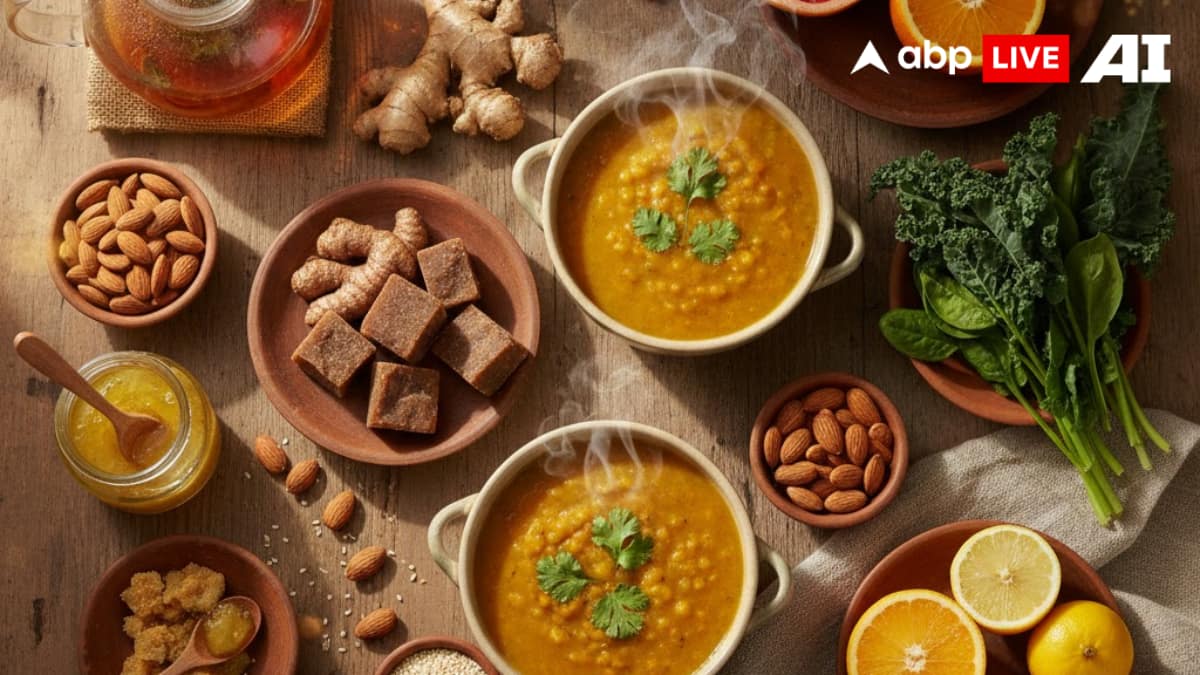
As temperatures drop, your body naturally demands more warmth, nourishment, and immunity-boosting support. Winter brings seasonal infections, dry skin, fatigue, and digestive discomfort. This makes it essential to eat foods that strengthen your system from within. The right winter superfoods not only keep your body warm but also enhance metabolism, improve energy levels, and protect you from cough, cold, and fever. If you're looking to stay healthy and active throughout the chilly months, adding these powerful foods to your daily routine can make all the difference. Here are seven nutrient-dense winter staples that you should be eating every single day for stronger immunity and steady warmth. ALSO READ: 8 Everyday Foods That Are Surprisingly Healthier When Eaten Raw 1. Jaggery (Image Source: ABPLIVE AI) Jaggery is one of the most comforting winter foods in Indian households. It naturally warms the body from inside, making it an excellent sugar replacement during the cold months. Rich in iron, magnesium, potassium, and antioxidants, jaggery helps regulate body temperature while strengthening the immune system. It also improves digestion, reduces bloating, and acts as a natural detoxifier by flushing out toxins from the liver. Eating a small piece of jaggery after meals keeps your energy levels stable and curbs cravings for unhealthy sweets. Whether you add it to tea, roti, chikki or warm milk, jaggery is a must-have daily winter superfood that offers warmth, sweetness and solid immunity support. 2. Ghee (Image Source: ABPLIVE AI) Ghee is a powerhouse of essential fatty acids that keep your body warm and nourished in winter. Contrary to popular belief, moderate daily consumption of ghee supports heart health, improves digestion, and enhances nutrient absorption. In winter, ghee plays a crucial role in lubricating joints, soothing dry skin, boosting gut strength, and energising the body. It also helps stabilise blood sugar, making meals more satisfying and calming. Ghee contains vitamins A, D, E and K, which are vital for immunity and bone health during colder months. Just a teaspoon added to dal, roti, rice or vegetables can help maintain optimal body heat and overall wellness. 3. Nuts And Seeds (Image Source: ABPLIVE AI) Nuts and seeds are winter superheroes packed with protein, healthy fats, fibre, and immunity-boosting vitamins. Almonds, walnuts, cashews, pistachios, flaxseeds, pumpkin seeds and sesame seeds create a nutrient-rich combination perfect for cold weather. Their natural fats generate warmth, keep energy levels high, and protect the body from winter fatigue. These crunchy powerhouses also support heart health, improve skin elasticity, and reduce winter dryness due to their vitamin E content. Walnuts and flaxseeds offer omega-3 fatty acids that enhance brain function, reduce inflammation and support overall immunity. Eating a handful of mixed nuts and seeds daily keeps hunger in check, boosts metabolism and provides long-lasting energy. 4. Root Vegetables (Image Source: ABPLIVE AI) Root vegetables like carrots, beets, sweet potatoes, radishes and turnips are winter favourites because they grow underground, retaining warmth and dense nutrition. These vegetables are rich in beta-carotene, fibre, vitamin C, iron and antioxidants that enhance immunity and support healthy skin. Their high complex carbohydrate content keeps the body warm and energised for long hours. Root vegetables improve digestion, support liver function and maintain stable blood sugar levels. They also promote heart health and improve haemoglobin levels, which helps fight winter fatigue. You can include them in soups, salads, roasted dishes or even fresh juices. 5. Ginger (Image Source: ABPLIVE AI) Ginger is one of the most effective natural foods for keeping the body warm during winter. Known for its anti-inflammatory, antibacterial and antiviral properties, ginger helps fight infections, soothe sore throats and reduce winter cough and congestion. It stimulates blood circulation, promoting internal heat and improving digestion. Ginger also supports metabolism, reduces nausea, and provides relief from cold-induced headaches and body aches. Regular consumption enhances immunity and helps your body resist winter illnesses. Adding ginger to tea, kadha, soups or daily meals can significantly boost your health. A warm cup of ginger tea every morning not only wakes up your senses but also protects your body from seasonal infections. 6. Dates And Figs (Image Source: ABPLIVE AI) Dates and figs are rich in natural sugars, fibre, iron, calcium and essential minerals that provide instant warmth and nourishment. These dried fruits are known to improve haemoglobin levels, support digestion and enhance bone strength. Their natural sweetness offers a healthy alternative to refined sugar cravings during cold weather. Dates help regulate body temperature, while figs support gut health and strengthen immunity. Eating 2–3 dates and 1–2 figs daily keeps you full, energised and protected from winter fatigue. They are also excellent for skin health, helping maintain radiance and hydration in harsh weather. 7. Millets And Whole Grains (Image Source: ABPLIVE AI) Millets and whole grains like bajra, jowar, ragi, whole wheat and oats are prized winter staples that help generate body heat and keep you active throughout the day. They are packed with fibre, protein, iron, magnesium and B vitamins, which strengthen immunity and support energy metabolism. Bajra roti, ragi porridge and jowar rotis are known for their warming properties and digestive benefits. These grains maintain satiety for long periods, helping regulate appetite and avoid unnecessary snacking during cold months. They also support heart health, improve gut function and stabilise blood sugar levels.

Diet Trends Of 2025: The Rise Of Protein-Enriched Everyday Foods

(By Dr. Ridhima Khamesra) There is a different kind of diet conversation happening this year. If the last decade was about shrinking the body, 2025 is about strengthening it from the inside out. People are tired of rules, restrictions and obsessing over every calorie. They want energy. They want clarity. They want peace with food. And honestly, the world is finally ready for it. ALSO READ: How Vitamin D Deficiency Is Becoming A Modern Lifestyle Epidemic Personalised Nutrition Takes The Front Seat The most powerful trend of 2025 is personalisation. One plan for everyone is officially outdated. Gut testing kits, metabolic tracking and hormone based nutrition are becoming normal tools for everyday people. The idea is simple. Two people can eat the exact same meal and digest it completely differently. Understanding what your body absorbs well and what causes inflammation is becoming the real foundation of progress. Trial and error is out. Data and self awareness are in. Mood Based Eating This one feels revolutionary. Food is not being viewed only as fuel but also as chemistry for the brain. Nutritionists are focusing more on the connection between food and neurotransmitters such as serotonin and dopamine. Pairing the right balance of carbs and protein can improve focus and reduce anxiety by helping amino acids reach the brain more efficiently. It is the reason a banana with peanut butter or a bowl of curd rice can genuinely lift your mood better than caffeine on an empty stomach. Protein Reinvented Protein is everywhere this year but not in the old bodybuilder way. The trend is shifting toward high protein everyday foods. Things like protein enriched staples, lentil based pastas and yogurt with double the protein have entered mainstream shopping carts. This is a major evolution for countries like India where more than half the population still does not meet basic protein needs. Balanced strength is becoming a lifestyle, not a gym phase. A Softer, Sustainable Mindset The most refreshing part of 2025 is the disappearance of punishment based dieting. People are embracing eating patterns that are flexible, joyful, culturally rooted and kind. Progress over perfection. Nourish over restrict. Real over aesthetic. Food is finally becoming personal again. And that might be the healthiest trend we have ever seen. Dr. Ridhima Khamesra is a Clinical Dietician [Disclaimer: The information provided in the article is shared by experts and is intended for general informational purposes only. It is not a substitute for professional medical advice, diagnosis, or treatment. Always seek the advice of your physician or other qualified healthcare provider with any questions you may have regarding a medical condition.]

‘We Documented 2,000 Himalayan Medicinal Plants’: Dr Radha On Tribal Wisdom & Breakthrough Research

Shoolini University researcher Dr Radha, whose pioneering work on Himalayan medicinal plants has led to four patents and international collaborations, has opened up about the inspiration, challenges and discoveries that shaped her groundbreaking studies. In an exclusive conversation with ABP, she detailed how childhood experiences, tribal knowledge and arduous fieldwork laid the foundation for her scientific achievements. Growing Up With Tribal Wisdom, The First Spark When asked whether Himalayan medicine was her first inspiration or if something else drew her into this field of research, Dr Radha said yes — her roots played a defining role. She explained that being from Himachal Pradesh and belonging to the Hatti tribal community meant growing up around forests, livestock and herbal remedies. “From my childhood, I’ve noticed that we use many medicinal plants,” she said. With no medical or veterinary facilities in high-altitude areas, shepherds relied entirely on natural resources.This early exposure shaped her decision to work closely with tribal communities, starting with the Gaddi and Kinnaura shepherds. Following Migratory Shepherds Across the Himalayas Responding to questions about how this undocumented, orally transmitted knowledge was preserved and validated through research, Dr Radha described the difficult yet rewarding process. Tracking migratory shepherds who lived above 3,000 metres was challenging. “But I stayed with them, moving from high to low pastures,” she said. The result: documentation of more than 2,000 medicinal and edible plants, including rare varieties like Prinsepia utilis and Bombax ceiba. She explained how shepherds traditionally use Prinsepia utilis oil for headaches and joint pain, and how this inspired laboratory investigations that confirmed its antimicrobial and antioxidant properties.They also consumed Bombax ceiba leaves as a vegetable, a traditional practice that later led her team to create patented food products like jam and chutney. The Harsh Reality of Field Research When asked about terrain challenges during plant collection, she described extreme conditions — no electricity, frequent wild animal encounters, and severe weather. The shepherds’ remote forest habitats made research physically demanding. Even when they approached roads, it was only for minutes before disappearing back into the woods. Documenting a Treasure Trove of Medicinal Plants Asked whether she encountered other important species besides Bombax ceiba and Prinsepia utilis, Dr Radha highlighted documenting over 2,000 plants, including Euphorbia species, Berberis lycium, Berberis aristata, and Swertia chirayita (Chiraita).She stressed that higher altitudes contained richer concentrations of bioactive compounds, especially berberine. When asked if Chiraita is the same plant used for diabetes treatment, she confirmed it is but warned that unsustainable root harvesting is endangering the species. In response to questions about rare or endangered plants, she identified Trillium govanianum (Nag Chhatri) as a critically rare species requiring immediate conservation. Blending Ancient Knowledge With Modern Science Asked about her vision when she began this research, Dr Radha said her goal was to merge traditional wisdom with modern scientific validation.Her work has attracted global attention, leading to collaborations with Stanford University, East Carolina University, Clemson University and several European institutions. Human Trials, Scientific Validation and the Risk of Disappearing Knowledge When questioned about human trials, she confirmed that many of the plants are already used traditionally for cough, cold, fever and asthma.However, as younger generations move away from shepherding, “within a few years this knowledge may disappear,” she warned — making documentation crucial. Balancing Research With Community Needs Asked how she balanced her work with the needs of shepherds, Dr Radha said she promotes sustainable harvesting, local cultivation and awareness to protect rare species while supporting livelihoods. She also revealed that her work from 2016 to 2020 required living in forests for months, often without food or basic facilities. “It was difficult as a woman…but the people were very kind,” she said. A Message for the Younger Generation When asked if she had a message for youth who may not value ancestral knowledge, she urged them to embrace traditional wisdom.She mentioned that her initial work on the Kinnaura tribe resulted in over 100 publications and several books, helping future researchers in taxonomy and phytochemistry. Future Research: Deeper Into the Himalayas Asked if she planned to explore new regions, Dr Radha said she would next work on the Bhotiya, Pangwal and Gujjar tribes. Her PhD student is already studying the medicinal practices of the Lahauli and Spiti communities, marking the first research of its kind in Spiti Valley. When questioned about the diseases these remedies target, she said they are effective for cough, cold, fever, asthma and are also used for livestock health. Eco-Friendly Extraction and the ‘Sanjeevani Booti’ Connection In response to questions about extraction processes, she highlighted her team’s eco-friendly, low-heat methods, which form the basis of patents for herbal teas, oils and supplements. When asked about the legendary Sanjeevani Booti, she said she documented a similar plant with comparable phytochemical properties, reinforcing her belief in ancient knowledge systems. Breakthrough Studies and Global Recognition Dr Radha’s findings — published in the Journal of Ethnopharmacology and Chemistry & Biodiversity — scientifically validate traditional Himalayan plants.Her work revealed that: Bombax ceiba flowers are rich in antioxidants and anti-inflammatory compounds Prinsepia utilis extracts show antibacterial activity, even against multi-drug-resistant strains Her earlier survey documented over 1,600 tribal medicinal and edible plants, many with immune-boosting and antimicrobial qualities These discoveries have resulted in four patents filed in 2025, including functional foods, antimicrobial extracts and eco-friendly extraction processes. The research was supported by ANRF and conducted in collaboration with the Botanical Survey of India, YS Parmar University, Shoolini University’s Pharmacy School and international partners. A Bridge Between Tribal Wisdom and Modern Medicine Through scientific validation of centuries-old remedies, Dr Radha’s work is transforming traditional knowledge into functional foods, natural antimicrobials and sustainable healthcare solutions — ensuring that priceless Himalayan wisdom is preserved for future generations.