Language Settings
Select Website Language
newshunt
newshunt

Filters

Channels
Topics
Other Filters

Controversy! Amid Oly 2036 dreams, Dane blasts India Open conditions

Denmark’s Mia Blichfeldt again criticised playing conditions at the India Open, saying the move to Indira Gandhi Indoor Stadium has not helped. She described the venue as cold, dirty and unhealthy, making warm-up difficult, and urged organisers and the BWF to intervene ahead of the World Championships. Canada’s Michelle Li and former world champion Ratchanok Intanon also raised concerns over the cold conditions.

Makar Sankranti 2026: Is It On 14 Or 15 January? Know The Correct Date

Makar Sankranti 2026: Makar Sankranti, one of the most spiritually significant Hindu festivals, symbolises the journey from darkness to light, ignorance to wisdom, and winter towards the life-giving warmth of spring. In 2026, however, the festival’s date has triggered widespread confusion, with many wondering whether it should be celebrated on 14 January or 15 January. The answer lies in a careful understanding of astrology, shastra, and sacred timing principles. ALSO READ: Makar Sankranti 2026 And Ekadashi Fall On The Same Day; Know How To Eat Khichdi And Donate Rice Correctly Why Makar Sankranti Holds Immense Religious Importance According to Hindu scriptures, Makar Sankranti marks the moment when the Sun enters Capricorn (Makar Rashi) and begins its northward journey, known as Uttarayan. This celestial movement is considered highly auspicious. From this day onward, all positive and sacred activities resume, planetary influences improve, and spiritual energy intensifies. On this sacred occasion, devotees perform holy bathing, charity (daan), ancestor offerings (tarpan) and prepare the traditional khichdi bhog, believed to invite prosperity, peace and good fortune into one’s life. Why There Is Confusion About The 2026 Date Astrologer Anish Vyas explains that Makar Sankranti is observed based on the Sun’s actual transit into Capricorn, combined with the principle of Udaya Tithi (the lunar day prevailing at sunrise). In 2026, the Sun enters Capricorn on 14 January at 3:07 PM Because this transition occurs in the afternoon, many are uncertain whether the festival should be observed the same day or the following morning. 14 Or 15 January: Which Is The Correct Day? 14 January 2026 - The Transit-Based Celebration Astrologically, the moment the Sun enters Capricorn itself defines the festival. Hence, many scholars affirm that 14 January is the primary and correct date. The Panchang also assigns the Punya Kaal and Maha Punya Kaal on this day. Since Ekadashi also falls on 14 January, devotees observing Sankranti on this date are advised to prepare khichdi and perform rice donations on 15 January. 15 January 2026 - The Udaya Tithi Observance According to classical texts, Makar Sankranti rituals such as holy bathing and charity should be performed during the sunrise following the Sun’s transit. Therefore, 15 January becomes ideal for snan-daan activities. Because the Sun’s transit occurs in the afternoon, 14 January 2026 remains the universally accepted date of Makar Sankranti, while 15 January is best for sacred bathing and charity rituals. Makar Sankranti 2026 beautifully aligns cosmic movement with spiritual renewal. Whether you observe it on the day of transit or during the sacred sunrise rituals, the festival’s true essence lies in gratitude, giving, devotion and inner illumination. [Disclaimer: The content of this article is based solely on astrological predictions, and should be taken as general guidance. Individual experiences may vary. ABPLive.com does not assert the accuracy or validity of any claims or information presented. It is strongly recommended to consult a qualified expert before considering or implementing any information or belief discussed herein.]

Central Govt Employees Alert! 8th Pay Commission May Push Monthly Pay Past Rs 1 Lakh

Central government employees are once again looking towards the next big pay revision as chatter around the 8th Pay Commission gathers pace ahead of 2026. While the government has made no formal announcement so far, estimates based on past pay commission patterns suggest a significant jump in salaries, particularly for staff in Levels 3 to 10. The key driver behind this expected hike is the fitment factor, which could substantially raise basic pay and, in turn, increase allowances such as HRA and travel benefits. What Is Fitment Factor? The fitment factor is the multiplier used to revise an employee’s existing basic salary under a new pay commission. Experts estimate the 8th Pay Commission fitment factor could range between 2.5 and 2.8. If it is fixed at 2.6, an employee drawing a current basic salary of Rs 35,400 could see it rise to around Rs 92,040 under the new matrix. This change would directly push overall monthly earnings upward across grades. Allowances Like HRA To Rise Sharply A higher basic salary also means larger allowances. HRA rates are expected to remain linked to city category, 24% for metro cities, 16% for big cities, and 8% for smaller towns. For instance, if the revised basic salary is around Rs 92,000 and the employee is posted in a metro, HRA alone could be nearly Rs 22,000 per month, significantly boosting take-home pay A Level 6 employee, for example, could see a notable change in the payslip. With revised basic pay, HRA and travel allowance added, the gross salary could touch about Rs 1,17,600. After deductions such as NPS contributions and other cuts, the estimated in-hand pay may still cross Rs 1 lakh. At lower levels, Level 3 staff could see salaries climb to around Rs 65,000-Rs 68,000, while senior posts at Level 10 may move up to roughly Rs 1.60 lakh-Rs 1.65 lakh, depending on posting and allowance structure. Implementation Likely After 2026 Despite 2026 being discussed as the reference year, actual implementation may take longer, potentially in 2027, going by previous commission timelines. However, employees may still benefit through arrears, which are typically paid with retrospective effect in case of delays. Until then, salaries will continue as per the 7th Pay Commission framework.

ABP Live Budget Traveller | How To Plan A Dream Trip To Laos Under ₹30K From India

If Thailand feels crowded and Bali feels overdone, there’s a quieter, cheaper and more soulful destination waiting for you, Laos. Nestled in the heart of Southeast Asia, this peaceful country offers misty mountains, golden temples, river towns and slow-living charm, all without burning a hole in your wallet. With the right planning, Indian travellers can enjoy a full international holiday in Laos for under ₹30,000, including flights, food, stays, transport and sightseeing. Welcome to your smartest travel move of the year. ALSO READ: ABP Live Budget Traveller: From Ahmedabad To Udaipur - Top 5 Kite Festivals In India You Can Explore Why Laos Is A Budget Traveller's Paradise           View this post on Instagram                       A post shared by Chaitali Verma | Food | Travel | Culture (@chaitali.verma) Laos is one of Asia’s most affordable countries, where travellers can survive comfortably on ₹1,400–₹1,800 per day, cheaper than many Indian hill stations. What makes Laos perfect for budget explorers: Dorm stays from ₹200 and cosy guesthouses under ₹700 Street food meals starting at ₹100 Transport via tuk-tuks, songthaew, buses and scenic trains at pocket-friendly rates Waterfalls, caves and temples with minimal or no entry fees Best Time To Visit Laos Nov–Feb: Best weather, slightly higher prices Mar–Apr: Warm, balanced crowds, excellent for budget travellers May–Oct: Green landscapes, lowest hotel rates, occasional rain Pro Tip: March and April offer the best mix of comfort and cost. How To Reach Laos From India On A Budget Travellers from Delhi can find return fares to Vientiane starting from around ₹10,300, while those flying from Kolkata can reach Luang Prabang with one-way tickets from approximately ₹11,600. From Mumbai, popular budget routes connect via Bangkok, Kuala Lumpur or Hanoi, with competitive fares often available when booked in advance. Bengaluru flyers can also take advantage of well-priced connections through Bangkok, Singapore or Ho Chi Minh City, making Laos surprisingly accessible from South India. Visa For Indians Visiting Laos Indian passport holders can choose between: E-Visa: ₹2,500–₹3,000 (online, quick & easy) Visa On Arrival: ₹2,500–₹3,500 at major airports The e-visa saves time and avoids airport queues. Where To Stay Without Overspending (Image Source: Twitter/@Mundo_Nomada) Budget Range: ₹200–₹700 per night Vientiane: Dream Home Hostel, Sinnakhone Guesthouse Vang Vieng: Chillao Hostel, riverside homestays Luang Prabang: Khammany Inn, Villa Merry No.1 Five Nights Of Stay: ₹2,500–₹4,000 Eating Well On A Tight Budget (Image Source: Twitter/@taymoork2) Lao food is light, fresh and wonderfully cheap. Must-try meals: Sticky rice and grilled pork for about ₹120 per meal. Khao Soi noodle soup, a filling and flavourful meal. Beerlao is the national beer which is available at approx ₹60–₹100. Five-Day Food Budget: ₹1,000–₹1,500 Getting Around Laos Cheaply (Image Source: Twitter/@roadtoanywhere) Tuk-Tuks: ₹50–₹150 per ride Scooters: ₹550 per day Buses And Minivans: ₹700 intercity Songthaew: ₹10-₹100 for intercity, depending on the distance Laos–China Railway: scenic rides from ₹700 Best Things To Do Under Budget (Image Source: Twitter/@WTGTravelGuide) Luang Prabang: Kuang Si Falls ₹270 | Mount Phousi sunset ₹50 | Night Market free Vientiane: Pha That Luang ₹50 | Buddha Park ₹100 | COPE Centre free Vang Vieng: Blue Lagoon ₹115 | Tham Phu Kham Cave ₹100 | Viewpoints free Total Sightseeing: ₹500–₹800 A trip to Laos proves that unforgettable international travel doesn’t need luxury budgets. With golden temples, emerald valleys, river sunsets and smiling locals, Laos delivers a deeply enriching journey at surprisingly low costs. our passport, your backpack and ₹30,000, that’s all it takes.

Budget 2026 Expectations: Operation Sindoor Shows Why Defence Spend Must Rise To 2.5% Of GDP

Operation Sindoor has just reminded New Delhi that the Pak-China military axis is deepening in real time. The only credible answer is to lift defence spending to 2.5% of GDP, push capital outlays above ₹1 trillion and double the R&D slice before the next crisis ringsthe doorbell. On the morning after Operation Sindoor, two facts became undeniable. First, Rawalpindi and Beijing are no longer “parallel” irritants; they are synchronising doctrine, logistics and even missile footprints. Second, the eastern border is no longer a dormant flank-Dhaka’s internal churn has opened a third potential front. A country that once planned for a “two-and-a-half front” contingency must now insure against a full “three-front” war. That insurance premium is called the Union Budget 2026-27. The finance ministry has reportedly received a 20% hike request from South Block-well above the customary 8-10% annual increment. Applied to the current year’s ₹6.81 lakh crore (81 billion), the number crosses ₹8.17 lakh crore, nudging India towards the psychological 100 billion mark. Is it large? Yes. Is it abnormal? Not if you realise that a single Multi-Role Fighter Aircraft (MRFA) tender, six Project-75(I) nuclear submarines and two additional S-400 squadrons will swallow almost ₹2 lakh crore over the next seven years-money thatcannot be “found” through the usual year-end juggling. The headline figure, however, will matter only if the capital outlay (CAPEX) jumps correspondingly. This year’s capex is a meagre 24-25 billion-barely 0.7% of GDP and less than one-third of the total defence pie. For a nation ring-fenced by adversaries, that is abysmal. Industry and the Services have therefore pitched for a ₹45,000 crore capex bump in 2026-27, which would push the hardware wallet past the 40 billion mark (≈1% of GDP). The medium-term goal is clearer: defence capex must climb to 2% of GDP so that India stops importing emergency spares on the eve of every stand-off. DRDO Chief Samir V. Kamat’s slide that went viral last month said it plainly: India devotes 5.75% of its defence budget to research and development; the United States allocates more than 10%. That gap explains why we still import engines for the Tejas, seek foreign seekers for our missiles and rent satellite bandwidth on the eve of every operation. A 20% overall hike gives the government head-room to double the R&D share to 10% without cutting a single bullet from the pension book. When folded into the new “mission-mode” funding route-where private start-ups can bid alongside HAL, BEL and shipyards-the extra ₹16,000 crore for science could seed an Indian version of DARPA within this decade. Uttar Pradesh and Tamil Nadu have built swanky defence industrial corridors; ribbon-cuttings are over, but the assembly lines are thirsty for firm orders. A 20% budgetary surge, with 25% of it ear-marked for domestic procurement, translates into ₹50,000 crore of localcontracts-enough to keep drone, missile and radar factories humming through the next downturn. More importantly, the government is finalising a rule-change that will allow private consortia to “co-develop” prototypes with the Services, ending the monopoly of PSU-leddevelopment teams and compressing 10-year cycles into four. China’s DF-41 brigades in Xinjiang and Pakistan’s Babur-III sea-launched cruise missile together compress India’s nuclear response window. MIRV-ing India’s own Agni-P, stationing a third SSBN on patrol and building hardened silos in the foothills all cost money-precisely the kind of “black” line-items that get sacrificed when the topline is frozen. A 2.5% GDP defence envelope would let the Strategic Forces Command modernise without cannibalising the conventional slice. Can a developing economy afford 100 billion on defence? Flip the question: can a 4 trillion economy afford to be invaded? India’s debt-to-GDP ratio has stabilised, the tax base is widening and the fiscal deficit is targeted below 4.5% next year. A one-time 50-basis-pointre-prioritisation-roughly what the country spends annually on petroleum subsidies-will buy a decade of deterrence. Moreover, every additional rupee spent on indigenous hardware comes back as GST, corporate tax and employee income-tax within three financial years,making the “net” cost of defence spending significantly lower than the headline outlay. Operation Sindoor was not just a military success; it was a geopolitical invoice. The bill lists three aggressive fronts, a tightening technology denial regime and the urgent need to field unmanned swarms, long-range precision fires and underwater leg of the nuclear triad. Paying that bill through a 20% defence hike is therefore not fiscal adventurism-it is the minimum insurance premium for a nation that intends to survive the 21st century on its own terms. If the finance minister signs the cheque in July, she will not be buying weapons; she will be buying time for India to become the very great power it aspires to be.

WATCH | Libyan Man Ordered Nokia Phones In 2010 & It Finally Arrived In 2026

After nearly 16 years of waiting, a Libyan trader in Tripoli finally received a shipment he had ordered back in 2010, cartons full of old Nokia mobile phones. A viral video shows him and his friends opening the boxes and laughing at the now-obsolete handsets. “Are these phones or artefacts?” he jokes. The delivery was delayed when Libya plunged into chaos after the Nato operation and civil war.  Both sender and receiver were in Tripoli, just kilometres apart, yet the goods vanished for years. Libyan Trader Receives Nokia Phones After 16 Years The men in the video explain that the shipment was handed over to a local contact in 2010. Soon after, political tension and war disrupted everything.  🚨⚡️UNUSUALAfter a 16-year wait due to the war, a Libyan trader in Tripoli finally receives a shipment of Nokia phones he ordered in 2010!Upon opening the boxes, he joked, "Are these phones or artifacts?"A unique story highlighting the tragedies of war and the destruction… pic.twitter.com/KVOXWJJ1u5 — RussiaNews 🇷🇺 (@mog_russEN) January 8, 2026 Roads closed. Systems broke. Packages stopped moving. What should have been a simple delivery became a mystery that lasted more than a decade. As they open the boxes, the group reflects on how valuable these phones once were. “Sixteen years ago, this could have bought a big house,” one man says. Back then, Nokia ruled the mobile world. These models were premium items, not museum pieces. One of the friends jokes, “It must have circled the world and come back.” Their laughter hides a deeper truth: war doesn’t just destroy buildings. It pauses lives, dreams, and even small business plans. Libyan Trader Nokia Phone Story Goes Viral Worldwide The clip spread fast online. An X account shared it with the caption: “After a 16-year wait due to the war, a Libyan trader in Tripoli finally receives a shipment of Nokia phones he ordered in 2010.” The post added that it shows “the tragedies of war and the destruction of nations.” The video crossed two million views. Users shared mixed emotions, humour, shock, and sadness. One wrote, “These phones are valuable now.  They have no tracker.” Another said collectors might pay more today than in 2010. A third added, “He should be grateful he is alive. Many are gone with their goods still on the way.” What began as a funny unboxing has become a quiet reminder: war delays everything, even time itself.

ABP Live Northeast Narrative | When Bihu Sounds Like Memory: The Silence Zubeen Garg Left Behind

Every year, when Bihu came around, my connection to home never came from grand celebrations. It came from the little things; the familiar things. The replacement of the gamusas, my mother kept around the house as hand towels, with new ones; the craving for pithas and the songs of Zubeen Garg playing on YouTube in the background. As someone born in Assam but having spent most of my life away from the state, my sense of longing for Bihu and my identification with folk traditions came a little later in life. Once they did, however, year after year, they added new markers to the things that reminded me that Bihu had arrived. More Than 'Just' A Festival Over time, I realised that Bihu is not just a festival but a feeling that returns three times a year as Bhogali (Magh), Rongali (Bohag) and Kongali (Kati). Each marks a different phase of life, harvest and hope in Assam. No matter which Bihu it is, the rhythm remains familiar. It is the time when Assam slows down and changes its pace. Beginning with Magh Bihu, which is now around the corner, it is when seasons shift, greenery returns to the fields, and people step out of their routines to reconnect with one another. For the last several decades, one voice has been a constant part of this connection that people shared. It was the voice of Zubeen Garg. The Axomiya Spirit This voice did not arrive overnight. It took shape slowly, over the years, as Zubeen etched his voice into the hearts and minds of people, igniting a shared Axomiya spirit. One that united the many ethnicities and indigenous communities across the state, who may drape the same fabric differently, but sing and dance to the same rhythms when Bihu arrives. Zubeen Garg was not simply a singer who performed during Bihu. He belonged to a generation of artists who took folk music to the stage and then brought the stage back to the people. Bihu is a folk tradition that is centuries old, and like all such traditions, it eventually faces a question of continuity. Will it reach the next generation in a form they can recognise and claim? Zubeen Garg answered that question through his music. His songs carried the rhythm of Bihu while speaking to a contemporary audience. They held the earthiness of folk traditions, but their language and sound allowed younger listeners to make them their own. Kinu Sawonire, Rati Rati, Moilong Moilong, Bati Bhorai… these were not simply popular tracks, but I’m pretty sure this was a huge part of how Bihu sounded to an entire generation. That is why Zubeen’s music was never confined to villages alone. It resonated just as deeply in cities. For many young people, their first emotional connection with Bihu came through his voice. Each time Bihu arrived, whether Bohag or Magh, preparations followed a familiar pattern. Cultural programmes were planned, stages were set up, and somewhere within it all, Zubeen Garg was expected to be present. Sometimes he was on the radio, sometimes on stage, sometimes in a song playing in Bihu-tolis across the state and sometimes simply in a tune sung by a small child skipping along the road on the way to school. That is perhaps the deepest place an artist can occupy. Their presence becomes so natural that their absence feels impossible to imagine. This year, Bihu will come again. The colours will return. The celebrations will continue. But this time, the difference will be unmistakable. A Quiet Realisation When Zubeen’s songs play now, they do not sound new. They sound like memory. Songs that once existed only for joy and celebration now make people pause. There is a quiet realisation that this voice will not return to the stage again. For years, Zubeen Garg’s name was almost guaranteed on Assam’s biggest Bihu stages. His presence shaped the identity of those programmes. This year, the stages will remain, the artists will still perform, and the same events will still take place. What will be missing is the anticipation that came with his name. It would be inaccurate to say that Bihu is incomplete without Zubeen Garg. Bihu does not belong to any one individual. Yet it is equally true that Bihu will feel different without him. Zubeen did not merely contribute songs to the festival. He defined an era. It was an era in which folk and modern influences were not in conflict, but existed together. In the years ahead, new artists will emerge. New voices will shape their own relationship with Bihu. Zubeen’s songs will continue to be sung and reinterpreted. Still, the era that unfolded alongside his voice has passed into history. This year, when Bihu returns, not once but across all three of its moments, it will be more than a celebration. It will also be a moment of remembrance. It will remind us that when an artist becomes inseparable from a culture, the culture itself pauses when that artist is gone. Perhaps that is Zubeen Garg’s greatest legacy. Northeast Narrative is an ABP Live-exclusive column, where we turn our attention to the lesser-seen and lesser-heard stories of Northeast India. Through this, we hope to bridge the distance between the Northeast and the rest of the country, breaking a sense of alienation and challenging half-formed narratives. Is the Northeast misunderstood? Often. Is it rich with stories waiting to be told? Absolutely. Join us as we rediscover the region, one story at a time.

New Tata Punch Facelift First Look Review, Prices

The new Tata Punch facelift is here and it's an extensive one. Prices start at Rs 5.5 lakh and the changes are both cosmetic as well as mechanical. We have had some time with the car and here is our first look. How Does It Look? The new Punch is a big change at first glance while linking itself closer to the bigger Nexon.  It has slimmer DRLs and headlamps below while the bumper as well as the grille is a lot sleeker.  The side profile is more or less the same but there are new alloys which look better. The rear too is a massive change and looks much more like an SUV rather than a raised hatchback.  While it now has connected tail-lamps plus there is more black trim along with a redesigned bumper. Even the logo is all new.  What About The Interior? The interiors get a bigger touchscreen and a (part) digital instrument cluster while the dashboard is new along with a touch HVAC panel.  There is a new two spoke steering too while it gets an illuminated logo. The touch enabled panel is prone to finger prints though.  The white panel has been toned down while now being concentrated for the dashboard.  The new touchscreen supports wireless Android Auto and Apple CarPlay plus is quicker too while the display quality is better.  Further additions include a new 360 degree camera and a blind view monitor. The 360 degree camera display is pretty good too.  We also like the fact that the Punch now has ventilated seats although as like other Tata cars, the placement is less intuitive.  Other additional features which are important include 6 airbags, auto headlamps etc. Space is the same but despite the compact size, it is pretty spacious for two passengers at the back.  What About The Engines? The new Punch carries on the standard 1.2l petrol with a manual gearbox and an AMT automatic. However, there is now a turbo petrol which has 120 bhp and 170 Nm plus it is available with a 6 speed manual.  The CNG version meanwhile now has an AMT option and has paddle shifters too. What's The Verdict? The Punch has always been a big seller but it needed a more powerful engine which now has been given while it looks much better now along with more features making it competitive in its class. The design and the appeal of the car has been maintained while we see this car keeping the crown in the small SUV space.

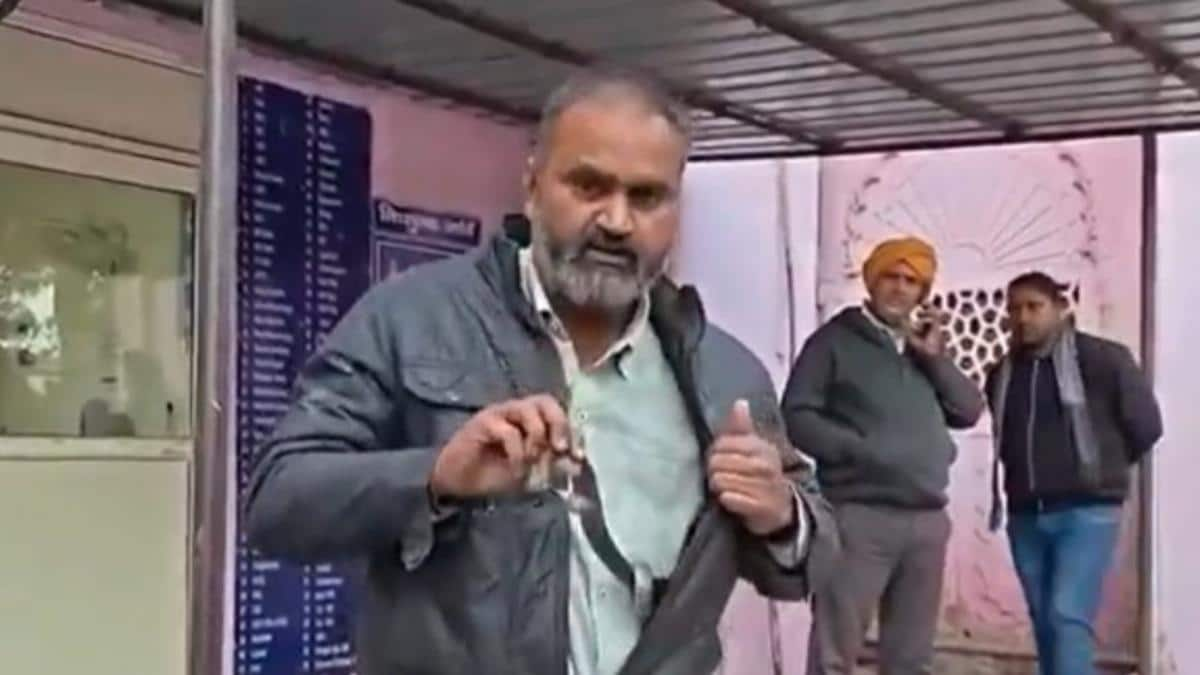
Mathura E-Rickshaw Driver Brings Live Cobra To Hospital After Snakebite-Watch

An e-rickshaw driver in Mathura, Uttar Pradesh, shocked hospital staff and patients after pulling a live cobra from his jacket pocket while seeking urgent treatment for a snakebite. Deepak, who was travelling to Vrindavan when the 1.5-foot reptile bit his finger, reportedly caught the snake on the spot and kept it with him. Frustrated by delays at the district hospital emergency ward, he revealed the hissing cobra to force quicker medical attention, sparking panic before police secured it. 🚨Mathura: An e-rickshaw driver bitten by a venomous SNAKE waits at the district hospital, no treatment in sight.-> When asked, "Where’s the snake?" he calmly pulls a LIVE snake out of his jacket 🤣🔥India is not for beginners!pic.twitter.com/0EZ2yBXzQw — The Analyzer (News Updates🗞️) (@Indian_Analyzer) January 13, 2026 Pocket Cobra Panic At Hospital According to reports, Deepak arrived at the district hospital after the bite but grew increasingly agitated at the waiting time. In an extraordinary move, he opened his jacket and produced the snake, sending patients and even staff fleeing in fear as it hissed and writhed. Police were called to the scene and took control of the cobra to restore order at the hospital. Once the situation was brought under control, doctors administered anti-venom and began treatment. Deepak’s condition is now said to be stable. The incident has since gone viral online, drawing a mix of amusement and disbelief, with many calling it a “desi” response to a life-threatening problem, while others pointed out the dangers of handling a venomous snake, even to prove the cause of a bite.

LIVE: Silver Prices Hit Record High Today (Jan 13), Check 1-Gram & 1-Kg Rates in Your City

Silver Prices Today Jan 13 2026: Silver futures jumped to a new record of Rs 2,72,202 per kg on Tuesday, following strong global trends, as concerns over the US Federal Reserve’s policy stance and rising tensions in Iran boosted safe-haven demand. Silver Prices Climb Sharply Amid Geopolitical Tensions and Fed Policy Concerns Over the last two trading sessions, silver prices have jumped Rs 19,477, or 7.7 per cent, from Rs 2,52,725 per kg on Friday, tracking firm global trends and heightened safe-haven demand amid geopolitical tensions and Federal Reserve policy uncertainty. According to Rahul Kalantri, VP Commodities at Mehta Equities Ltd, traders are closely monitoring the escalating situation in Iran and the ongoing criminal probe into US Federal Reserve Chair Jerome Powell over a building renovation project, which has added pressure on the Fed to consider interest rate cuts. Market participants are also awaiting upcoming US inflation data for further cues on the central bank’s policy direction. Adding to market jitters, President Donald Trump announced a 25% tariff on countries trading with Iran and warned of possible military action as protests intensified. Strong inflows into exchange-traded products and a rush for portfolio diversification have helped both metals reach fresh record levels, Kalantri said. Also Read- LIVE Gold Price Update (Jan 13): 22K & 24K and 18K Rates Jump Across Cities Silver Price Across Major Cities In India On Jan 13 Silver Price In Delhi Today The current silver price in Delhi stands at Rs 275 per gram and Rs 275,000 per kg. Silver Price In Chennai Today The current silver price in Chennai stands at Rs 292 per gram and Rs 292,000 per kg. Silver Price In Bengaluru Today The current silver price in Bengaluru stands at Rs 275 per gram and Rs 275,000 per kg. Silver Price In Mumbai Today The current silver price in Mumbai stands at Rs 275 per gram and Rs 275,000 per kg. Silver Price In Pune Today The current silver price in Pune stands at Rs 275 per gram and Rs 275,000 per kg. Silver Price In Kolkata Today The current silver price in Kolkata stands at Rs 275 per gram and Rs 275,000 per kg. City Per Gram Per KG Silver Rate in Hyderabad 292 292,000 Silver Rate in Ahmedabad 275 275,000 Silver Rate in Indore 275 275,000 Silver Rate in Lucknow 275 275,000 Silver Rate in Coimbatore 292 292,000 Silver Rate in Bhubaneswar 292 292,000 Silver Rate in Mysore 275 275,000 Silver Rate in Kanpur 275 275,000 Silver Rate in Salem 292 292,000 Silver Rate in Visakhapatnam 292 292,000 Silver Rate in Vijayawada 292 292,000 Silver Rate in Patna 275 275,000 To check Gold price in India today, click here.