Language Settings
Select Website Language
newshunt
newshunt

Filters

Channels
Topics
Other Filters

Bengaluru Vs New York: Google Staff Highlights Workplace Culture Differences

A woman working at Google’s Bengaluru office has triggered an online discussion after sharing her observations from a visit to the company’s New York City workplace. Through a short Instagram reel, she highlighted differences in everyday work culture between the Indian and US offices. Instagram Reel Draws Attention Taking to Instagram, Diksha Aggarwal posted a video offering glimpses from her visit to Google’s New York office. In the clip, she reflects on how workplace environments differ across geographies. “Culture of Indian Google office and New York Google office culture is not same,” she says in the video. Team Dynamics Differ Across Locations According to Aggarwal, the Bengaluru office appears more energetic and collaborative, with teams frequently interacting and exchanging ideas. In contrast, she describes the New York office as more individually oriented, where employees tend to work independently while maintaining similar levels of productivity. Office Policies Also Contrast Aggarwal also points out a difference in office policies. She notes that alcohol is permitted within the New York office, something that is not allowed in the Indian workplace. Shared Values Across Borders Despite the contrasts, Aggarwal emphasises a common thread. “But one thing remains same. Freedom to think big,” she says, adding that ideas are valued whether employees are in Bengaluru or New York. “That is why Google is different in every city but feels like Google only,” she remarks. Social Media Reactions The reel received positive responses from viewers, many of whom appreciated her perspective. One user commented, “This is such an insightful reel! I love the way you covered it,” while another wrote, “This is such an insightful video.”           View this post on Instagram                       A post shared by Diksha Aggarwal (@diksha__aggarwal__) Others praised her presentation style, with comments such as, “I really love your detail oriented videos,” and, “This kind of comparison really helps people understand global work culture better.”

‘Gym, Wi-Fi Bills, New Phone’: Bengaluru Job Listing With Rs 35 Lakh CTC, Daily Zomato Credits Goes Viral

At a time when job insecurity is rising and well-paying opportunities are becoming harder to find, a job listing has gone viral on social media for all the right reasons. According to the viral screenshot, a company is offering Rs 35 lakh CTC for an entry-level software developer role. And that’s not all. The offer also includes perks such as gym, phone and Wi-Fi bill reimbursements, along with a new phone every three years. Yes, you read that right! Viral Bengaluru Job listing The job listing describes an SDE-1 role based in Bengaluru with a base salary of Rs 25 lakh per annum, plus ESOPs worth Rs 20 lakh vested evenly over four years. The selected candidate would also be eligible for a 10 per cent performance bonus. In addition, the company is offering relocation and signing bonuses totalling Rs 5 lakh - Rs 2 lakh for relocation and Rs 3 lakh as a joining bonus - bringing the total first-year compensation to approximately Rs 35 lakh. But the generous pay package isn’t the only thing drawing attention. The perks outlined in the post are also grabbing eyeballs. These include reimbursements for gym, phone and Wi-Fi bills, a work-from-home setup allowance of Rs 21,000, a new phone every three years, and 600 daily Zomato credits. The job was first listed on LinkedIn before it made its way to other social media platforms, including but not limited to Reddit and X (formerly Twitter).  At one side layoffs are happening and other side companies are offering such high salaries for 1 year experienceAnd the fun part is that same company would be paying lesser to 5-8yrs experience employee already working with them.Salary structure is completely broken in tech. pic.twitter.com/5k5Rivwb3H — EngiNerd. (@mainbhiengineer) January 14, 2026 How have social media users reacted to this job listing? Social media users have since been reacting to the post, with many expressing surprise over whether such compensation packages are sustainable in India’s tech ecosystem. “That reminds me of HCL,” said one social media user. Another added, “One of my friends got placed at Rs 35 LPA just after finishing college.” “This is very much the reality of the current market. The thing is, you need to understand which tech is hottest/has more potential to get max money, and you need to acquire proficiency in it, then put across to your current org your worth, if they don’t agree, switch immediately!” suggested a third.  A fourth posted, “This is true for most multinational companies. If you are selected through the internal hiring process, you typically receive only the standard hike (mostly 10%) upon promotion. But if they hire externally, they often offer exorbitant hikes.” “Take it from me - been in tech for 20yrs - 85% of people do not want to upgrade but always worry about losing their job. I was in the same boat 12 years back before I took a 6-month break to join a product company, and my perspective on career changed,” read yet another comment.  A sixth said, “Ways to attract the talent, build super quick and then fire.”

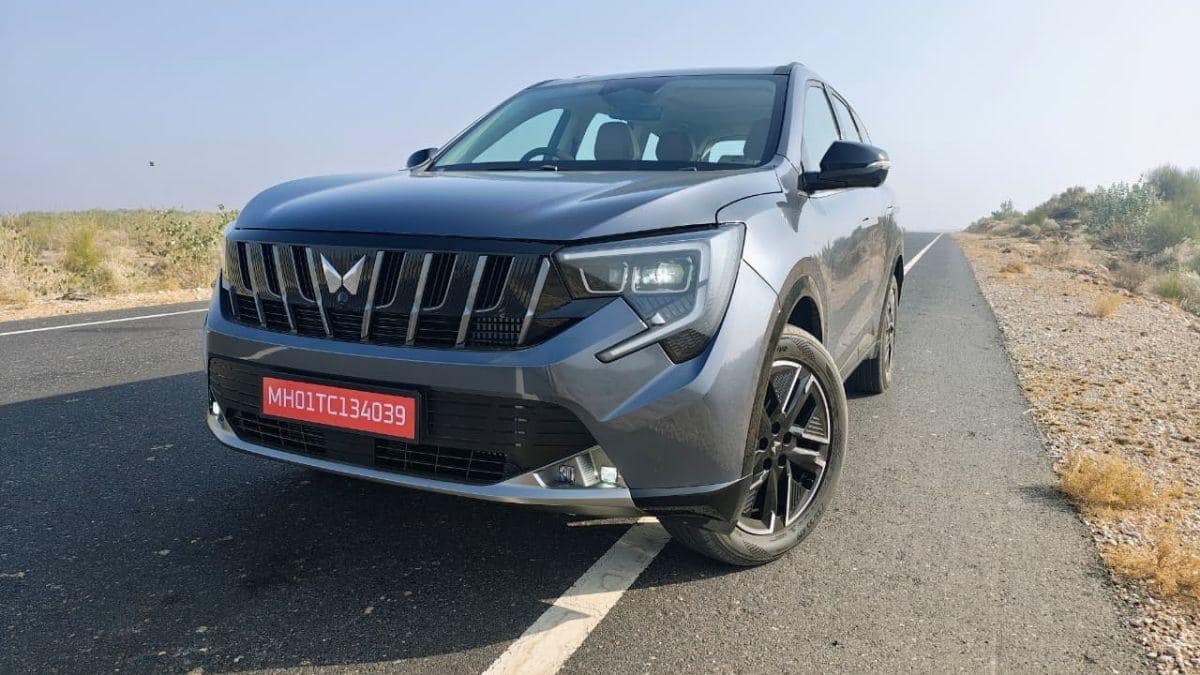
Mahindra XUV 7XO And XEV 9S Bookings: New SUVs Market Performance?

Mahindra has opened bookings for its XUV 7XO and it's electric XEV 9S while together they have both clocked a whopping 93,689 bookings.  Deliveries for the XEV 9S will start from 26th January while the XUV 7XO deliveries will begin from today.  Mahindra XUV 7XO And XEV 9S: Details Both SUVs were launched recently while the XUV 7XO is priced at Rs lakh starting, the XEV 9S is meanwhile starting at Rs lakh.  The XEV 9S is an electric 7 seater SUV which is based on the Inglo platform while the XUV 7XO is an ICE SUV coming with diesel as well as petrol versions.  Both SUVs have garnered quite a few bookings on the first day.  The XUV 7XO is a heavily facelifted version and comes with a new interior with three screens plus a new suspension while also getting a new look. The diesel and petrol engines continue as before. The XEV 9S meanwhile is the three row version of the 9E while getting a more practical cabin. The XEV 9S also has a three screen setup.  Between the two SUVs, Mahindra is keen to expand its SUV range with multiple offerings.  The electric XEV 9S joins the BE 6 and the XEV 9e while the 7XO replaces the XUV 700. The diesel versions have been popular with the XUV 700 and the same can be seen with the XUV 7XO as well.  Going forward Mahindra plans to launch several new SUVs this year and the year started with the XUV 7XO. The XEv 9S was launched earlier.

India's Auto Exports Surge, But High Logistics Costs Are Eating Into Global Competitiveness: NITI Aayog

A NITI Aayog report on India’s automotive exports has flagged high logistics costs, both inland and port-related, as significant constraint on export competitiveness and on achieving economies of scale with inefficiencies in transportation from manufacturing clusters to ports eroding margins and weakening India’s competitive position relative to global peers even as data from Society of Indian  Automobile Manufacturers (SIAM) on Tuesday posted steller performance in shipments of automobiles – from passenger to commercial vehicles. India’s automotive exports reach a broad international footprint, with key destinations including Japan, Mexico and various markets across Africa and Latin America. In global automotive demand, passenger vehicles account for about 71 per cent, and India has captured around 1 per cent of this market, as per NITI Aayog.  Pawan Goenka, Past President SIAM and Chairman, Steering Committee on Advancing Local Value-add & Exports (SCALE), Ministry of Commerce & Industry, recalls that in the last four and a half years, India’s automobile exports have grown nearly 20 per cent annually, three to four times higher than the rest of the world. “My vision is to see 50 per cent of our production going into exports. The auto industry’s importance is not just in numbers but in its economic contribution, advanced manufacturing, and the strongest MSME ecosystem,” says Goenka. Change In India's Share In Global Auto Exports Global Attraction  Propelled by a strong international market access drive, India’s passenger vehicles saw their highest-ever exports in Q3 of the current fiscal, 2025-26, of 2.25 lakh units, registering a growth of 11.7 per cent over Q3 of 2024-25, as per SIAM. In addition, the segment also posted its highest-ever exports during January–December 2025 of 8.63 lakh units, registering a growth of 16.0 per cent as compared to the same period last year. The demand has been steady across most markets, including in the Middle East, Africa and Latin America. Exports of three-wheelers posted a good growth of 70.1 per cent in Q3 of 2025-26 with exports of around 1.27 lakh units, as compared to Q3 of last year. Three-wheeler exports reached 4.26 lakh units in calendar year January-December 2025, posting a growth of 42.7 per cent, compared to the same period of last year. Increased exports to Sri Lanka and African nations have contributed to this growth. “Exports witnessed double-digit growth across vehicle segments in 2025, compared to calendar year 2024,” agrees Shailesh Chandra, President, SIAM. “The industry will also continue to monitor geopolitical developments to ensure resilience in supply chain and export volumes,” he assures. Two wheelers also recorded their highest ever exports in Q3 of 2025-26 of 1.37 million units, registering a growth of 24.3 per cent over Q3 of 2024-25. During January-December 2025, 4.94 million units of 2Ws were exported, which is the highest exports of the calendar year period, with a growth of 24.2 per cent, as compared to January-December 2024. Overall, the growth in exports during the quarter was driven by a combination of improving macro-economic conditions in key markets of Africa, steady demand from South Asian markets and industry-wide recovery in motorcycle demand, SIAM reported. PVs Lead The Way Citroën India’s broader growth story mirrors the trend. Vehicle exports rose 18.8 per cent in 2025, driven by strong demand from Africa and ASEAN markets. This sharp increase reinforces India’s strategic role as a key manufacturing and export hub within Citroën’s expanding global portfolio,” agrees Shailesh Hazela, CEO & Managing Director, Stellantis India. For Hyundai Motor India, exports contributed 16,286 units of the total monthly sales of 58,702 units. “We delivered 26.5 per cent year-on-year growth in export volume in December, reaffirming our commitment to offering world-class products manufactured indigenously,” says Tarun Garg, MD, CEO of HMIL.  Skoda Auto Volkswagen India (SAVWIPL) too marked a major landmark in its internationalisation strategy with cumulative exports surpassing 715,000 units, firmly establishing India as a strategic global production base for the group. The group expanded its global footprint by exploring and entering new markets in the Gulf and ASEAN regions. Piyush Arora, Managing Director & CEO, SAVWIPL, credits the performance to the strength of the company’s Make-in-India strategy supported by deeper localisation, scale and a robust product pipeline. “This is visible across manufacturing, sales and exports. The momentum of this year reinforces our belief that India will be an even larger contributor to the Group’s global growth journey,” says Arora. Maruti Suzuki India exported 3.95 lakh vehicles in 2025, staying on course as India’s top PV exporter for the fifth consecutive calendar year. The company re-entered Europe with the commencement of exports of e VITARA in August 2025. In 2025, Maruti Suzuki exported 18 models to over 100 countries. With the commencement of export of Suzuki’s first battery electric vehicle (BEV), the e VITARA, from the Hansalpur facility, over 13,000 units have already been exported to 29 countries, predominantly in Europe. “This is a proud moment for the company as we record our highest-ever calendar year exports of 3.95 lakh units,” notes Hisashi Takeuchi, Managing Director & CEO, MSIL, describing the landmark as a reflection of India’s manufacturing strength and the trust of customers worldwide. “At a time when global trade is passing through a turbulent phase, we regard this 21 per cent growth as a responsible contribution in supporting the nation’s export momentum aligned with the national vision of ‘Make in India, Make for the World’,” says Takeuchi. In the 2- and 3-wheeler segment, TVS Suzuki’s total exports registered a growth of 40 per cent, with sales increasing from 104,393 units in December 2024 to 146,022 units in December 2025. Two-wheeler exports grew by 35 per cent with sales increasing from 96,927 units in December 2024 to 130,709 units in December 2025. Neighbouring countries and the Middle East have been the steady markets for India’s commercial vehicles, which are also catching up with 0.25 lakh units exported with a growth of 13.6 per cent in Q3 of 2025-26, as compared to Q3 of last year. During January-December 2025, 0.92 lakh units of CVs were exported, with a growth of 27.1 per cent, as compared to January-December 2024.  Low Share In Global Export Market Is Worrying The fifth edition of NITI Aayog’s Trade Watch Quarterly, while lauding India’s growing manufacturing depth, competitiveness, increasing integration into global value chains and a broad export footprint across advanced and emerging markets, observes that India has done well in specific segments of the automotive export market and would do well to tap significant opportunities to increase market share in the USD 2.2 trillion global automotive export market. India contributes USD 30 bn in exports, which accounts for just 1.4 per cent of the world's demand. Global demand for automobiles, measured by imports, increased from USD 937 bn in 2015 to USD 1.3 trillion in 2024, reflecting an average annual growth of about 4 per cent over the period. Against this backdrop, India’s automobile exports expanded from USD 9.4 billion to USD 13.2 billion, registering a CAGR of 3.5 per cent. India’s automotive export patterns reflect clear areas of specialisation, offering a strong base for future diversification and deeper integration into global automotive value chains. India’s backward integration into global value chains has also improved, rising from 32 per cent in 2015 to 46 per cent in 2024, according to NITI Aayog. While global EV imports surged nearly 30  times between 2020 and 2024, India’s participation remains negligible at 0.1 per cent of global exports and imports. In motorcycles, India commands a higher share of global demand, close to 9 per cent,t supported by robust growth in both world demand and India’s exports. In tractors, India accounts for over 1.5 per cent of global demand, reflecting its established competitiveness in this category. On the import side, India’s finished vehicle imports have grown faster than exports, with a CAGR of about 7 per cent from 2015 to 2024, indicating rising domestic demand for select vehicle categories. Imports are concentrated in PVs and niche segments, reflecting consumer preferences and technology-intensive models rather than broad-based dependence on foreign supply. NITI Aayog highlights high logistics costs, both inland and port-related and inefficiencies in transportation from manufacturing clusters to ports, combined with elevated shipping costs that can weaken India’s competitive position relative to global peers. India’s logistics cost currently stands at 8 per cent of GDP. The report emphasises reducing tariffs, boosting two-way trade and cross-border platform participation and reorienting production toward high-demand segments such as PVs to enhance competitiveness and global positioning. Strengthening quality standards, certification systems, and technology adoption, alongside fostering forward linkages in global supply chains, will be critical. Coupled with domestic market strength, these actions can help India scale high-quality production, broaden market diversification, and capture a larger share of global automotive trade, the report suggests.  (Mukherjee is a contributing writer for ABP Live English. A business journalist for more than 15 years, she has written extensively on the economy, policy, and international relations in Indian newspapers and magazines)

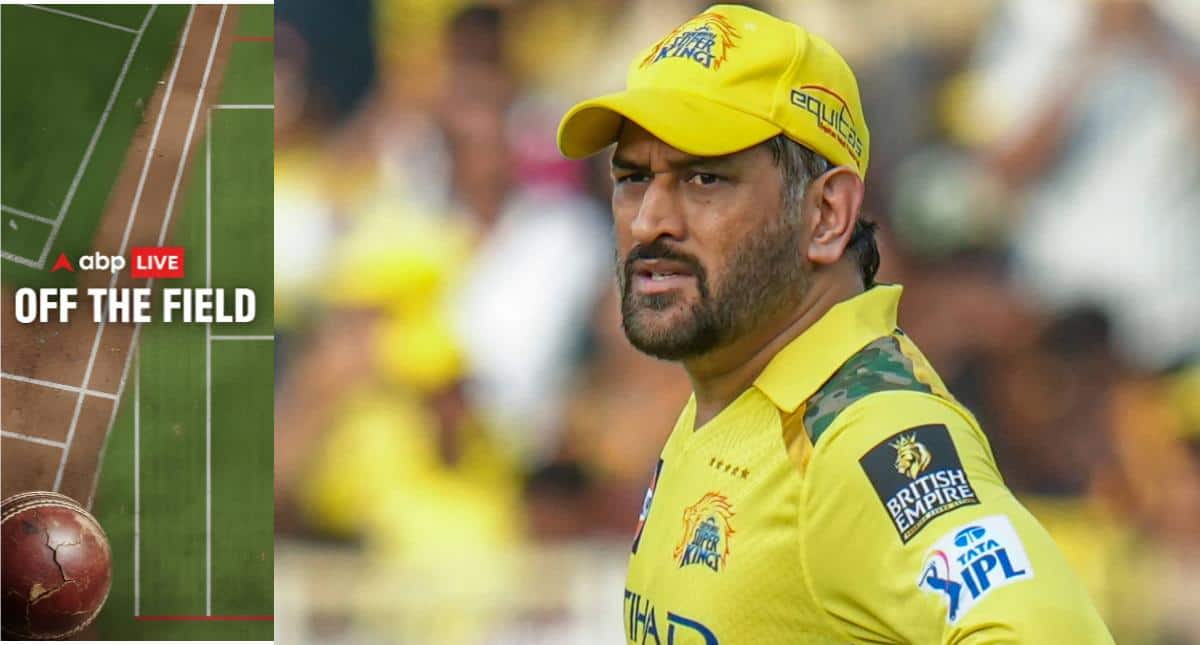
ABP Live Off The Field: From Dhoni To Jadeja, 5 Cricketers Whose Bungalows Are Pure Palaces

Cricketers often make headlines not just for their performances on the field but also for their extravagant lifestyles off it. From lavish bungalows to luxury cars and premium watch collections, many former and current stars attract just as much attention for their wealth and taste as for their cricketing achievements. Several international cricketers have built stunning homes that reflect their success, matching the grandeur of their journeys in the sport. Here’s a look at five cricketers whose bungalows resemble nothing short of royal palaces. 5 cricketers whose bungalows are nothing less than luxury palaces Sourav Ganguly’s opulent bungalow Former India captain Sourav Ganguly leads a lavish life and owns an impressive bungalow in Kolkata, West Bengal. His ancestral home, estimated to be worth around ₹10 crore, reportedly has 48 rooms and features elegant, regal interiors that give it a palace-like feel. In addition to this, Ganguly also owns a spacious two-storey mansion. Sunil Gavaskar’s seaside mansion Though Sunil Gavaskar is closely associated with Mumbai, he currently resides in Goa. He lives with his wife Marshneel Gavaskar and son Rohan Gavaskar in a luxurious beachside property known as Isprava Villa. As per media reports, the value of this stunning villa is believed to be close to ₹20 crore. Navjot Singh Sidhu’s grand residence Navjot Singh Sidhu owns a sprawling bungalow in Amritsar, Punjab, where he stays with his family. Construction of this lavish home began in 2014 and was completed in 2017. Media reports suggest that the bungalow was built at a cost of approximately ₹25 crore. MS Dhoni’s Ranchi farmhouse Mahendra Singh Dhoni owns a massive farmhouse named Kailashpati in Ranchi, Jharkhand. Spread across nearly seven acres, the property includes a swimming pool, gym, and even an indoor stadium. Dhoni lives there with his family, and according to reports, the farmhouse is valued at around ₹6 crore. Ravindra Jadeja’s Jamnagar bungalow Ravindra Jadeja’s bungalow in Jamnagar, Gujarat, is a visual treat and exudes royal charm. Featuring grand entrances, antique furniture, chandeliers, and premium décor, the interiors are both elegant and striking. Media reports estimate the value of Jadeja’s lavish home to be around ₹10 crore.