Language Settings
Select Website Language
newshunt
newshunt

Filters

Channels
Topics
Other Filters

Hyundai Exter Facelift: Old Vs New-What Has Changed In Design, Features And Interior

The Exter remains the smallest SUV within the Hyundai lineup being placed below the Venue while now just like the Verna, the new Exter gains a small facelift. Here is what has changed vs the old Exter. The styling is the biggest difference between the two cars with the facelift Exter having a more rounded off appearance with changes to the front end. Since it is a facelift, the dimensions are the same though. The new font end has a new grille, bumper and new skid plate with a silver finish. The Exter badging is also all new. The new bumper and the design gives the Exter a new look which is atleast noticeable. Refreshed Hyundai Exter gets new grille, updated interior theme, added features and same petrol, CNG engines. There is enough cladding and the 15 inch alloys now have a new design. The rear too has a new spoiler, bumper and a slightly revised styling for the rear trim. The Golden Bronze colour is also all new and so is the new Matte shade. Inside, compared to the old Exter there is a new colour scheme which makes the cabin look a bit more premium in place of the all black look. The dashboard trim is also overhauled. There are some feature additions too with metal pedals, adjustable armrest, wireless Android Auto and Apple CarPlay plus more standard features like Drivers seat height adjust. Other features like an 8 inch screen and dash cam plus more remain. The 1.2l petrol and CNG also remains with no turbo unlike the Tata Punch. Hence while the changes are small, it does add some fresh appeal to the smallest Hyundai SUV.

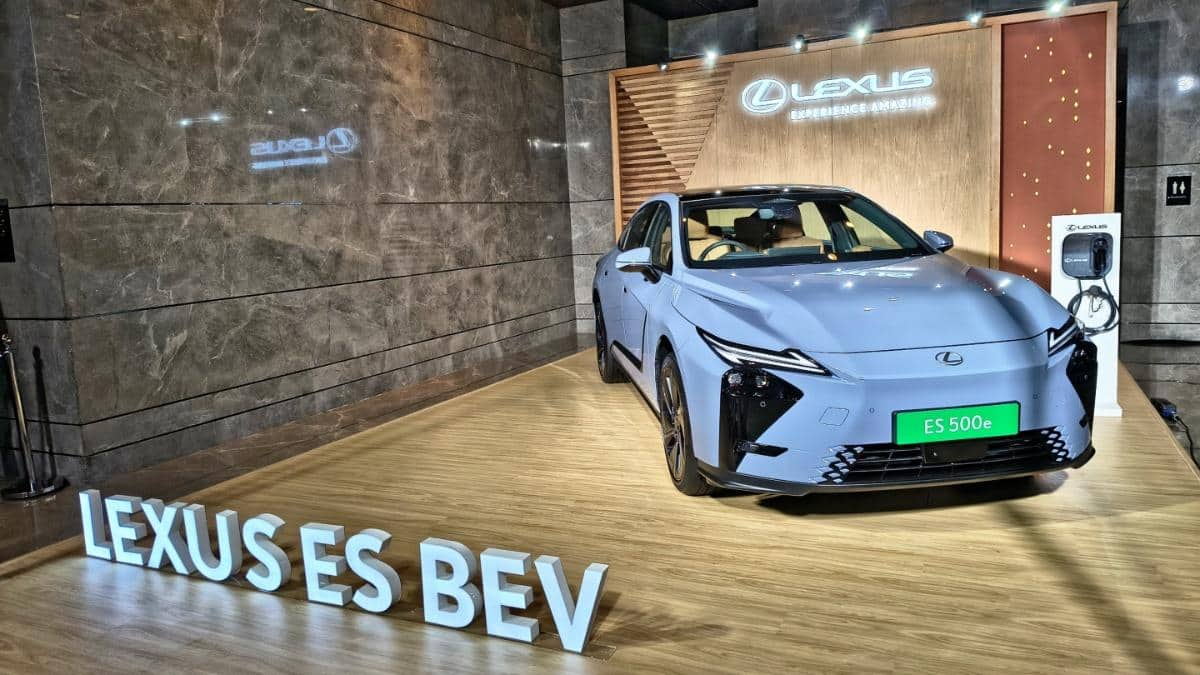
Lexus ES 500e First Look: Electric Sedan Also Has A Hybrid Sibling

The new ES luxury sedan has been launched in India, with the brand introducing both electric and hybrid versions together. Earlier, only the hybrid ES was on sale, but now an electric version has arrived. For now, buyers can opt for the EV, while the hybrid variant will be made available at a later stage. This also marks the first electric car launch from Lexus in India. The new ES 500e is positioned as an electric luxury sedan and currently has no direct rivals in its segment. Powertrain, Range And Performance The ES 500e comes equipped with a 74.68kWh lithium-ion battery pack, offering a claimed range of 580 km on a single charge. It features an all-wheel-drive setup with twin motors producing 343 bhp and 438 Nm of torque, making it a powerful offering in its category. Lexus is also offering a buyback scheme, an 8-year warranty, and an 11 kW AC charger with the vehicle. The hybrid variant, which will be introduced later, will feature a 2.5-litre petrol engine paired with an electric motor. Design And Dimensions In terms of styling, the new ES adopts a more aggressive design language with a slanting roofline, while the traditional grille has been removed. It is a large car, measuring 5,145 mm in length, but appears sportier and less conventional compared to the previous-generation ES. Ground clearance stands at 158 mm, which has been increased to better suit Indian road conditions. Interior And Features Inside, the ES gets a large 14-inch touchscreen, a digital rear-view mirror, and a panoramic glass roof. The cabin also features enhanced ambient LED lighting. Additional features include three-zone climate control, a heads-up display (HUD), window sunshades, and an automatic boot lid. The car also has a row of switches that remain hidden until illuminated, designed to minimise driver distraction. Safety And Practicality On the safety front, the ES is equipped with 10 airbags and a comprehensive camera system. Cabin space has improved over the previous model, and the interior now feels more futuristic. However, unlike rivals such as the BMW 5 Series and Mercedes-Benz E-Class, the ES does not come in a long-wheelbase (LWB) version. Pricing And Positioning Despite being an import, the electric Lexus ES has been priced in line with its internal combustion engine (ICE) rivals that are locally assembled, making it a competitive offering in the luxury sedan segment.

Skoda Kushaq Facelift 1.0 Vs 1.5 TSI Price Comparison 

Skoda has launched the new Kushaq facelift and prices start at Rs 10.69 lakh. The top-end is Rs 18.99 lakh.  Here we will discuss whether you should stretch to the 1.5 TSI or go for the 1.0 TSI AT.  What Is The Right Choice For You? The 1.0 TSI now gets a 8 speed torque converter automatic gearbox which replaces the old 6 speed automatic. The 1.5 TSI now is available with a 7 speed DSG only.  First of all, the Kushaq 1.5 TSI is only available towards the topend variants which means Prestige and Monte Carlo hence if at a lower budget, the 1.0 makes more sense with the automatic starting at Rs 12.6 lakh.  Anyways going to the top-end models, the difference gets lower between the topend 1.0 TSI AT and the 1.5 TSI AT.  The 1.0 TSI automatic is Rs 17.5 lakh for the Prestige variant while the top-end is Rs 17.89 lakh for the Monte Carlo.  Similarly the top-end the 1.5 TSI is Rs 18.79 lakh for the Prestige and Rs 18.99 lakh for the Monte Carlo.  Hence, the price difference is around Rs 1 lakh or slightly more between the 1.5 and 1.0 TSI automatics.  The 1.0 TSI is more efficient and makes sense for city use while being more relaxed but the 1.5 TSI is more refined and has much more power as well. So for enthusiasts the 1.5 TSI makes sense with a small price gap while the 1.0 will be enough for most if looking at more efficiency/everyday city driving.

‘Winter is coming,’ spring is not: Why India’s Rituraj is losing its throne

India's cherished spring, once a gentle interlude, is rapidly vanishing. Winters are warming, heat arrives earlier, and the transition season is shrinking, impacting cultural traditions and agriculture. Recent years show a disturbing pattern of early heatwaves and record temperatures, signalling a profound shift in the climate. This loss affects not just weather but the very rhythm of life.