Language Settings
Select Website Language
newshunt
newshunt

Filters

Channels
Topics
Other Filters

Eating Breakfast Late? It Could Be An Alarming Sign Of Aging Health Issues

Breakfast has long been considered the most important meal of the day, but new health insights suggest that when you eat it could be just as important as what you eat, especially as you age. As people get older, many tend to shift their daily eating patterns, often delaying breakfast and dinner, while shortening the overall time window in which they eat. This seemingly small change might actually signal deeper health concerns. ALSO READ: The Nutrition - Vision Link: Foods That Support Healthy Eyes Why Late Breakfast Can Be A Red Flag Regularly eating breakfast later in the day may indicate underlying physical or mental health challenges. Older adults who delay their first meal are more likely to experience issues such as fatigue, low mood, poor oral health, and disrupted sleep patterns. In some cases, these habits may reflect broader lifestyle or functional difficulties, such as challenges in meal preparation or maintaining consistent routines. A delayed start to eating could also be tied to changes in the body’s internal clock, which regulates sleep and appetite. People who naturally prefer later sleep and wake times are more likely to eat their meals later in the day. However, in older adults, this shift can interfere with the body’s circadian rhythm, impacting metabolism, energy levels, and overall well-being. Meal Timing And Longevity Maintaining a consistent eating schedule appears to support healthier aging. Early meal timing, particularly having breakfast soon after waking, helps synchronise the body’s internal systems, supporting digestion, hormonal balance, and mental alertness. In contrast, irregular or delayed eating patterns have been associated with increased health risks and even higher mortality rates in older adults. While trends like intermittent fasting and time-restricted eating continue to gain popularity, their effects can vary depending on age and individual health status. For younger people, shortening the eating window might offer metabolic benefits, but in older adults, a delayed or skipped breakfast could do more harm than good. Keeping a regular meal schedule, especially making breakfast a priority, can serve as an easy, practical step toward maintaining good health and longevity. Starting the day with a balanced meal not only fuels the body but may also reflect a healthy lifestyle and routine, both key components of aging well. [Disclaimer: The information provided in the article is intended for general informational purposes only. It is not a substitute for professional medical advice, diagnosis, or treatment. Always seek the advice of your physician or other qualified healthcare provider with any questions you may have regarding a medical condition.]

Trump Revises India-Pakistan War Claim, Now Says 8 Planes Shot Down Before Peace Deal

US President Donald Trump once again asserted that he single-handedly mediated peace between India and Pakistan. Speaking at the America Business Forum in Miami, he revised his previous account, claiming that eight fighter jets were downed during the brief conflict in May, not seven as he had claimed. According to Trump, the nuclear-armed neighbours agreed to a ceasefire only after he threatened to cancel their trade deals, reported NDTV. Trump recounted the episode and said, “I was in the midst of a trade deal with India and Pakistan, and then I read on the front page of a certain newspaper...I heard they were going to war. Seven planes were shot down, and the eighth was badly wounded. Eight planes were shot down essentially. I said, this is war, and they are going at it. They are two nuclear nations. I said, 'I'm not going to make any trade deals with you guys unless you agree to peace.'” He continued, describing resistance from Delhi and Islamabad, “The two nations said 'No way. This has nothing to do...' I said, 'It has everything to do. You are nuclear powers. I'm not trading with you. We're not making any deals with you if you're at war with each other.'” Trump then claimed that the next day, both countries had called to confirm they had made peace, paving the way for trade without tariffs. A Tale of Repeated Claims This is not the first time Trump has touted this intervention. Since May, he has repeatedly claimed that US mediation led to a ceasefire between India and Pakistan, stating it occurred after a “long night” of talks. Reports suggest he has mentioned the India-Pakistan claim at least 60 times, despite India consistently denying any US role. India Denies US Involvement According to official accounts from India, the ceasefire was achieved on May 10 after Pakistani commanders requested an end to hostilities. The brief conflict was triggered by India’s Operation Sindoor on May 7, targeting terrorist camps deep inside Pakistan and Pakistan-occupied Kashmir.  This was a retaliatory move following the cold-blooded killing of 26 civilians in Pahalgam, J&K, by Pakistan-sponsored terrorists. The cross-border firing and missile strikes lasted four days before Pakistan sought a ceasefire, independent of any US pressure. Despite these denials, Trump's audience in Miami cheered for his narrative. As Trump continues to brand himself a global peacemaker, questions remain over how much of his version aligns with the official accounts from the countries involved.

'Gambhir’s backing made the difference': Yuvi credits India coach for Abhishek’s success

Yuvraj Singh sees parallels between his career and Abhishek Sharma's rise, attributing the youngster's fearless batting to strong backing from coach Gautam Gambhir and captain Suryakumar Yadav. This supportive environment, reminiscent of his own experience under Gary Kirsten, empowers Abhishek to play freely, a mindset Yuvraj believes is transforming India's white-ball cricket.

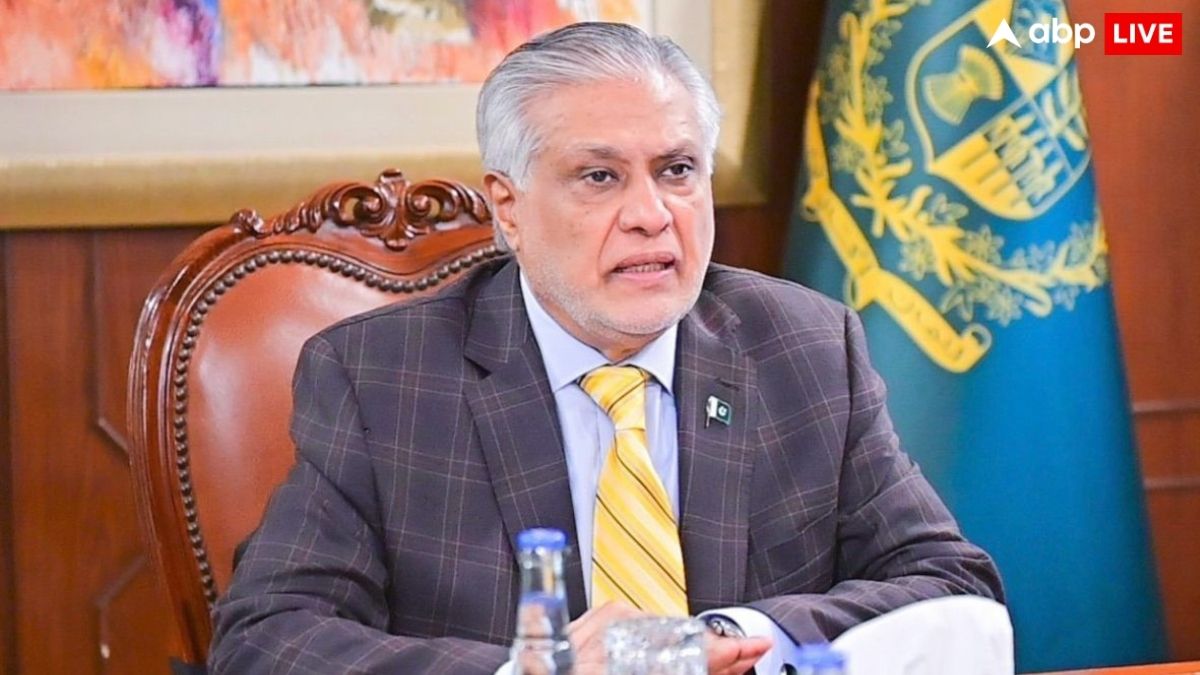
‘Costly Cup Of Tea’: Ishaq Dar Blames Kabul Visit For Pakistan’s Security Crisis Ahead Of Afghanistan Talks

Pakistan’s Deputy Prime Minister and Foreign Minister, Ishaq Dar, has reignited a political storm by criticising a past decision that, he says, continues to haunt the country, a symbolic “cup of tea” in Kabul that has turned into a costly mistake for Pakistan. Speaking during a Senate session on Wednesday, Dar launched a veiled attack on the previous Imran Khan-led Pakistan Tehreek-e-Insaf (PTI) government, accusing it of opening the nation’s borders to Afghanistan under the pretext of a goodwill visit. “It was a big mistake and should not be repeated,” he said, as reported by Afghanistan’s Tolo News. The Kabul Visit That Sparked Controversy Dar’s remarks referred to the 2021 visit of then-Inter-Services Intelligence (ISI) chief, Lt Gen Faiz Hameed, to Kabul shortly after the Taliban took control of Afghanistan following the withdrawal of US and allied forces. The general’s now-famous image sipping tea at the Serena Hotel in Kabul quickly became symbolic — and, according to Dar, disastrous. Last year, during a press conference in London, Dar had made similar remarks, saying Pakistan was “paying the price” for that symbolic meeting. He claimed that the security situation had worsened since the Taliban’s return, alleging that militant groups like the Tehrik-i-Taliban Pakistan (TTP), Fitna al-Khawarij, and the Balochistan Liberation Army (BLA) were operating from Afghan soil. Security Concerns and Cross-Border Tensions Dar said he had held six phone conversations with his Afghan counterpart, Amir Khan Muttaqi, to raise Pakistan’s concerns and demand that Afghan territory not be used for cross-border attacks. However, Afghanistan’s Ministry of Foreign Affairs has denied these claims. In a post on X, ministry spokesperson Hafiz Zia Ahmad said the Pakistani minister’s statement “lacked accuracy,” clarifying that the conversation between the two sides took place in a spirit of “mutual understanding and coordination.” Ahmad further stated that Dar had admitted he was not fully briefed on the matter and would follow up after gathering complete information. “The recent statements by the Pakistani Foreign Minister, in which he claimed that the Foreign Minister of the Islamic Emirate in Afghanistan, Mullah Amir Khan Muttaqi, had contacted him six times in one day, lack accuracy and realism,” Ahmad wrote. “In fact, the first phone contact between the two sides was aimed at mutual understanding and coordination.” Hopes Pinned on Istanbul Peace Talks Despite the sharp exchanges, Dar struck a cautiously hopeful tone, expressing confidence that upcoming talks between Pakistan and Afghanistan — scheduled for November 6 in Istanbul — could help restore stability and cooperation on security issues. Relations between the two neighbours have deteriorated in recent months. In October, Pakistan launched airstrikes inside Afghan territory, triggering retaliatory fire from the Afghan side and sparking intense border clashes. The situation eased only after mediation by Qatar and Türkiye, leading to a temporary ceasefire that has since been extended. The second round of peace talks in Istanbul is expected to focus on “further modalities of implementation,” according to the Turkish Ministry of Foreign Affairs.

Global Tariffs Under Fire: Supreme Court Examines Trump’s Trade Powers

The US Supreme Court on Wednesday cast fresh doubt on the legality of President Donald Trump’s global tariff regime, raising questions that could reshape how much power presidents wield in international trade.  The justices, spanning both conservative and liberal camps, expressed deep scepticism about whether a decades-old law allows Trump to levy tariffs as freely as he has claimed, reported Reuters. Testing the Limits of Presidential Power The court heard over two and a half hours of arguments in what has become a defining test of Trump’s executive authority. The case hinges on his use of the International Emergency Economic Powers Act (IEEPA), a 1977 law typically reserved for national emergencies, to justify tariffs on nearly every major trading partner. Lower courts had already ruled that Trump’s use of IEEPA overstepped his authority, prompting the administration’s appeal. Chief Justice John Roberts, a conservative, pointedly told the government’s lawyer, US Solicitor General D John Sauer, that imposing tariffs amounts to taxing Americans, “the core power of Congress.”  He suggested the court might apply its “major questions” doctrine, which requires Congress to clearly authorise executive actions of great economic and political consequence. “The justification is being used for a power to impose tariffs on any product, from any country, in any amount, for any length of time,” Roberts said, calling it “major authority” that may not fit the law’s original intent. The justices’ concerns cut across ideological lines. Liberal Justice Ketanji Brown Jackson argued that Congress had designed IEEPA to limit, not expand, presidential power. “It’s pretty clear that Congress was trying to constrain the emergency powers of the president,” she said.  Meanwhile, conservative Justice Amy Coney Barrett challenged Sauer to cite any historical precedent for using the phrase “regulate importation” to justify imposing tariffs, an example he struggled to provide. The Case for Trump’s Tariffs Trump, who has framed tariffs as both an economic weapon and a diplomatic tool, has urged the court to uphold his sweeping powers. He invoked IEEPA by declaring that America’s trade deficits posed an “unusual and extraordinary threat” to national security, language normally used to justify sanctions or asset freezes against hostile nations. The administration argues that tariffs have strengthened the country’s negotiating hand and protected jobs. Sauer told the justices that removing the tariffs could lead to “ruthless trade retaliation” from other countries and weaken the United States economically and strategically.  Between February and September this year, tariffs brought in an estimated $89 billion in revenue, according to data from the US Customs and Border Protection agency. Yet critics say Trump’s trade war has alienated allies, disrupted global markets, and contributed to economic uncertainty. Twelve states, mostly Democratic-led, and several US businesses have challenged the tariffs, contending that the president has intruded on powers constitutionally reserved for Congress. A Divided Bench, High Stakes Ahead While Roberts’ questions reflected scepticism, other conservative justices signalled potential sympathy for Trump’s case. Justice Brett Kavanaugh noted that President Richard Nixon had once imposed worldwide tariffs under IEEPA’s predecessor law, suggesting some historical precedent. He remarked that “foreign affairs is a core power of the executive,” a point also raised by Roberts when questioning lawyer Neal Katyal, who represents the private business challengers. Justice Neil Gorsuch, however, warned against granting presidents too much unchecked authority, asking, “What would prohibit Congress from just abdicating all responsibility to regulate foreign commerce, or for that matter, declare war, to the president?” His line of questioning reflected concerns about maintaining the constitutional balance of powers. The Supreme Court, which has a 6-3 conservative majority, typically takes months to issue rulings. But the administration has urged a swift decision. Treasury Secretary Scott Bessent, who attended the hearing, told Fox Business he felt “very, very optimistic” after the arguments and said that if the ruling goes against Trump, other legal routes will be explored to preserve the tariffs.

World leaders to rally climate fight ahead of Amazon summit

World leaders meet Thursday in the Brazilian Amazon in an effort to show that climate change remains a top global priority despite broken promises and the United States shunning the gathering. In a sobering reminder of the task at hand, a closely watched vote last month to reduce pollution from global shipping was rejected under intense pressure from the United States.