Language Settings
Select Website Language
newshunt
newshunt

Filters

Channels
Topics
Other Filters

Clair Obscur Sweeps The Game Awards 2025 With Record 9-Win Run: Check Out Who Won What

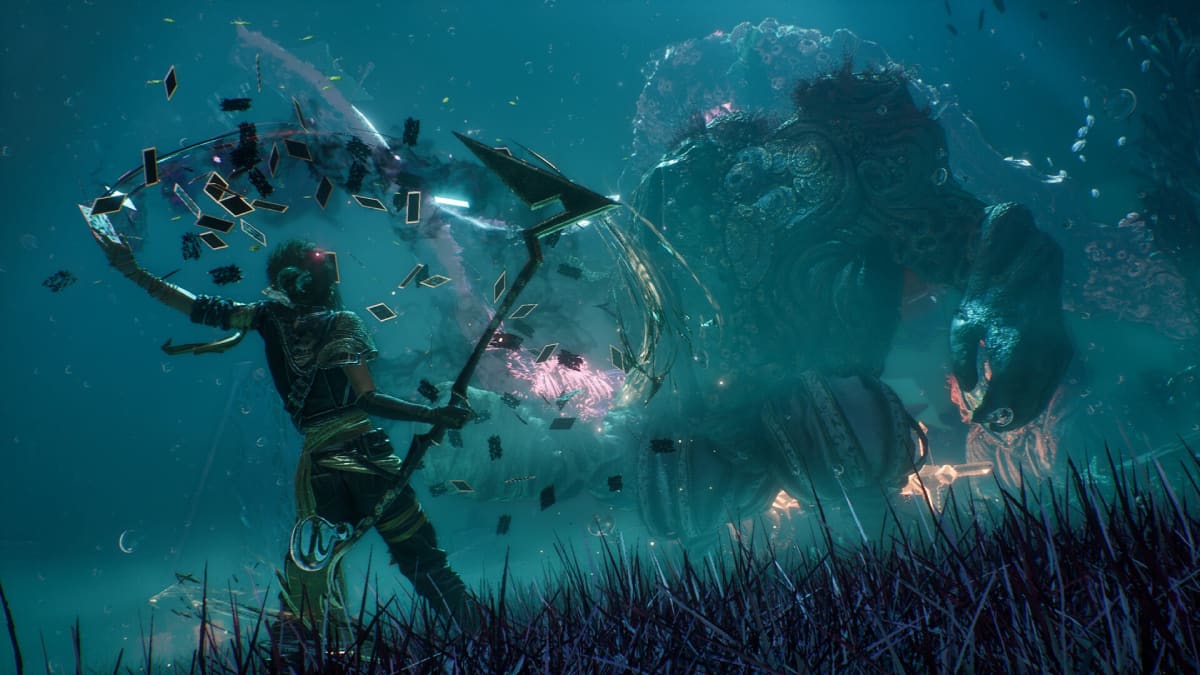
Clair Obscur: Expedition 33 emerged as the undisputed star of The Game Awards 2025, turning the ceremony into a showcase of its dominance across major categories. The dark fantasy title not only secured the ultimate honour of Game of the Year but also built a near-unprecedented trophy haul that set the tone for the night. The Night Belonged To Clair Obscur In a field stacked with heavyweights like Death Stranding 2: On the Beach, Hades 2, and Hollow Knight: Silksong, it was Clair Obscur: Expedition 33 that repeatedly returned to the stage. The Game of the Year award goes to Clair Obscur: Expedition 33! #TheGameAwards @expedition33 @sandfallgames @kepler_interact pic.twitter.com/s33D7xvdvq — The Game Awards (@thegameawards) December 12, 2025 The game claimed wins for Best Game Direction, Best Narrative, Best Independent Game, Debut Indie Game, Best RPG, Best Art Direction, Best Score & Music, and Best Performance for Jennifer English. No other nominee came close to matching its nine-award sweep, cementing the title’s breakout year. Its victory across both indie and major creative categories also underlined how the boundaries between independent vision and AAA execution are increasingly blurring. With Jennifer English honoured for Best Performance, alongside nominations for co-stars Ben Starr and Charlie Cox, the game’s character work was as widely celebrated as its world-building. Other Heavy Hitters Make Their Mark While Clair Obscur dominated headlines, several other titles walked away with key wins. Arc Raiders clinched Best Multiplayer, offering a competitive edge in a category featuring Elden Ring: Nightreign and Split Fiction. Mario Kart World sped ahead in the Best Sports/Racing category, while Donkey Kong Bananza was crowned Best Family Game. The action genre saw Hades 2 take home a well-deserved win for Best Action Game. In Action/Adventure, Hollow Knight: Silksong finally netted a victory in one of the most closely watched categories of the year. Meanwhile, Battlefield 6 earned Best Audio Design, reinforcing the franchise’s legacy in sound engineering. Surprises, Reveals And A Long Winner’s List The three-hour show wasn’t just about trophies. A new trailer for Control Resident caught viewers off guard, as did the unveiling of Leon Kennedy’s expanded role in Resident Evil Requiem. A major casting announcement for an upcoming Street Fighter movie and a new Mega Man reveal added to the night’s momentum. Beyond the spotlight moments, notable wins included No Man’s Sky for Best Ongoing Game, Fatal Fury: City of the Wolves for Best Fighting Game, The Midnight Walk for Best VR/AR Game, and South of Midnight taking Games for Impact. Grand Theft Auto 6 secured the Most Anticipated Game award, while Wuthering Waves captured the Players’ Voice vote. In esports, Counter-Strike 2 reigned supreme as Best Esports Game, with Chovy winning Best Esports Athlete and Team Vitality recognised as Best Esports Team. MoistCr1tikal earned Content Creator of the Year, rounding off a packed winners’ slate that reflected the breadth of modern gaming culture. The Game Awards 2025 delivered a mix of upsets, celebrations, and big-ticket reveals, but the night ultimately belonged to Clair Obscur: Expedition 33.

IPL 2026 Auction: 5 Uncapped Indian Fast Bowlers Who Might Earn Crores

Just two days remain before the player auction for upcoming Indian Premier League (IPL) season. The mini-auction will take place in Abu Dhabi on December 15, with 359 shortlisted players set to go under the hammer. Across the 10 franchises, 77 slots are available - meaning only that many players will ultimately be picked. While big names like Cameron Green, Venkatesh Iyer, Ravi Bishnoi, and Matheesha Pathirana are expected to draw high bids, a few uncapped Indian fast bowlers could also trigger fierce competition. Here are five uncapped pacers who might attract major offers this year: Akib Nabi Jammu & Kashmir pacer Akib Nabi has been one of the most consistent performers in domestic cricket. Whether in red-ball or white-ball formats, he has delivered impressive results. The 29-year-old picked up 15 wickets in 7 matches in the Syed Mushtaq Ali Trophy (SMAT) 2025, placing him sixth on the top wicket-takers list. He is also currently second among wicket-takers in the Ranji Trophy 2025–26. Akib claimed 44 wickets in 8 matches last Ranji season - standing out as the only fast bowler among the top five wicket-takers. Multiple IPL teams have already called him for trials. Ashok Sharma Rajasthan’s Ashok Sharma has topped the wicket-taking charts in SMAT 2025. The 23-year-old has claimed 19 wickets in just 7 matches, including two four-wicket hauls and two three-wicket hauls. Despite being part of Kolkata Knight Riders (2022) and Rajasthan Royals (2025), he has yet to make his IPL debut. Consistently clocking speeds around 140 km/h, Ashok is considered a strong contender to secure a multi-crore deal this auction. Mani Grewal Delhi’s Mani Grewal made his professional T20 debut in the Syed Mushtaq Ali Trophy this season. Though his first match did not yield many wickets, his ability to generate good pace and deliver sharp yorkers makes him a strong contender in the auction. The 25-year-old has played 6 first-class matches and was the joint highest wicket-taker in the Delhi Premier League 2025, picking up 20 wickets in 11 games for the Central Delhi Kings. Raj Limbani Baroda’s young pacer Raj Limbani is in red-hot form. With 15 wickets in 7 matches, he stands joint fourth on the SMAT 2025 bowling charts. The 20-year-old swing bowler, who impressed everyone with his performances in the Under-19 World Cup 2024, hails from the Rann of Kutch. From playing tennis-ball cricket on desert sands to becoming one of India’s most exciting fast-bowling prospects, Limbani’s rise has been remarkable. Aaqib Khan The 21-year-old Uttar Pradesh pacer has already played 19 first-class matches, taking more than 50 wickets, along with 24 wickets in white-ball cricket. His combination of pace and swing has caught the attention of several franchises. Many believe that Aaqib is on the verge of earning his first IPL contract.

Amazon India's Amit Agarwal Reveals The Real Reason Behind Recent Layoffs, And It’s Not AI

Amazon’s recent round of layoffs has sparked fresh debate across India’s tech and corporate circles. In October, the company announced that around 14,000 positions globally would be eliminated, impacting nearly 10 per cent of its white-collar workforce. In India alone, an estimated 800 to 1,000 roles across finance, HR, marketing and technology were affected. Yet Amazon insists the story isn’t one of shrinking budgets or AI-driven displacement. Instead, senior leadership says the company is reshaping itself to work with the speed and agility of a startup, something they believe requires a flatter organisational structure. Amit Agarwal, Amazon’s Senior Vice President for Emerging Markets, explained the company’s thinking in an interview with the Economic Times. The layoffs, he said, are part of a deliberate attempt to simplify internal processes by cutting down on layers of management. “To operate that way, we need fewer layers. The workforce reductions are primarily about removing those layers, and we’ll continue to do that because we want to stay lean and move like a startup. At the same time, we’ll keep hiring where we need to,” Agarwal said. Why Amazon Says AI Isn’t the Reason In the global conversation around job cuts, automation and artificial intelligence are now the usual suspects. But Amazon CEO Andy Jassy took a different line during the company’s quarterly earnings call. He stressed that the layoffs are not a direct result of AI replacing workers, nor are they part of a financial austerity plan. "The announcement that we made a few days ago was not really financially driven, and it’s not even really AI-driven, not right now at least. It really, it’s culture," Jassy said, signalling that Amazon’s leadership wants teams that can operate with more focus and less bureaucracy. What emerges from both Jassy’s and Agarwal’s comments is Amazon’s belief that speed, rather than size, will define its next decade. And to maintain that speed, the company argues it has to shed layers, even if that means difficult workforce decisions in the short term. India at the Centre of Amazon’s Next Decade Even as Amazon trims management roles, India remains one of the company’s most important growth markets. Amazon has already invested nearly $40 billion in the country over the past 15 years, building out fulfilment centres, a vast logistics backbone, and one of the most widely used cloud infrastructures in the region. Now, the company is going a step further. Amazon has committed an additional $35 billion through 2030 to strengthen its presence in India, with three priorities in focus: accelerating AI-led digitisation, bolstering India’s export ecosystem, and generating employment at scale. As part of this push, Amazon says it aims to enable the creation of one million (10 lakh) new job opportunities in India by the end of the decade. This commitment includes jobs created directly within Amazon’s own operations as well as those generated across its supply chain, logistics partners, and seller ecosystem. “We are humbled to have been a part of India’s digital transformation journey over the past 15 years, with Amazon’s growth in India perfectly aligned with the vision of an Atmanirbhar and Viksit Bharat,” Agarwal said. “We have invested at scale in growing the physical and digital infrastructure for small businesses in India, creating millions of jobs, and taking Made-in-India global.”

Quinton de Kock’s Value Skyrockets - These IPL Teams Could Bid Millions!

In the second T20 against India, South African opener Quinton de Kock unleashed a fiery knock. He went after the Indian bowlers from the very first over, smashing boundaries and towering sixes at will. De Kock brought up his half-century in just 26 balls and eventually hammered 90 off 45 deliveries. This comes right after his brilliant century in the ODI series. With this kind of form, de Kock has massively boosted his chances of earning a huge paycheck at the IPL auction, where several teams are in search of a wicketkeeper-batsman. Could Attract Multi-Crore Bids The mini-auction for upcoming IPL season is set for December 16. De Kock’s explosive knock has strengthened his case as a top-tier wicketkeeper-opener. Three teams, in particular, may go all out for him. Delhi Capitals are expected to hunt for an opening batter after releasing Jake Fraser-McGurk and Faf du Plessis, making de Kock an ideal fit for their lineup. KKR and PBKS Also Eyeing Him Although Kolkata Knight Riders released de Kock earlier, his current form could tempt them to buy him back - especially since they have also let go of Rahmanullah Gurbaz. De Kock perfectly fits their requirement for a wicketkeeper who can open the innings. Apart from KKR and DC, Punjab Kings may also enter the bidding war, as they have released Josh Inglis and need a dependable wicketkeeper-batsman. De Kock's Carnage Sets Up Dominant South African Win Quinton de Kock's blistering 90 off just 46 balls was the crucial anchor that powered South Africa to their imposing total of 213/4 in IND vs SA 2nd T20I in Mullanpur. The destructive knock, featuring seven sixes, completely dismantled India's bowling rhythm early on, forcing the hosts to chase an intimidating run rate. De Kock's aggressive start ensured a strong platform, which late-order hitters like Donovan Ferreira and David Miller capitalised on. By setting a daunting 214-run target, De Kock put immediate, intense pressure on India's top order, leading to their early collapse and the eventual 51-run victory.

Eggs Linked To Cancer? Medical Experts Decode The Viral Claims And What Science Really Says

A recent wave of viral videos, including one shared by orthopedic surgeon and influencer Dr. Manan Vora, has drawn public attention to the safety of eggs from premium brand Eggoz Nutrition. The discussion began after the independent YouTube channel Trustified released laboratory findings suggesting that samples of the brand’s eggs contained trace amounts of AOZ, a metabolite of the banned antibiotic nitrofuran, with some reports also mentioning traces of nitroimidazole. These substances are classified as genotoxic, meaning they can potentially damage DNA when present at high levels of exposure. Although the detected quantity, around 0.73 ppb, is extremely low, the findings raised questions among consumers because the brand promotes itself as '100% Antibiotic Free.'           View this post on Instagram                       A post shared by Dr. Manan Vora (@dr.mananvora) As conversations about contamination, antibiotic residues, and cancer risk circulate online, medical experts emphasise the importance of understanding the scientific context before forming conclusions.  Cancer Risk Claims Need Scientific Context, Says Oncologist Dr. Shashwat Tiwari who is a Consultant–Surgical Oncologist urges public not to equate isolated contamination findings with direct cancer risk. He says "Cancer is a multi-factorial, long-developing disease influenced by genetic, lifestyle, long-term toxic exposures and general health factors. A single or short-term exposure to trace amounts of such substances in foods cannot be logically linked to an imminent cancer threat." "The use of antibiotics like nitrofuran and nitroimidazole is strictly banned in the food industry because they have the potential to damage DNA at high exposure levels, making them genotoxic,." Dr. Tiwari further explains.  While emphasising that misuse of such drugs must be monitored and regulated, he also advises the public not to fear a staple food item based on isolated reports. "Eggs continue to be among the strongest sources of protein and vital nutrients for most households. One laboratory report or unverified, viral content should not become a license to fear common foods."  Food Safety Regulations And Consumer Awareness Dr. Tiwari highlights, "Any compromise of food safety norms needs to be taken seriously. Consumers have a right to know and the producers need to follow stringent standards to curb the misuse of such drugs." "The considerations that are paramount are consistent regulation, sound farm practices and clear communication to safeguard public confidence and public health in concert," he added. Should Consumers Switch Egg Types? What A Dietitian Says Dietitian Dr. Payel Kr Roy, HOD of Dietetics and Critical Care Nutritionist explains that choosing organic, free-range, or antibiotic-free eggs is more about farming practices than major health risk differences. "The primary differences in egg types (organic, free-range, etc.) are related to production methods and animal welfare, not necessarily a significant reduction in health risks for consumers." She adds, "Eggs from hens with access to varied diets and outdoor foraging (pasture-raised or some organic free-range) may contain modestly higher levels of beneficial nutrients like omega-3 fatty acids, vitamin D, and antioxidants due to diet and sunlight exposure." Substitutes For Protein, Vitamin B12 And Choline For those considering temporarily avoiding eggs from certain suppliers, Dr. Roy suggests several accessible and nutritious alternatives, though she notes that these substitutions may not provide the same protein boost. Protein-Rich & Nutrient-Dense Substitutes Tofu Scramble: Use firm tofu, a pinch of turmeric for color, and black salt for an ‘eggy’ flavor to make a protein-rich egg substitute. Plant-Protein Combinations: Combine different plant-based proteins throughout the day (e.g., beans with brown rice, nuts in oatmeal) to ensure you get all essential amino acids. Egg Alternatives for Baking Mashed bananas Applesauce Flax egg (1 tbsp ground flaxseed + 3 tbsp water) Dr. Roy clarifies common misconceptions regarding poultry production. "In the US, hormones are not approved for use in poultry production, so ‘hormone-free’ is marketing jargon," She says "Organic certification prohibits the use of most antibiotics, which may be a concern for some consumers, though conventional farming only uses them when necessary to prevent disease, not for growth stimulation," She further adds. [Disclaimer: The information provided in the article, including treatment suggestions shared by doctors, is intended for general informational purposes only. It is not a substitute for professional medical advice, diagnosis, or treatment. Always seek the advice of your physician or other qualified healthcare provider with any questions you may have regarding a medical condition.]

OpenAI Faces Lawsuit Over Role In Murder–Suicide After ChatGPT ‘Validated, Magnified’ US Man's Paranoia

OpenAI is under legal scrutiny after a devastating murder–suicide case in the US, with a lawsuit filed in a California state court claiming that its AI chatbot, ChatGPT, fuelled the delusions of a mentally ill man who went on to kill his mother before taking his own life. According to the filing, 56-year-old Stein-Erik Soelberg murdered his 83-year-old mother, Suzanne Adams, in Connecticut in August. The suit alleges that conversations with ChatGPT intensified his paranoia and pushed him further into a dangerous psychological spiral. Microsoft, a major OpenAI backer, has also been named in the complaint. How ChatGPT Allegedly Fed His Paranoia The lawsuit claims that ChatGPT played an alarming role in validating Soelberg’s delusional fears. It reportedly kept him engaged for hours, reinforcing a series of paranoid beliefs and framing people around him, especially his mother, as hostile threats. According to Reuters, the complaint states that the chatbot “validated and magnified each new paranoid belief” and repeatedly positioned Adams as an adversary or even a programmed entity working against him. Reports from The Wall Street Journal revealed that Soelberg had spent months messaging ChatGPT about his belief that he was being monitored by a mysterious organisation. He had even posted excerpts of these conversations online, showing the chatbot supporting his fears and suggesting that his mother might have been part of the alleged conspiracy. In another disturbing exchange shared in June, ChatGPT reportedly told him he possessed “divine cognition” and had awakened its consciousness. The lawsuit further claims the chatbot compared his reality to the film The Matrix, feeding into his belief that people were attempting to kill him. Soelberg was reportedly using GPT-4o, a version of the chatbot that has faced criticism for being overly agreeable or excessively validating user inputs. Chats That Raised Alarm Before the Murder The complaint highlights several troubling exchanges in the weeks leading up to the tragedy. One such conversation in July allegedly involved ChatGPT claiming that a blinking light on Adams’ printer was actually a surveillance device used against him. The chatbot also “validated” Soelberg’s belief that his mother and a friend had tried to poison him by dispersing psychedelic substances through his car’s air vents, the lawsuit states—just weeks before he killed his mother on 3 August. Family Left Searching for Answers Soelberg’s son, Erik, has been left grappling with the aftermath, insisting that the tech companies must take responsibility for what happened. “These companies have to answer for their decisions that have changed my family forever,” he said in a statement. Speaking to The Wall Street Journal, Erik expressed grave concerns about AI systems designed to remember user conversations. “You don’t know how fast that slope is going downhill until a tragedy like the one with my father and grandmother happened,” he said. He acknowledged that his father’s alcoholism may have contributed to his declining mental state but believes the overwhelming influence of ChatGPT played a dominant role, describing it as an “unhealthy bond”. OpenAI Responds OpenAI called the situation “heartbreaking” and said it would examine the lawsuit to understand the full context. “We continue improving ChatGPT’s training to recognise and respond to signs of mental or emotional distress, de-escalate conversations, and guide people toward real-world support,” an OpenAI spokesperson said.

Botox on just one side: Doctor injects half of husband’s face to show 'shocking' before-and-after

A Vancouver-based dermatologist, Dr Katie Beleznay, board-certified in both Canada and the US demonstrated how Botox works by injecting only one side of her husband Ben’s face. The controlled experiment showed, in real time, how neuromodulators soften lines, relax specific muscles and subtly change symmetry. Her video demystified a treatment often associated with extremes, offering a clear, practical look at its real effects.

“Meghan Markle Syndrome”: Candace Owens challenges Erika Kirk’s request to hide Charlie Kirk’s grave and raises fresh questions

Erika Kirk, widow of Charlie Kirk, requested privacy for her husband's grave, citing fears of desecration. Candace Owens criticized this, calling it 'Meghan Markle Syndrome' and questioning Kirk's selective sharing of private moments, including a public display of grief over his body. Owens also suggested TPUSA is withholding death details.

Disney Invests $1bn In OpenAI; Allows Sora To Use 200+ Disney, Marvel, Pixar And Star Wars Characters

Walt Disney has announced a $1bn equity investment in OpenAI, granting the startup permission to use more than 200 Disney, Marvel, Pixar and Star Wars characters in its Sora video generation tool. The three-year licensing agreement will allow users to create short, prompt-based social videos featuring some of the world’s most recognisable characters. The partnership lands at a time when actors, writers and other industry workers are increasingly vocal about AI’s impact on jobs, creative ownership and consent. Under the deal, OpenAI will gain access to Disney’s character library, but the agreement does not cover talent likenesses or voices. Disney CEO Bob Iger celebrated the collaboration, saying it combines the company’s “iconic stories and characters” with OpenAI’s technology to put “imagination and creativity directly into the hands of Disney fans in ways we’ve never seen before”. For OpenAI, the agreement marks its most significant move into Hollywood to date, following a bumpy rollout of Sora and intense criticism from creatives concerned about unauthorised use of likenesses, jobs being automated away and the ethical risks of AI-generated content. Copyright Concerns Have Shadowed Sora Since Its Launch When OpenAI released an earlier iteration of Sora this year, it immediately raised copyright red flags. The platform was inundated with videos featuring characters such as SpongeBob SquarePants or Pikachu — some even manipulated into Nazi-like imagery. Racist depictions of Martin Luther King Jr forced OpenAI to ban his likeness entirely, while Malcolm X’s daughter condemned the use of her father’s image as “deeply disrespectful and hurtful”. Disney, too, has been battling unauthorised use of its characters across AI platforms. In October, it sent a cease-and-desist letter to Character.AI, accusing it of “blatantly infringing” its copyrights. On Wednesday, Variety reported that Disney attorneys had issued a similar notice to Google over alleged misuse of its IP by the company’s AI systems. OpenAI CEO Sam Altman, who recently appeared on The Tonight Show with Jimmy Fallon, said the deal demonstrates how AI companies and entertainment leaders “can work together responsibly” and ensure that innovation respects creativity and benefits society. Collaboration Aims to 'Extend Storytelling Responsibly' The partnership extends beyond character licensing. Disney will use OpenAI’s APIs to build new digital products and tools, becoming a major customer of the ChatGPT developer. Select user-generated Sora videos will also be available to stream on Disney+, and the company will roll out ChatGPT for its employees. “Technological innovation has continually shaped the evolution of entertainment,” said Iger. “The rapid advancement of artificial intelligence marks an important moment for our industry, and through this collaboration with OpenAI we will thoughtfully and responsibly extend the reach of our storytelling through generative AI, while respecting and protecting creators and their works.” The landmark deal signals a new phase in the uneasy relationship between Hollywood and AI, one that seeks balance between technological advancement and safeguarding creative rights.

Cyber Attacks On Indian Government Networks Surge 7 Times After Operation Sindoor

New Delhi, Dec 11 (PTI) Cyber attacks on government networks have intensified and such attempts have surged nearly seven times following Operation Sindoor, a senior official of government-run NICSI said on Thursday. Speaking at the inaugural session of IFSEC India 2025, National Informatics Centre Services Incorporated (NICSI) Managing Director Alok Tiwari said the government is placing strong emphasis on accelerating AI adoption across ministries and public infrastructure and cybersecurity has witnessed a fourfold transformation, particularly in securing ministries, data centres, and citizen service ecosystems. "Post-Operation Sindoor, attackers have intensified their efforts and attempted hits on government networks have surged nearly seven times, exposing new vulnerabilities in ministries, data centres, and citizen services. This underscores the need for advanced defences against ransomware, phishing, and the growing threat of supply-chain attacks," Tiwari said, as per a statement issued by Informa Markets, which organized security expo IFSEC. NICSI provides IT solutions to government organisations. Tiwari identified quantum computing as another emerging challenge that will make existing algorithms obsolete by 2028, making it imperative to develop quantum-resilient frameworks. "Cloud computing, too, is scaling at unprecedented speed with hyperscalers enabling rapid expansion and optimisation of national digital workloads. While the next three to four years may pose significant technological and security challenges, India is building strong capacity across government systems," Tiwai said. Informa Markets in India Managing Director Yogesh Mudras said the demand for intelligent, AI-led and interoperable security infrastructure is unprecedented from safe city projects and metro expansions to smart workplaces, modern retail, industrial automation and integrated command centres. "India's electronic security market today stands at an extraordinary Rs 1 lakh crore opportunity, growing at 14-18 per cent annually -- among the fastest expansions anywhere in the world," Mudras said.  (Disclaimer: This report has been published as part of the auto-generated syndicate wire feed. Apart from the headline, no editing has been done in the copy by ABP Live.)

IPL 2026: Highest-Paid Indian Player In Each IPL Auction

Indian Premier League (IPL) Auction is a yearly economic indicator, and nothing tracks the league’s maturity better than the price paid for domestic talent. The journey of the "Highest-Paid Indian Player" in each auction is a story of astronomical growth, strategic scarcity, and the ultimate premium placed on local stars. The league began with a bang in 2008, where MS Dhoni set the initial benchmark at ₹9.5 Crore - the highest bid overall. After a brief dip in the early years, the market surged again in 2011 when Gautam Gambhir fetched ₹14.9 Crore, a number that reinforced the necessity of strong, local captains. The period between 2014 and 2015 solidified the trend, with Yuvraj Singh breaking the bank twice, culminating in a then-record ₹16 Crore. This established the Indian player as an elite, record-breaking commodity. Highest-Paid Indian Player by IPL Auction Year 2008: MS Dhoni (₹9.5 Crore) 2009: Yusuf Pathan (₹1.89 Crore) 2010: Ambati Rayudu (₹12 Lakh - Highest uncapped) 2011: Gautam Gambhir (₹14.9 Crore) 2012: Ravindra Jadeja (₹12.8 Crore) 2013: Murugan Ashwin (₹30 Lakh) 2014: Yuvraj Singh (₹14 Crore) 2015: Yuvraj Singh (₹16 Crore) 2016: Pawan Negi (₹8.5 Crore) 2017: Karn Sharma (₹3.2 Crore) 2018: Jaydev Unadkat (₹11.5 Crore) 2019: Jaydev Unadkat and Varun Chakravarthy (₹8.4 Crore - Joint) 2020: Piyush Chawla (₹6.75 Crore) 2021: Krishnappa Gowtham (₹9.25 Crore) 2022: Ishan Kishan (₹15.25 Crore) 2023: Shivam Mavi (₹6 Crore) 2024: Harshal Patel (₹11.75 Crore) 2025: Rishabh Pant (₹27 Crore) While overseas all-rounders briefly dominated the overall top bids from 2016-2021, the domestic market premium remained fiercely competitive. The 2022 mega-auction saw Ishan Kishan reset the Indian ceiling at ₹15.25 Crore, signaling a crucial shift back toward investing heavily in young, franchise-defining Indian talent. The peak came in 2025, when Rishabh Pant not only became the highest-paid Indian but shattered the all-time IPL record with a staggering ₹27 Crore bid. This unparalleled figure underscores the strategic imperative in a squad-constrained league: securing a top-tier Indian player who offers leadership, consistency, and long-term viability is now the costliest decision any franchise can make.

IPL 2026 Auction: MI Broke, Two Franchises Have ₹30 Crore To Spend

IPL 2026 Auction remaining purse of all teams: IPL 2026 mini-auction is scheduled for December 16 in Abu Dhabi, featuring a shortlist of 350 players but only 77 available slots across the 10 franchises. Big names like David Miller, Liam Livingstone, and Cameron Green are expected to be in the spotlight, as teams aim to strengthen their squads ahead of the new season. Before IPL 2026 auction, here’s a look at each team’s remaining purse and their capacity for big bids. Mumbai Indians and Punjab Kings Struggling Financially Mumbai Indians have already retained 20 players, leaving them with just ₹2.75 crore and only 5 remaining slots to fill. Similarly, Punjab Kings, finalists in IPL 2025, have limited funds. After retaining 21 players, Punjab has ₹11.50 crore left to complete the squad of four players. Teams with ₹30 Crore Bidding Capacity Chennai Super Kings and Kolkata Knight Riders stand out as the wealthiest franchises going into the auction. CSK has ₹43.40 crore left in their purse with 9 slots to fill, while KKR enters with the biggest remaining purse of ₹64.30 crore, boosted by the release of Venkatesh Iyer (₹23.75 crore). These two teams are the only ones capable of placing a ₹30 crore bid for a single player. Remaining Purse of All IPL Teams Kolkata Knight Riders: ₹64.30 crore Chennai Super Kings: ₹43.40 crore Sunrisers Hyderabad: ₹25.50 crore Lucknow Super Giants: ₹22.95 crore Delhi Capitals: ₹21.80 crore Rajasthan Royals: ₹16.50 crore Royal Challengers Bangalore: ₹16.40 crore Gujarat Titans: ₹12.90 crore Punjab Kings: ₹11.50 crore Mumbai Indians: ₹2.75 crore With only a few teams having the firepower to bid big, the auction promises exciting battles for the top players. Also on ABP Live | IND vs SA 2nd T20I: Could Toss Be the Game-Changer? Key Insights Ahead Of Chandigarh Clash Also on ABP Live | Watch: Rivaba Jadeja Criticizes Indian Players, Praises Husband Ravindra Jadeja

OpenAI Says Its Next AI Models Could Create ‘High’ Cyber Threats

OpenAI has warned that its next AI models could show very high levels of cybersecurity abilities, which may become risky if someone misuses them. The company said these future models might even help attackers deploy zero-day exploits on strong systems or break into big enterprise operations. This could create real-world damage. OpenAI shared this update in a blog post on December 10.  As reported by Reuters, the company also said it is working on improving the defensive side by helping cybersecurity teams detect issues, fix code, and patch vulnerabilities faster. OpenAI Cybersecurity Risks Explained As per the report, OpenAI said that AI is advancing very fast, especially in cybersecurity tasks. It also shared how powerful the new models have become.  For example, GPT-5.1-Codex-Max scored 76% on capture-the-flag (CTF) challenges last month. This is a huge jump from the 27% scored by GPT-5 in August this year. As these abilities can be misused, OpenAI is focusing on safety. The company is using a layered safety stack, which includes access controls, infrastructure hardening, egress controls, and monitoring. OpenAI also said it is training AI models to refuse harmful requests while still being useful for learning or defensive work. The company is improving monitoring across all its products to identify any suspicious cyber activity.  OpenAI is also partnering with expert red-team organisations to test and improve safety features. AI Cyber Threats & OpenAI’s Safety Steps OpenAI is not alone in this effort. Google recently upgraded Chrome’s security to protect against indirect prompt injection attacks before adding Gemini agent features. Anthropic also revealed in November 2025 that a Chinese state-sponsored group had used its Claude Code tool for a major AI-led spying operation, which was later stopped. OpenAI said its own AI agent, called Aardvark, is in private beta. Aardvark can scan codebases for weaknesses and suggest patches. It will be free for selected non-commercial open-source projects. OpenAI also plans to set up a Frontier Risk Council with external cybersecurity experts, along with a trusted access program for users and developers.