Language Settings
Select Website Language
newshunt
newshunt

Filters

Channels
Topics
Other Filters

ABP Live Your Money Your Life | Assam’s 8th Pay Commission Move: Will State Employees Get An Early Hike?

Assam has taken an early lead in the long-awaited pay revision cycle by becoming the first state in India to constitute its own 8th Pay Commission. The move has sparked fresh speculation among government employees and pensioners across the country: could Assam staff see a salary hike before their central government counterparts? The short answer is no, at least not immediately. While Assam’s decision is symbolically significant, history suggests that revised pay is still some distance away.  Assam Takes the First Step The Assam government formally announced the constitution of its 8th Pay Commission on January 1, 2026. Chief Minister Himanta Biswa Sarma said the state would take the lead in initiating the next round of pay revisions for its employees and pensioners. Former Additional Chief Secretary Subhas Das has been appointed chairman of the commission. The panel will review salaries, pensions, allowances and service conditions for nearly 7 lakh serving employees and retired staff of the Assam government. According to a report by The Financial Express, the state’s early announcement does not mean faster pay hikes on the ground. Instead, it signals the start of what is typically a long and methodical process. How This Fits Into the National Picture Assam’s move comes after the central government constituted its own 8th Pay Commission earlier. The Centre’s three-member panel is headed by Justice Ranjana Desai and has been given a timeline of 18 months to submit its recommendations. Like the central panel, Assam’s pay commission is also expected to take around 18 months to complete its work. Its mandate includes reviewing pay structures, pensions, allowances and broader service conditions for state employees and retirees. Despite Assam moving swiftly to name its commission and chairman, the Centre’s decisions will continue to set the overall pace for pay revisions nationwide. Will Assam Employees Get a Hike Before Central Staff? While Assam has moved faster administratively than most states, experts say it is highly unlikely that state government employees will receive revised pay before central government staff. There is a clear historical pattern at play. States almost always wait for the Centre to finalise and implement its pay commission recommendations before rolling out their own versions. This approach allows states to align their pay structures with central benchmarks and assess the financial implications more accurately. Even during previous pay cycles, early movers among states did not translate that head start into earlier salary hikes. When Could Revised Pay Become a Reality? With Assam’s 8th Pay Commission constituted in January 2026 and given an 18-month window, its report is likely to be submitted by mid to late 2027. Implementation could follow towards the end of 2027 or spill over into early 2028. That said, employees may still benefit retrospectively. Based on past precedent, any approved pay revision is expected to be calculated from January 1, 2026, with arrears paid for the intervening period. This means that while the actual hike may come later, the financial benefit could be backdated, a familiar feature of previous pay commission rollouts. The End of the 7th Pay Commission Era Pay commissions at both the central and state levels generally follow a 10-year cycle. The tenure of the 7th Pay Commission officially ended on December 31, 2025, setting the stage for the next revision. In Assam, the 7th Pay Commission recommendations were implemented from April 1, 2017. However, the reference date for calculating pay, pensions and related benefits was January 1, 2016, in line with the Centre’s timeline. This alignment underscores why states typically wait for central decisions before finalising their own revisions. Why States Rarely Move Ahead of the Centre Beyond convention, there are practical reasons why states avoid implementing pay hikes ahead of the Centre. Salary revisions have significant fiscal implications, and most states prefer clarity on central pay scales, allowances and funding patterns before committing additional expenditure. In fact, the gap between states is so wide that some are still operating under the 6th Pay Commission framework, having not yet adopted the 7th Pay Commission at all. What Employees Should Expect Next For Assam government employees and pensioners, the formation of the 8th Pay Commission is an important first milestone, but patience will be required. Detailed consultations, data analysis and negotiations lie ahead before any concrete revision takes shape. For now, the bigger signal will come from the Centre, whose recommendations will likely determine when and how pay hikes are rolled out across states.

Is interstellar object 3I/ATLAS older than our Sun? Here’s what it might reveal about the origins and observations

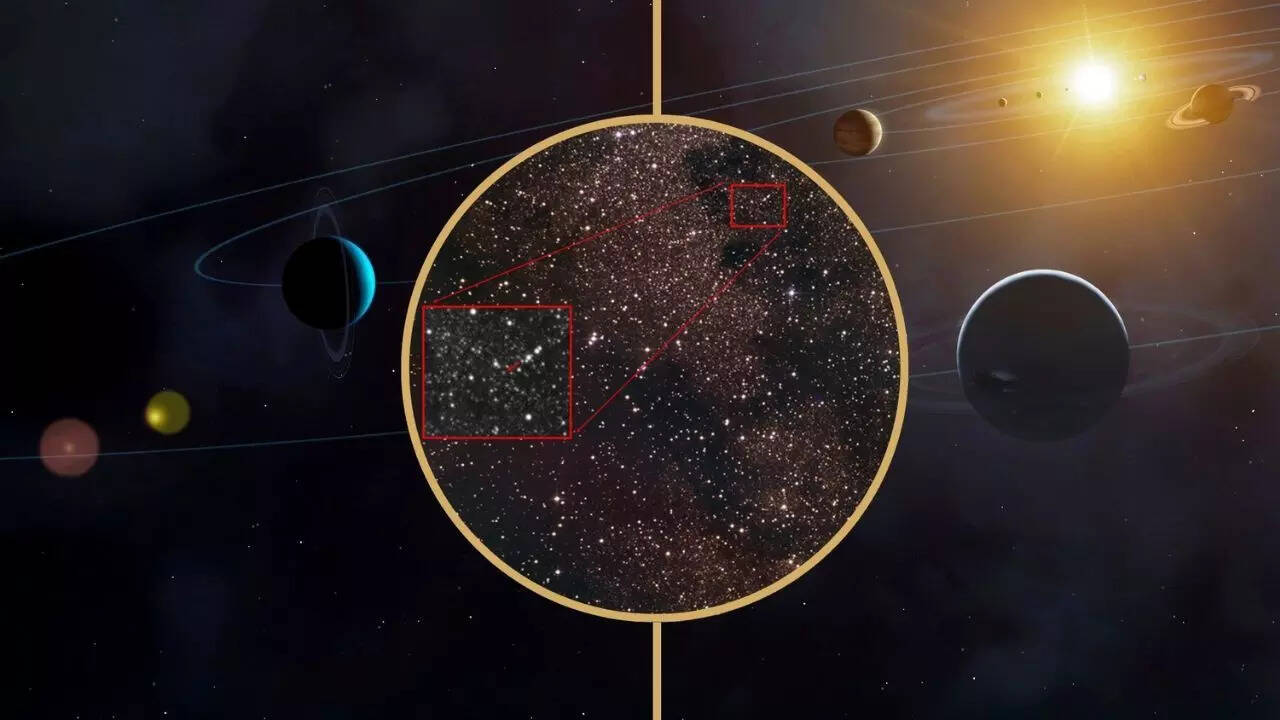
Astronomers have discovered 3I/ATLAS, a fast-moving interstellar object detected in mid-2025. Researchers believe this ancient comet, potentially 8-14 billion years old, originated from the Milky Way's earliest era, predating our Sun. Its unique chemical composition, including iron and nickel, further supports its alien origins, offering a rare glimpse into material forged around ancient stars.

What really happens when astronauts cry in space

In space, tears don't fall due to the absence of gravity. Instead, surface tension causes them to cling to the eye, creating a physical sensation and potential vision blur. Astronauts manage these tears with absorbent cloths, a process vital for understanding human physiology in microgravity and for future long-duration missions.

How oysters turn a tiny irritant into a pearl: What really goes on inside the shell

Pearls begin as irritants within oysters, which respond by slowly covering the foreign object with layers of nacre. This controlled biological process, influenced by environmental factors and diet, transforms discomfort into a stable, beautiful structure. Cultured pearls follow the same natural oyster response, with quality determined by nacre thickness and lustre, not just size.

National Bird Day 2026: 8 Stunning Winter Migratory Birds To Spot In India

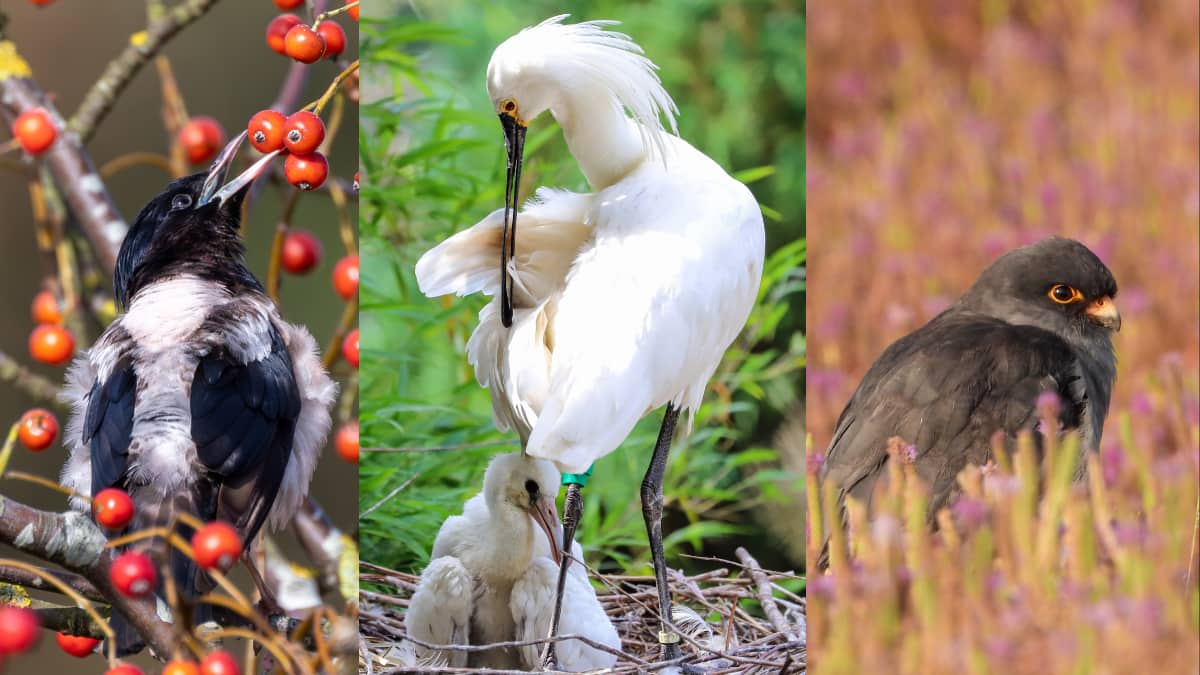
Every winter, India becomes one of the world’s most spectacular natural theatres as thousands of migratory birds arrive from across continents. From the frozen landscapes of Siberia to the wetlands of Central Asia and Europe, these travellers journey thousands of kilometres to find food, warmth and safe breeding grounds. National Bird Day 2026 is the perfect moment to explore some of the most dazzling winter migratory birds that transform India's lakes, rivers, grasslands, and coastlines into a living work of art. ALSO READ: ABP Live Budget Traveller | How To Explore Rishikesh Under ₹6,000 – A Soulful Himalayan Escape 1. Siberian Crane (Image Source: Twitter/@iamvivekko1) The majestic Siberian Crane is one of the most iconic winter visitors to India. These elegant white birds migrate from the frozen tundra of Siberia and northern Russia, travelling over 5,000 kilometres to reach Indian wetlands. Once a regular guest at Bharatpur’s Keoladeo National Park in Rajasthan, sightings have now become rare, making each appearance deeply special for bird lovers. With their long necks, crimson facial markings and powerful wingspans, Siberian Cranes represent resilience and endurance. 2. Greater Flamingo (Image Source: Twitter/@NatureIn_Focus) The flamboyant Greater Flamingo adds a splash of pink to India’s winter landscape. These stunning birds migrate from parts of Africa, the Middle East and Central Asia to coastal regions and salt pans of India, particularly Gujarat’s Rann of Kutch, Mumbai’s wetlands and Chilika Lake. Their vibrant colour comes from their diet of algae and crustaceans, making every flock a moving pastel painting. Watching flamingos feed with their upside-down beaks is endlessly fascinating. They form large colonies, turning wetlands into breathtaking spectacles during winter. 3. Nothern Pintail (Image Source: Twitter/@homerbirds) The elegant Northern Pintail migrates from Europe, Siberia and northern Asia to Indian lakes and marshes each winter. Recognisable by its long, pointed tail and graceful silhouette, this duck is commonly seen in Chilika Lake, Harike Wetland and Bharatpur. Northern Pintails are fast flyers and skilled swimmers, forming mixed flocks with other waterfowl. Their migration helps regulate insect populations and maintain ecological balance. 4. Bar-Headed Goose (Image Source: Twitter/@amit_valsangkar) One of nature’s greatest athletes, the Bar-Headed Goose migrates from the high-altitude plateaus of Tibet, Mongolia and Central Asia, flying over the Himalayas at altitudes exceeding 29,000 feet. These geese arrive in northern India’s wetlands such as Pong Dam, Harike and Yamuna floodplains. Their stamina is legendary. They possess special haemoglobin allowing efficient oxygen use at extreme heights. Seeing their V-shaped flocks glide across Indian skies each winter is awe-inspiring. 5. Amur Falcon (Image Source: Twitter/@aves_bird) The tiny but mighty Amur Falcon makes one of the longest migrations of any bird, travelling from Siberia and northern China to southern Africa, with India as a vital stopover. Huge flocks gather in Nagaland, Manipur and Assam during winter. Their coordinated flight patterns darken the skies at dusk, creating unforgettable visuals. Conservation efforts in Nagaland have transformed the Amur Falcon from hunted species to protected treasure. 6. Demoiselle Crane (Image Source: Twitter/@MaheshKerekatte) The graceful Demoiselle Crane migrates from Central Asia, Mongolia and eastern Europe to India’s deserts and grasslands, especially Rajasthan’s Khichan village, where thousands gather each winter. Their pale grey bodies and elegant black neck plumes make them one of the most photogenic migratory birds. Local communities in Khichan feed and protect these birds, turning the village into a global birding destination. 7. Eurasian Spoonbill (Image Source: Twitter/@Gyan84s) The distinctive Eurasian Spoonbill travels from Europe and Central Asia to Indian wetlands, easily identified by its spoon-shaped beak. Found in Bharatpur, Chilika and Sundarbans, these birds feed on small fish and crustaceans, playing a key role in aquatic ecosystems. Their snow-white plumage glows in winter sunlight, making them a favourite among wildlife photographers. 8. Rosy Starling (Image Source: Twitter/@tomhines1) The social and energetic Rosy Starling migrates from Eastern Europe and Central Asia to India in massive flocks, covering farmlands and cities with their musical chatter. Easily recognised by pink bodies and glossy black heads, they thrive across northern and western India. Their arrival signals winter’s peak and agricultural renewal.

'I don't know how much is left for me': Root reflects on Ashes career and pressure

Joe Root's commanding 160 at the Sydney Test propelled England to a strong position, holding a significant lead over Australia. The captain emphasized creating positive experiences for young teammates touring Australia for the first time, aiming to build confidence and break past tour baggage. Root's century also saw him equal Ricky Ponting's record for overseas Test centuries in Australia.

Last-minute call? Kohli to miss Delhi’s Vijay Hazare match tomorrow

Star batter Virat Kohli has withdrawn from Delhi's Vijay Hazare Trophy match against Railways, a decision confirmed by Delhi coach Sarandeep Singh. Kohli had previously met the BCCI mandate by playing two games, scoring impressively. His absence means he won't face pacer Himanshu Sangwan before joining the India squad for the upcoming ODI series against New Zealand.

All-New Tata Punch Turbo: Power Increase And Transmission Details

The all new Tata Punch is due for launch soon and the interesting feature is the addition of a turbo petrol engine. The Punch till now has been solely available with a naturally aspirated petrol engine but now the new Punch will come with a turbo petrol engine. The iTurbo badge is teased in the latest details shared by Tata Motors. The new Punch will likely get a 1.2l turbo petrol and that will increase the power to 110bhp while also increasing the torque figure. The new Punch turbo petrol will come with a 6 speed manual gearbox only while an automatic wont be available most likely. Power, Positioning and Variants The new turbo petrol engine will give the Punch more performance and make this small SUV much quicker. An automatic gearbox option won't be offered on the Punch Turbo engine because that would further increase the price tag further while pushing it into the Nexon territory. The new Punch turbo petrol would be now more powerful than some of its competition with its 110bhp engine. The new turbo petrol engine will be available in the flagship variant with a manual gearbox only. Pricing Expectations and Launch Timeline The addition of a turbo petrol in the Punch answers the need for more power in this small SUV while it will make the Punch more premium plus expand its buyer base. The Punch turbo petrol will cost more than the standard naturally aspirated petrol version though but the extra performance could be worth it. More details would be spilled soon closer to the launch.

'This Isn't Funny': Google Engineer Says AI Did In 1 Hour What Her Team Took A Year To Build

Jaana Dogan, a principal engineer at Google working on the Gemini API, recently shared a surprising experience while testing Claude Code. She said that after giving the tool a short, three-paragraph problem description, Claude Code produced a solution in about one hour that looked very similar to what her Google team had been developing for almost a year.  The task focused on complex systems that manage and coordinate multiple AI agents, an area where her team had explored many ideas but had not finalised a single design. Claude Code Shows How Fast AI Coding Assistants Are Evolving According to Dogan, the problem involved building distributed agent orchestrators, which help different AI agents work together smoothly. She explained that Google has been experimenting with several approaches since last year, and internal teams were still not fully aligned on the final direction.  I'm not joking and this isn't funny. We have been trying to build distributed agent orchestrators at Google since last year. There are various options, not everyone is aligned... I gave Claude Code a description of the problem, it generated what we built last year in an hour. — Jaana Dogan ヤナ ドガン (@rakyll) January 2, 2026 To test Claude Code fairly, she avoided using any confidential information and instead created a simplified version using only public ideas. Even with this limited input, Claude Code generated a design that closely matched Google’s internal work. Dogan was clear that the output was not perfect and still needs refinement.  However, she said the speed and quality of the result were impressive enough to change how people should think about AI coding tools. She encouraged sceptics to test these systems in areas where they already have strong technical knowledge, as that is where the real value becomes clear. Claude Code Sparks Debate On The Future Of AI Coding Assistants When asked if Google uses Claude Code internally, Dogan replied that it is allowed only for open-source projects, not for internal development. Responding to questions about when Gemini would reach a similar level, she said her team is working intensely on both the models and the supporting systems. Dogan also stressed that progress in AI is not a zero-sum game. She said it is important to acknowledge strong work from competitors and added that Claude Code’s performance made her more motivated.  She reflected on how quickly AI coding has advanced: from writing single lines of code in 2022, to full sections in 2023, to multi-file projects in 2024, and now entire codebases in 2025. Her post gained millions of views, with many users noting how AI could reduce organisational friction and accelerate individual creativity.