Language Settings
Select Website Language
newshunt
newshunt

Filters

Channels
Topics
Other Filters

One Festival, Many Drapes: Regional Sarees That Define Makar Sankranti Across India

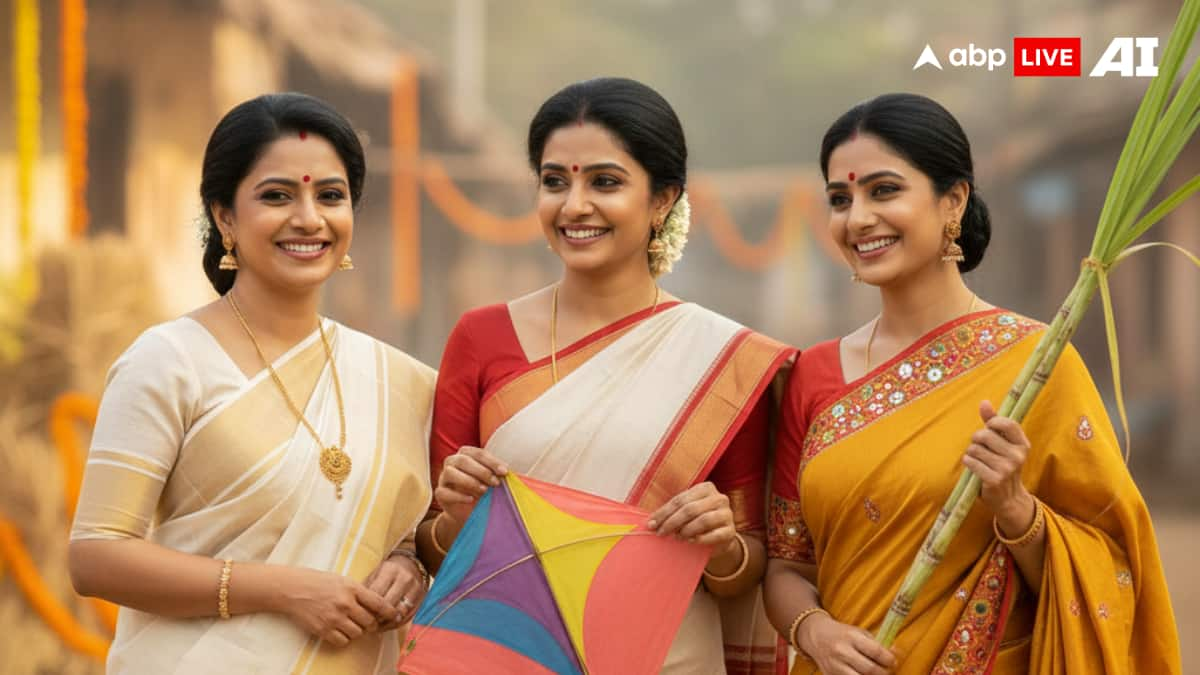
(Mr. Darshan Dudhoria) Across India, harvest season marks a shift that is both cosmic and cultural. Makar Sankranti is among the few festivals that travel seamlessly across the country, unified in spirit yet deeply regional in expression. Known by different names, Pongal in Tamil Nadu, Magh Bihu in Assam, Sankranti in West Bengal, and celebrated alongside Lohri in Punjab, the festival is rooted in gratitude, renewal, and abundance.  While rituals, food, and customs vary across states, what people choose to wear during this time carries deep significance. The saree, worn with intention during harvest celebrations, becomes a reflection of the region it belongs to. Each drape becomes a bridge between contemporary wardrobes and ancestral customs, between modern life and age-old ritual. Its fabric, colour and weave mirror agrarian rhythms, spiritual beliefs and community life, making it as much a cultural marker as a ceremonial garment.  ALSO READ: Happy Makar Sankranti 2026: Share These Heartfelt Messages And Wishes With Your Close Ones Assam: Magh Bihu And The Beauty Of Simplicity (Image Source: Special Arrangement) Magh Bihu marks the close of the harvesting season in Assam and is celebrated with community feasts, bonfires and joy. The sarees worn here are lighter, reflecting the region’s agrarian simplicity and warmth. Soft silks and handwoven drapes dominate, mirroring the understated elegance of Assamese culture. These sarees are meant for movement, gathering and togetherness, celebrating shared abundance. West Bengal: Poush Sankranti And The Handloom Tradition (Image Source: Special Arrangement) In West Bengal, Poush Sankranti unfolds through ritual observances, river-side prayers and village fairs. Handwoven sarees take precedence, carrying the intimacy of craft and the authority of tradition. Worn during early morning pujas or while moving through seasonal melas, these drapes reflect Bengal’s enduring relationship with its weaving heritage, where every motif and texture is deeply interwoven with memory, ritual and place. Gujarat: Uttarayan And The Spirit Of Celebration (Image Source: Special Arrangement) In Gujarat, Makar Sankranti is celebrated as Uttarayan, marked by large-scale kite flying that fills the skies with colour and movement. The festival is social and vibrant, spilling onto terraces and public spaces. Sarees worn during Uttarayan are festive yet practical, chosen for ease of movement while retaining celebratory flair. Bright hues, lightweight fabrics and expressive pallus reflect the energy of the day, blending tradition with the exhilaration of communal celebration. Tamil Nadu: Pongal And tThe Language Of Silk (Image Source: Special Arrangement) In Tamil Nadu, Pongal is both a harvest thanksgiving and a deeply spiritual observance. Homes are cleansed, kolams adorn thresholds, and temples become the centre of community life. Women traditionally wear temple-ready silk sarees, often in auspicious shades, symbolising renewal and abundance. With their luminous texture and ceremonial presence, these silks align seamlessly with the sacred rhythm of the festival Kerala: Makara Vilakku And The Language Of Devotion (Image Source: Special Arrangement) In Kerala, the Sankranti period aligns with Makara Vilakku, associated with the Sabarimala pilgrimage and spiritual observance. Traditional attire during this time is defined by white and off-white drapes, often edged with subtle gold borders, reflecting ideals of purity, restraint and devotion. These understated silks and cottons mirror the discipline of the pilgrimage and the contemplative spirit of the season, reinforcing the sacred undertone that marks Makara Vilakku celebrations. As Makar Sankranti is celebrated across the country, the saree remains a constant. Draped differently in every state and worn for different ceremonies, yet bound by the same spirit of gratitude and renewal, it tells a shared story of India’s harvest. In these threads of silk and handloom lies the essence of the festival itself, diverse, grounded and enduring. Mr. Darshan Dudhoria is the CEO of Indian Silk House Agencies 

Vir Das comments on India's Gen Z; says, 'It is a weird...'

The excitement around Vir Das' forthcoming film 'Happy Patel: Khatarnak Jasoos' is palpable, especially with Aamir Khan lending his support and praising its refreshing take on cultural narratives. In an insightful discussion, Das dives into the spirit of India's vibrant Gen Z, noting their keen self-awareness and strong sense of community.

ABP Live How-To | Someone Deleted A WhatsApp Message? Your Android Phone Might Still Show It

ABP Live Tech How-To: WhatsApp is part of everyday life. We use it for work, family, friends, and everything in between. But one thing always grabs attention: when someone sends a message and quickly deletes it. All you see is “This message was deleted.” That tiny line creates huge curiosity. What did they write? Was it important? Was it about you? Many people don’t know that Android phones already have a hidden setting that can help in such moments.  It’s not a WhatsApp feature, but a phone feature called Notification History. With it turned on, you can often read deleted messages. How To View Deleted WhatsApp Messages On Android To view deleted WhatsApp messages, you first need to turn on Notification History. Go to your phone’s Settings. Tap on Notifications. Inside, look for Advanced or directly Notification History. Turn it on. From now on, every notification your phone receives gets saved. That includes WhatsApp messages. When someone sends you a message, its text appears in the notification. Even if the sender deletes it later, the notification may still be stored. If a message gets deleted, go back to Settings > Notifications > Notification History. Scroll to the time when the message arrived. You will often find the text there. This trick works only for text messages. It won’t show photos, videos, voice notes, or GIFs. Also, if Notification History was off before, old messages cannot be recovered. Limits Of Viewing Deleted WhatsApp Messages This method is useful, but it has limits. If your phone was on silent mode or WhatsApp notifications were off, nothing will be saved. No notification means no record. Long messages may appear cut. You might see only part of the text. Group chats can also make it harder to find the right message among many alerts. This feature is only for Android. iPhone users don’t have this option. It is safe because it uses your phone’s system. No third-party apps are needed. But remember, once Notification History is on, all app notifications get saved. That includes OTPs, emails, and private alerts. So yes, this setting really works, but in a limited way. It’s not magic, just a smart use of what your phone already has.

ABP Live Leaks Before Launch | Samsung Galaxy S26 Series Will Come In February, But What’s The Exact Date? Check New Leak

Samsung Galaxy S26 Leaks: Samsung’s next Galaxy phones may arrive later than usual this year. Reports say the Galaxy S26 series could be announced on February 26, with sales starting from March 11 in some countries. France may get it first, followed by the US, Europe, and Korea. Samsung has not confirmed this yet. If true, this will be the latest Galaxy S launch in years. The delay is said to be due to changes in Samsung’s original plans for the lineup and model names. Samsung Galaxy S26 Series Launch Date & Model Changes The Samsung Galaxy S26 series is expected to have three phones: Galaxy S26, Galaxy S26 Plus, and Galaxy S26 Ultra. Earlier, there were talks about a “Pro” and an “Edge” model. But those ideas were dropped. Samsung is now bringing back the Plus model because the Galaxy S25 Edge did not perform well. This change seems to be one of the reasons behind the delay. Usually, Samsung launches its Galaxy S phones in January. This time, the company may wait until the end of February. For fans who follow Samsung every year, this feels quite late. But the extra time might help Samsung improve the phones and fix earlier plans.  If the reports are right, the Galaxy S26 series will be announced in late February and reach stores in March. Samsung Galaxy S26 Series: Expected Features & Upgrades The Galaxy S26 Ultra is likely to keep the same 5,000mAh battery. But charging could finally get faster. Wireless charging may go up to 25W, and wired charging could reach 60W. The camera setup is expected to stay mostly the same, with a 200MP main camera. The 3x zoom camera may get a small upgrade. The regular Galaxy S26 may have a slightly bigger 6.3-inch screen and a 4,300mAh battery. It is expected to come with three rear cameras and a 12MP front camera. The Galaxy S26 Plus is tipped to have a larger 6.7-inch QHD+ display and a 4,900mAh battery. It will likely use the same cameras as the base model. Samsung may again use both Snapdragon and Exynos chips, depending on the country. Overall, the Samsung Galaxy S26 series looks like a small but steady upgrade, focusing on better charging, improved screens, and smoother performance. If you are interested in more such leaks, we've got you covered! We keep a close eye on every latest Samsung Galaxy S26 leak, so stay tuned to know more.

Makar Sankranti 2025 Dos And Don’ts: Know What Scriptures Advise On This Auspicious Day

Makar Sankranti marks the Sun’s transition into the zodiac sign of Capricorn (Makara) and the shift from Dakshinayan to Uttarayan. Also known as Khichdi Parv in several parts of India, the festival holds special significance for holy bathing, Sun worship, and charity. In 2025, Makar Sankranti will be observed on Wednesday, January 14. According to scriptures, certain rules should be followed on this day. It is believed that mistakes made knowingly or unknowingly on Makar Sankranti may result in unfavourable effects throughout the year. ALSO READ: Magh Bihu 2026: Date, Key Rituals, Significance, And All You Need To Know About This Festival Of Assam Makar Sankranti 2025 Date And Significance The festival symbolises positivity, spiritual growth, and the beginning of auspicious solar movement. Worshipping Surya Dev on this day is believed to bring health, prosperity, and clarity in life. Things To Do And Avoid On This Day Avoid Travelling in the South Direction:Travelling towards the south on Makar Sankranti is considered inauspicious. Since the Sun begins its northward journey (Uttarayan) on this day, travelling south is believed to oppose the Sun’s positive energy. Stay Away From Anger and Falsehood:On Makar Sankranti, individuals are advised to avoid anger, violence, arguments, and negative speech. One should resolve to follow truth and practice patience. It is believed that lying or expressing anger on this day may prevent one from receiving the blessings of Surya Dev. Avoid Tamasik Food and Alcohol:The sacred day of Makar Sankranti calls for purity and sattvik living. Consuming non-vegetarian food, alcohol, or any form of tamasik food is discouraged. Since the festival is associated with Sun worship, maintaining a pure and disciplined lifestyle is considered essential. Do Not Donate Black Sesame Seeds:Sesame seeds hold special importance on Makar Sankranti, which is why the festival is also known as Til Sankranti. However, scriptures advise against donating black sesame seeds on this day. Black sesame is associated with Shani Dev, while Makar Sankranti is dedicated to Surya Dev. Donating black sesame may lead to an unfavourable Sun–Saturn conflict. Follow Ritual Discipline for a Blessed Year:Observing these guidelines with devotion and awareness is believed to ensure peace, prosperity, and spiritual growth throughout the year. Makar Sankranti serves as a reminder to align daily actions with positivity, truth, and discipline. [Disclaimer: The content of this article is based solely on beliefs, and should be taken as general guidance. Individual experiences may vary. ABPLive.com does not assert the accuracy or validity of any claims or information presented. It is strongly recommended to consult a qualified expert before considering or implementing any information or belief discussed herein.]

Trevor Noah bids farewell as Grammys host

Trevor Noah will host the 68th Annual Grammy Awards on February 1, 2026, marking his sixth and final time in the role. Executive producer Ben Winston praised Noah's "spectacular" impact, highlighting his wit and genuine fandom. This finale coincides with CBS airing its last Grammys before the show moves to ABC.

Saudi Arabia weather alert: Temperature to drop −3°C across northern and central regions this weekend

Saudi Arabia will experience a significant cold wave from today through the weekend, with temperatures dropping as low as −3°C in northern and central regions. The cold air will gradually move south, affecting Qassim, Riyadh, and parts of the Eastern Province. The National Centre for Meteorology has urged residents to take precautions, especially overnight, and follow official updates.