Language Settings
Select Website Language
newshunt
newshunt

Filters

Channels
Topics
Other Filters

Virat Kohli's old tweet about Arijit Singh goes viral

Singer Arijit Singh has announced his departure from playback singing to focus on Indian classical music and his own compositions, a decision that has surprised fans and filmmakers. The move has drawn parallels to cricketer Virat Kohli's past retirement, with fans highlighting their shared status at the peak of their careers.

‘I Play Rocky’ opens Thanksgiving 2026

Mark your calendars for 'I Play Rocky,' launching in theaters right before Thanksgiving 2026! This riveting drama celebrates the 50th anniversary of the legendary original film. Directed by Peter Farrelly, it tells the inspiring story of Sylvester Stallone's relentless pursuit to bring his beloved underdog tale to life, showcasing his struggles and undying passion for his craft.

Railway Budget 2026: Why Railways Must Focus On Faster, Reliable Freight

As India looks to lower logistics costs and strengthen manufacturing competitiveness, expectations from Railway allocations in Union Budget 2026 are shifting from headline capital outlays to measurable improvements in freight movement, industry stakeholders said. Budget 2026: What Rail Freight Needs To Deliver Nikhil Agarwal, President, CJ Darcl Logistics Ltd, said Budget 2026 must ensure that railway spending delivers tangible outcomes in terms of speed, reliability and efficiency of freight services. "As India pushes toward lower logistics costs and stronger manufacturing competitiveness, Budget 2026 must ensure that railway allocations translate into measurable improvements in freight movement not just higher capital outlay," Agarwal said. The first priority should be faster execution and better utilisation of Dedicated Freight Corridors (DFCs), he added. According to him, while core corridors are progressing, congestion at terminals and poor last-mile rail connectivity continue to slow freight evacuation. "Budget support should focus on feeder routes, terminal upgrades, and smoother integration with industrial clusters. Terminal efficiency remains a critical bottleneck. Investments in mechanised handling, longer sidings, private freight terminals, and digital yard operations can significantly reduce dwell time and improve wagon productivity," Agarwal said. Service reliability is equally important, according to Agarwal. "For rail to attract time-sensitive cargo, freight customers need predictable transit timelines. Budget-linked incentives for scheduled freight services, guaranteed delivery windows, and performance-based accountability can help railways shift from a volume-driven to a service-oriented model," he added. "Technology-led transparency must be strengthened through real-time train tracking, predictive ETAs, and integrated digital platforms for bookings and documentation, improving both customer confidence and network planning," he said. "Finally, multimodal integration and sustainability should be core outcomes. Targeted investments in rail-linked logistics parks, port connectivity, and incentives for modal shift from road to rail can reduce congestion, emissions, and overall logistics costs," Agarwal added. Budget 2026 should ensure railway spending delivers outcomes businesses can rely on faster movement, predictable timelines, and a more efficient freight ecosystem, he added. From Capital Outlay To Freight Outcomes Industry experts say that while progress on Dedicated Freight Corridors has improved capacity on core routes, bottlenecks at terminals and weak last-mile connectivity continue to limit the benefits. Budgetary focus, they argue, should shift towards feeder routes, terminal modernisation and better integration of rail infrastructure with industrial clusters. Improving terminal efficiency through mechanised cargo handling, longer sidings, private freight terminals and digitised yard operations could significantly cut turnaround time and raise wagon productivity, according to logistics players. Reliability And Technology Key To Modal Shift For railways to attract time-sensitive and high-value cargo, service predictability has become critical. Industry stakeholders are calling for incentives linked to scheduled freight services, assured delivery timelines and performance-based accountability to help railways transition from a volume-led to a service-driven freight model. Greater use of technology, such as real-time train tracking, predictive estimated time of arrival (ETA) systems and integrated digital platforms for bookings and documentation, is also seen as essential to improving transparency, customer confidence and network planning. Capex Push And Advanced Infrastructure These expectations align with broader fiscal priorities outlined in the latest EY Economy Watch report, which said Budget 2026 should look at increasing the share of capital expenditure in total government spending, with a sharper focus on advanced infrastructure and technology-led sectors. While EY noted that the scope for additional tax reforms in personal income tax and GST may be limited, it expects the fiscal deficit target of 4.4 per cent of GDP in FY26 to be achieved despite revenue shortfalls. The report recommended continuing fiscal consolidation, targeting a fiscal deficit of 4 per cent of GDP in FY27, to create room for private investment. The report added that while expansion of physical infrastructure may face constraints, there remains significant scope for higher capital spending in defence and advanced technology segments, where upfront costs are large. It also highlighted the need for public infrastructure support to enable private sector participation in emerging technology areas. Railways And Multimodal Integration For the railways, experts say this approach reinforces the need to prioritise multimodal logistics parks, port connectivity and incentives that encourage a shift of freight from road to rail. Such measures can help reduce congestion, emissions and overall logistics costs, while improving the reliability of supply chains. As Budget 2026 approaches, industry voices are clear that railway allocations must move beyond headline spending figures and deliver freight systems businesses can depend on, faster movement, predictable timelines and a more efficient logistics ecosystem.

Budget Day Trading: Why Markets Will Be Open This Sunday

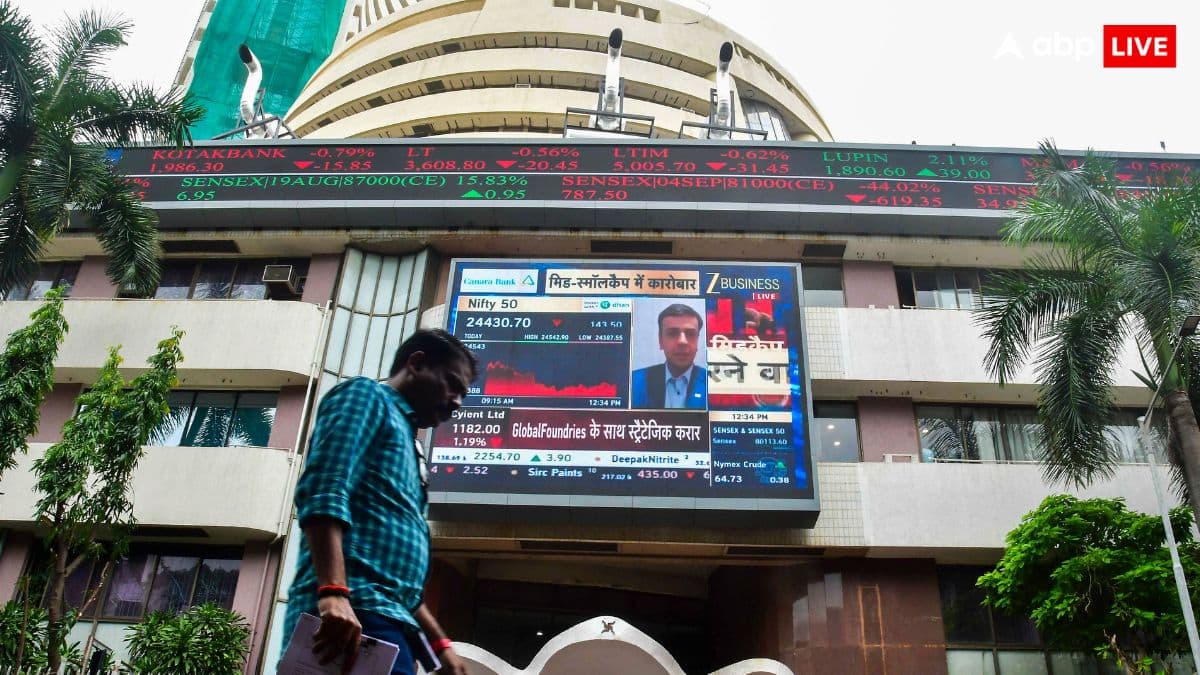
Each year, the presentation of the Union Budget raises a familiar question among investors and traders: why does the stock market open even when Budget Day falls on a weekend? In 2026, that question is especially relevant as the Budget is scheduled for Sunday, February 1. Despite it being a non-working day, Indian stock markets will remain open on February 1, 2026. The National Stock Exchange (NSE) and the Bombay Stock Exchange (BSE) have announced a special trading session to coincide with the presentation of the Union Budget. Why A Sunday Trading Session Is Necessary The Union Budget is one of the most closely watched economic events of the year, outlining the government’s plans on taxation, spending, fiscal discipline and economic growth. These decisions have an immediate and direct impact on companies, sectors and overall market sentiment. Keeping markets open on a Sunday ensures that investors can respond to Budget announcements in real time. If trading were deferred to the next working day, reactions would be delayed, uncertainty would build, and volatility could intensify once markets reopened. An open market on Budget Day allows for smooth absorption of information and transparent price discovery. Special Trading Session On February 1 Although February 1, 2026 falls on a Sunday, trading will take place through a special session announced by the exchanges. Market timings are expected to follow regular hours, with trading scheduled from 9:15 am to 3:30 pm. All major segments will remain operational during the session, including equities, derivatives such as futures and options, currency derivatives and the commodity market, including MCX. This ensures uninterrupted access across markets despite the weekend. How Budget Announcements Move Markets Stock markets are forward-looking and react to expectations about future growth and profitability. Budget proposals influence these expectations through tax changes, government spending priorities, subsidy allocations and fiscal deficit targets. Market movements on Budget Day are shaped not just by what is announced, but by how those announcements compare with expectations. Even a budget viewed as positive can trigger short-term selling if it falls short of market hopes, contributing to sharp intra-day swings. What Investors Should Focus On Instead of reacting to immediate headlines, investors typically track specific policy signals. Changes in personal and corporate tax rates affect consumption and earnings, while capital expenditure allocations indicate long-term growth intent. Fiscal deficit targets influence interest rates and bond yields. Sector-specific incentives, subsidies and capital market-related proposals, including any changes to securities taxes or compliance norms, also tend to drive stock-specific movements. Volatility Is A Normal Feature Budget Day is usually among the most volatile sessions of the year. Markets often react sharply during and immediately after the finance minister’s speech as traders respond to headline announcements. Some early moves may reverse once the finer details are analysed, with clearer trends emerging over subsequent sessions. Heightened volatility on Budget Day is therefore expected, especially during a special Sunday session. Should Investors Trade On A Budget Sunday? Trading on Budget Day carries higher risk due to sudden price swings. While short-term traders may find opportunities, reversals are common. Long-term investors generally focus on how policy changes affect business fundamentals rather than reacting instantly to announcements. Maintaining discipline and avoiding emotional decisions is particularly important during such sessions. The Bottom Line Indian stock markets will be open on Sunday, February 1, 2026, because of a special trading session announced by the NSE and BSE to coincide with the Union Budget. Trading will take place across all major segments during normal market hours. The decision to open markets on a Sunday reflects the importance of the Budget and the need for real-time price discovery. Investors who remain focused on fundamentals and long-term implications are better equipped to navigate the volatility that typically accompanies Budget Day.

December IIP Data: Industrial Output Hits Highest Level In Over Two Years

India’s industrial production surged by 7.8 per cent in December 2025, reaching its highest level in over 2 years, driven by a robust across-the-board growth in the manufacturing, mining, and electricity sectors, according to figures released by the Ministry of Statistics on Wednesday. This was the second consecutive month of strong year-on-year growth in the country’s index of industrial production (IIP) as it came on the back of a 7.2 per cent acceleration in November 2025. The manufacturing sector recorded an 8.1 per cent growth in December, with 16 out of 23 industry groups recording a positive growth during the month. The top three contributors include the manufacture of basic metals, motor vehicles, pharmaceuticals, and chemicals. In the industry group "Manufacture of basic metals", "Flat products of Alloy Steel", "MS slabs", and "Pipes and tubes of Steel" have shown significant contribution to overall growth. In the industry group "Manufacture of pharmaceuticals, medicinal chemical, and botanical products", item groups "Vaccine for veterinary medicine", "Digestive enzymes and antacids, API & formulations of vitamins" have shown a significant contribution to growth. The mining sector has bounced back with a growth of 6.8 per cent in December compared to the same month of the previous year, while the electricity sector also recorded a strong growth of 6.3 per cent. The figures on use-based classification show that the production of capital goods, which comprise machines used in factories, shot up by 8.1 per cent over the same month of the previous year. This segment reflects the real investment taking place in the economy, which has a multiplier effect on the creation of jobs and incomes going ahead. The consumer durables sector, comprising white goods such as refrigerators, TV sets and washing machines, also recorded a double-digit growth of 12.3 per cent while non-durable goods such as soaps, cosmetics and processed foods clocked a robust 8.3 per cent growth during the month. The increase reflects the rising demand following the GST rate cuts, which have led to an increase in demand for consumer goods. The infrastructure and construction sector clocked a strong 12.1 per cent growth during the month compared to the same month of the previous year on the back of big-ticket government projects being implemented in the highways, railways, and ports sectors. (Disclaimer: This report has been published as part of the auto-generated syndicate wire feed. Apart from the headline, no editing has been done in the copy by ABP Live.)

From Kobe to entire team: Remembering air tragedies in sports history

The death of Maharashtra Deputy Chief Minister Ajit Pawar in a plane crash deeply shocked India, drawing tributes from leading athletes and administrators. His passing revived memories of devastating air disasters that have scarred the sporting world, including the Munich Air Tragedy, Kobe Bryant’s crash, Chapecoense’s fatal flight, the Andes disaster, Emiliano Sala’s death, the Leicester City helicopter crash, and the 1993 Zambian team tragedy.