Language Settings
Select Website Language
newshunt
newshunt

Filters

Channels
Topics
Other Filters

This shouldn’t be real: Paralysed patients play video games just by thinking after Neuralink transplant

Paralysed individuals are now playing video games using only their thoughts, thanks to Neuralink's brain-computer interface. This groundbreaking technology, implanted in patients with severe paralysis, translates neural signals into digital commands, restoring interaction and independence. Early trials show patients navigating the web and engaging in fast-paced games, marking a significant step towards regaining control and connection.

Trump’s Warning To Canada Falls Flat As UK Strikes Major Deal With China

Britain has moved forward with a major agreement with China even as US President Donald Trump issued sharp warnings to Canada over engaging with Beijing. Prime Minister Keir Starmer met Chinese President Xi Jinping and Premier Li Qiang in Beijing on January 29, marking a significant step in resetting UK-China relations after years of strain. The talks focused on boosting trade, easing travel and expanding cooperation, underlining London’s intent to pursue economic growth through global engagement despite rising geopolitical tensions among Western allies. During his Beijing visit, Starmer confirmed a series of measures aimed at strengthening bilateral ties. China agreed to allow visa-free entry for British citizens travelling for tourism or business for up to 30 days, while both sides moved towards reducing export duties on Scotch whisky-a key British industry. The UK and China also signalled readiness to launch their first joint law enforcement operation, reflecting deeper cooperation beyond trade. Starmer said growth at home is directly linked to engagement with the world’s major powers and stressed that Britain would pursue a long-term strategic partnership with China, while maintaining open dialogue on areas of disagreement. The British government said the agreements are intended to revive people-to-people links and expand commercial opportunities, following several years of diplomatic friction. Trump Targets Canada As Allies Diverge 0n China The UK’s move comes as President Trump warned Canada against drifting closer to Beijing. Last week, Trump said China would “swallow” Canada if Ottawa refused to align with Washington, and threatened steep tariffs on Canadian goods should any deal with China materialise. In a social media post, Trump criticised Canada for opposing the proposed “Golden Dome” defence initiative, which he claimed would protect the country, while supporting trade ties with China. He warned that such alignment could leave Canada vulnerable within a year. So far, Canadian Prime Minister Mark Carney has not announced any agreement with Beijing. However, Britain’s decision to press ahead highlights growing differences among Western partners over how to engage with China. Analysts say the UK’s approach reflects a pragmatic push to revive economic growth through trade and tourism, even as security concerns continue to shape relations between Washington and Beijing. The developments also underscore a shifting diplomatic landscape, with allies increasingly charting independent paths in dealing with China.

ABP Live Deep Dive | Why Andhra Pradesh & Goa Are Eyeing An Australia-Style Social Media Ban For Under-16 Children

ABP Live Deep Dive: Australia has already enforced a ban on social media for children under 16. In India, a similar conversation has begun at the state level. Andhra Pradesh became the first state to formally examine such a move. Soon after, Goa announced that it is also studying Australia’s model. Both states are looking at ways to restrict minors’ access to major platforms and reduce online risks.  While there is no national policy yet, these developments show how global actions are shaping local debates on children and social media in India. Australia's Social Media Ban For Under-16 Australia has implemented a law that stops children under 16 from using major social media platforms. The rule applies to companies like Meta’s Instagram, ByteDance’s TikTok, Alphabet’s YouTube, Elon Musk’s X, and Reddit. Under the Online Safety Amendment Act, these platforms must verify a user’s age. Methods can include facial estimation through selfies, uploaded identity documents, or bank-linked details. The responsibility lies with the tech companies, not with parents or children. If a company fails to take “reasonable steps” to comply, it can face a fine of up to 49.5 million Australian dollars, which is about $32 million. The law is aimed at reducing risks linked to social media use among teenagers. It focuses on issues such as sleep disruption, stress, and the impact of algorithm-driven content on young users. Since the ban came into effect, some teenagers have reported changes in their daily routines, while others have tried to find ways around the system. The law remains in force, making Australia the first major country to place such restrictions on social media use by minors. Why Andhra Pradesh Is Planning A Social Media Ban Andhra Pradesh is the first Indian state to seriously consider banning social media for children below 16. The state government has formed a Group of Ministers (GoM) to study the issue. The GoM is headed by IT and Electronics Minister Nara Lokesh and includes Home Minister V Anitha, Housing Minister K Partha Sarathi, Health Minister Satya Kumar Yadav, and Civil Supplies Minister N Manohar. Officials have studied global models and prepared a note for discussion. The note lists possible benefits such as increased attention span and better physical interaction with peers. It also flags a concern called the “digital cliff,” which refers to the emotional and social impact of entering social media suddenly at the age of 16. The GoM was formed in October after morphed obscene images of women related to leaders of the ruling Telugu Desam Party were circulated online. This led to a crackdown on social media activists linked to the opposition YSR Congress Party. After Australia introduced its ban, the scope of the GoM was expanded. The aim is to protect minors from online harm, cyberbullying, and addictive algorithms. Apart from a possible age-based ban, Andhra Pradesh is considering several regulatory steps. These include setting up a State Social Media Coordination Cell, appointing a nodal officer to handle complaints, creating a system to route blocking requests to the central government, and forming an oversight mechanism to review platform responses and corrective action. Why Goa Is Studying A Similar Social Media Ban Goa has also started examining the idea of banning social media for children under 16. The state’s Information Technology Minister, Rohan Khaunte, confirmed that Goa is studying Australia’s law. Goa is among the top markets for global tech platforms despite being India’s smallest state by area. Officials are reviewing how minors access social media and what regulatory options exist. Khaunte said the state is looking at how Australia regulates minors’ access and whether a similar system can be implemented in Goa. “If possible, we will implement a similar ban on children below 16 for usage of social media,” he told reporters. India has more than a billion internet users and a large number of users under 18. There are no national restrictions on children using social media, and there are no signs of a countrywide ban at present. Goa’s move follows Andhra Pradesh’s announcement. The state is now studying age verification systems and platform responsibility models used in Australia. India’s IT ministry has not issued a response to queries about these state-level plans. Companies such as Google and X have also not commented publicly on the proposals. With both Andhra Pradesh and Goa examining similar measures, the issue of regulating minors’ access to social media is now being discussed at the state level in India.

Redmi Note 15 Pro Series Debuts With Bigger Batteries, Premium Pricing

After introducing the sub-Rs 25,000 Redmi Note 15 earlier this month, Xiaomi has expanded the lineup in India with the launch of the Redmi Note 15 Pro and Redmi Note 15 Pro+. Positioned higher in the mid-range segment, the new models offer upgraded hardware and premium features, along with a noticeable price hike over the base variant. Starting at Rs 29,999, the Redmi Note 15 Pro series is the most expensive Note lineup Xiaomi has introduced in India so far. The increase is accompanied by headline upgrades such as a 200MP primary camera, significantly larger batteries, and fast-charging support of up to 100W. Redmi Note 15 Pro Series: Price, Offers And Availability The Redmi Note 15 Pro is priced at Rs 29,999 for the 8GB RAM + 128GB storage variant, while the 8GB + 256GB option costs Rs 31,999. The Redmi Note 15 Pro+ starts at Rs 37,999 for the 8GB + 256GB configuration. Xiaomi has also announced 12GB + 256GB and 12GB + 512GB variants of the Pro+, priced at Rs 39,999 and Rs 43,999, respectively. This is the first time a Redmi Note smartphone has crossed the Rs 40,000 mark in India, a move Xiaomi attributes to the ongoing global memory chip shortage. As part of launch offers, buyers can avail an instant discount of up to Rs 3,000 using HDFC Bank credit cards or credit card EMIs, bringing the effective starting prices down to Rs 26,999 for the Note 15 Pro and Rs 34,999 for the Note 15 Pro+. Pre-bookings are now open on Amazon for Rs 1,999. The amount will be credited as Amazon Pay balance and can be used during the purchase window on February 3 between 10 am and 11:59 pm. Open sales begin on February 4. Customers who pre-book either phone will receive a one-year screen replacement. In addition, pre-bookers of the Redmi Note 15 Pro+ will get the Redmi Watch Move at no extra cost. In terms of colour options, the Note 15 Pro+ will be available in Coffee Mocha, Mirage Blue and Carbon Black. The Note 15 Pro comes in Silver Ash, Mirage Blue and Carbon Black. Larger Batteries, Faster Charging Battery capacity is a major highlight of the Redmi Note 15 Pro series. The Note 15 Pro packs a 6,580mAh battery, while the Note 15 Pro+ features a 6,500mAh unit, both among the largest seen on a Redmi Note device. Charging speeds, however, differ. The Note 15 Pro+ supports 100W HyperCharge, with the charger included in the box. The Note 15 Pro tops out at 45W fast charging. Despite the increase in battery size, both phones are slimmer than their predecessors. The Redmi Note 15 Pro measures 7.96mm in thickness, compared to 8.4mm on the Note 14 Pro. The Mocha Brown leather variant of the Note 15 Pro+ measures 8.47mm, down from 8.85mm on the previous generation. The phones are marginally heavier than before. Durability And Design Upgrades Xiaomi is positioning durability as a key differentiator this year. Both models feature Gorilla Glass Victus 2 protection on the front and carry IP66, IP68, IP69 and IP69K ratings for dust and water resistance. The IP69K rating offers protection against high-pressure, high-temperature water jets, placing the phones among the most rugged in their segment. Design-wise, the Redmi Note 15 Pro features a flat display with a glass back, while the Note 15 Pro+ adopts a curved front and rear design, with an optional Coffee Mocha leather finish. 200MP Camera Takes Centre Stage The camera setup has been refreshed across the lineup. Both phones feature a new 200MP Samsung ISOCELL HP3 primary sensor, which Xiaomi claims enables sharper images and supports 2x and 4x optical-level zoom. This is also intended to offset the removal of the telephoto camera on the Note 15 Pro+. Both devices include an 8MP ultra-wide camera. On the front, the Redmi Note 15 Pro gets a 20MP selfie camera, while the Note 15 Pro+ upgrades to a 32MP sensor, compared to the 20MP unit on the previous Pro+ model. Performance, Display And Audio Performance duties are handled by different chipsets across the two models. The Redmi Note 15 Pro+ is powered by the Snapdragon 7s Gen 4, while the Redmi Note 15 Pro runs on the MediaTek Dimensity 7400-Ultra. Both are 4nm processors and successors to the chips used in the Note 14 Pro series. The display experience remains identical on both devices. Xiaomi has equipped them with a 6.83-inch CrystalRes AMOLED panel with 1.5K resolution (2772 x 1280), a 120Hz refresh rate, and up to 3,200 nits peak brightness. The screen supports HDR10+ and Dolby Vision, offers DCI-P3 wide colour gamut, 12-bit colour depth and 3,840Hz PWM dimming. Audio is handled by dual stereo speakers with a claimed 400% volume boost, along with support for Dolby Atmos and Hi-Res audio. Software Support And Competition The Redmi Note 15 Pro series ships with HyperOS 2.0 based on Android 15. Xiaomi has confirmed that HyperOS 3.0 will roll out in the future and that both devices will receive four years of major Android updates and six years of security patches. In the market, the Redmi Note 15 Pro and Pro+ compete directly with the Realme 16 Pro and Realme 16 Pro+ in the Rs 35,000 to Rs 45,000 segment. While both lineups offer 200MP cameras and IP69K durability, Realme’s phones feature larger 7,000mAh batteries, 144Hz displays and higher-resolution 50MP front cameras. On paper, Xiaomi’s latest Note phones are aimed at users seeking large displays, strong durability and dependable battery life. Existing Redmi Note 14 Pro users may find the camera upgrades, battery improvements and extended software support appealing, though performance gains appear incremental. Ultimately, the choice between the two Redmi models comes down to a preference for flat versus curved design.

India Energy Week: Union Minister Hardeep Singh Puri Calls For Sustained Investment

India Energy Week 2026 commenced with a strong focus on sustained investment, global collaboration and pragmatic action to navigate the energy transition amid volatility in global markets. The inaugural session brought together key global and Indian leaders, including Union Minister for Petroleum and Natural Gas Hardeep Singh Puri; Sultan Ahmed Al Jaber, UAE Minister of Industry and Advanced Technology and Managing Director and Group CEO of ADNOC; and Goa Chief Minister Pramod Sawant. Energy Transition Must Be About Addition, Not Replacement: Puri Addressing the gathering, Hardeep Singh Puri highlighted India’s steady progress towards energy security, self-reliance and climate justice under the leadership of Prime Minister Narendra Modi. He said India Energy Week has rapidly emerged as a trusted global platform bringing together policymakers, producers, consumers, investors and technology providers. Leadership engagements continued on Day 3 of India Energy Week 2026 with Hon’ble Shri Hardeep Singh Puri, Union Minister of Petroleum and Natural Gas, Government of India.The Hon’ble Minister interacted across the exhibition floor, as discussions reflected growing confidence in… pic.twitter.com/4hAcq4utYS — IndiaEnergyWeek (@IndiaEnergyWeek) January 29, 2026 The Union Minister emphasised that the global energy transition must be viewed as energy addition rather than replacement, calling for continued investment across oil, gas, biofuels, green hydrogen, LNG and clean cooking fuels. He outlined India’s reforms-led approach, citing the opening up of sedimentary basins for exploration, successive Open Acreage Licensing Policy (OALP) and Discovered Small Fields (DSF) bidding rounds, and policy measures aimed at attracting long-term global investment. Underinvestment Biggest Threat to Energy Security: Al Jaber UAE Minister Sultan Ahmed Al Jaber said global energy demand is entering a phase of large-scale transformation driven by emerging economies, digitalisation and integrated energy systems. He cautioned that underinvestment poses the greatest risk to energy security and stressed the need for balanced investment across all energy sources to ensure affordability and sustainability. Highlighting the UAE–India partnership, Al Jaber reaffirmed ADNOC’s role as a reliable supplier of crude oil, LNG and LPG to India, and reiterated the UAE’s commitment to long-term, trust-based cooperation. Goa’s Sustainability Vision Highlighted Welcoming delegates, Chief Minister Pramod Sawant said India Energy Week has evolved into a platform that translates dialogue into action. He outlined Goa’s sustainability roadmap, including its goal of achieving 100 per cent renewable energy by 2050, while balancing environmental priorities with the responsible development of the blue economy. Leadership Engagements Continue on Day 3 Leadership engagements continued on Day 3 of India Energy Week 2026, with Hardeep Singh Puri interacting across the exhibition floor. Discussions reflected growing confidence in India’s energy journey, with a strong focus on exploration and production, technology-led capability building and long-term energy security. India Energy Week 2026 continues to highlight how policy reforms, innovation and self-reliance are shaping the next phase of India’s energy transformation, reinforcing the country’s positioning as a responsible and credible global energy leader.

Serena Williams could return to WTA Tour later this year

Tennis world buzzes with excitement over Serena Williams' potential WTA Tour return later this year. After officially retiring in September 2022, speculation intensified following reports of her re-entry into the testing pool. Fellow players like Elina Svitolina and Aryna Sabalenka expressed enthusiasm for the legendary champion's comeback.

Are you being brainwashed? Eerie truth behind viral ‘hidden messages’ in sound and why you hear them

Clips of thin, whistling tones are going viral on social media, startling listeners who suddenly “hear” hidden words. The sound itself doesn’t change; once listeners know the sentence, their brains impose meaning, transforming whistles into intelligible speech. Known as sine-wave speech (SWS), the phenomenon shows how perception, expectation, and auditory priming shape what we hear, not secret messages or conspiracies.

India Energy Week 2026: Indian Oil Eyes Cost-Effective Hydrogen For Future Fuels

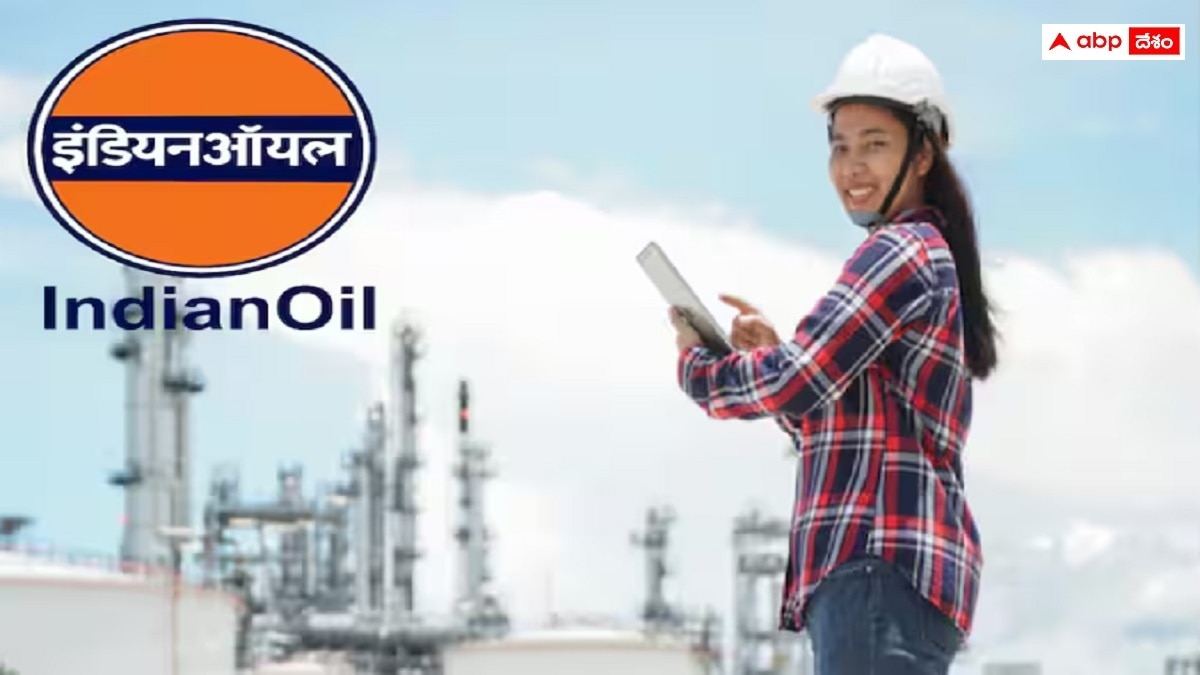
Indian Oil Corporation Limited (IOCL) is focusing on large-scale hydrogen production as part of its long-term energy transition strategy, Saurabh Dutt, Executive Director (Corporate Communications & Branding), Indian Oil, said at India Energy Week 2026. In an exclusive interaction with Oneindia, Dutt outlined Indian Oil’s plans for commercial hydrogen production, cost targets and its broader roadmap for fuels of the future. Driving Down Hydrogen Costs Key Priority Highlighting the central challenge in hydrogen adoption, Dutt said affordability would determine its viability as a mainstream fuel. “We are working very hard to create the fuel of the future, hydrogen, at commercially viable rates, so that our transition from conventional fuel is smooth, affordable, and accessible, while meeting the energy needs of the nation. We are working very seriously towards hydrogen, and the key challenge is bringing down the cost. Today, the cost must come down to levels of Rs 200 per kg or below to make it viable. That is our effort. Though we have made a beginning, this year at our stall we are showcasing our efforts towards hydrogen,” he told Oneindia. Indian Oil’s Expanding Role In The Energy Mix Dutt said Indian Oil currently contributes about 9 per cent of India’s total energy consumption and aims to increase this to 12 per cent in the coming years. “IndianOil contributes about 9 per cent of the total energy of this country today. Our aim is to take this up to 12 per cent in the next few years,” he said, adding that the company remains the country’s largest supplier of conventional fuels. Beyond traditional fuels, Indian Oil has a significant presence in natural gas as the second-largest player and is actively involved in ethanol blending, petrochemicals, explosives and cryogenics. “We operate across the entire spectrum of energy requirements,” Dutt said. India Energy Week 2026 In Goa India Energy Week 2026 began in Goa on Tuesday, January 27, with the event expected to host over 75,000 energy professionals from more than 120 countries. Now in its fourth year as an annual platform, the event has expanded significantly, featuring 700 exhibiting companies, 10 dedicated country pavilions and 11 thematic zones. More than 550 global speakers are scheduled to participate across over 110 strategic and technical sessions.