Language Settings
Select Website Language
newshunt
newshunt

Filters

Channels
Topics
Other Filters

ABP Live IPL Pulse: Rajasthan Royals Reason Behind Delay In IPL 2026 Schedule

Indian Premier League (IPL) 2026 Schedule: The release of IPL 2026 schedule has faced an unexpected roadblock due to growing uncertainty surrounding the Sawai Mansingh Stadium (SMS) in Jaipur. Rajasthan Royals (RR) have reportedly expressed hesitation regarding hosting their home games at the venue, citing critical safety and facility concerns. RR's Safety Audit Concerns A comprehensive 700-page audit by Tata Projects flagged several issues. In light of the recent Bengaluru stampede, RR is prioritizing fan safety and has requested an indemnity waiver from Rajasthan State Sports Council (RSSC) to proceed with matches in Jaipur. BCCI's Stance: Sources within BCCI have supported the franchise's concerns, stating that the Sawai Mansingh Stadium "significantly lags behind" other modern IPL venues. The board emphasized that fan experience, security protocols, and basic comfort are non-negotiable for the tournament. RSSC Rebuttal: Rajasthan State Sports Council has dismissed most of the audit's findings, claiming the stadium is ready for IPL 2026 season barring minor repairs. This tussle between RR franchise, the state council, and the audit reports has delayed the finalization of Indian Premier League (IPL) 2026 schedule, as BCCI remains cautious about approving a venue with flagged safety risks. Rajasthan Royals are reportedly scouting for potential alternative home grounds while the standoff continues, ensuring they have a contingency plan if the Jaipur venue is deemed unfit. IPL 2026: Reported Start and Final Dates Based on multiple reports and BCCI briefings provided to franchises, IPL 2026 season is set to run from March 26 to May 31, 2026. This 19th edition will feature 84 matches, following an expansion in the tournament's window to accommodate the growing number of fixtures. While the window is confirmed, the full IPL schedule is currently on hold. BCCI is awaiting the official announcement of assembly election dates in states like West Bengal and Tamil Nadu to avoid security conflicts. Also, the board is finalizing venue shifts for teams like Rajasthan Royals and Royal Challengers Bengaluru due to local stadium concerns.

US Deploys Over 50 Fighter Jets To Middle East As Nuclear Talks With Iran Resume

The United States has significantly expanded its military footprint in the Middle East, moving more than 50 fighter jets into the region within 24 hours even as diplomatic efforts with Iran over its nuclear program continue in Geneva. According to Axios, which first reported the development, a U.S. official confirmed the rapid aircraft deployment. Aviation observers tracking military movements independently identified multiple advanced jets — including F-22s, F-35s, and F-16s — arriving alongside aerial refueling tankers, signaling readiness for sustained missions. Second Carrier Strike Group Heads Toward Region Alongside the air buildup, the USS Gerald R. Ford carrier strike group has departed the Caribbean and is crossing the Atlantic en route to the Middle East, according to a Navy official who spoke to the Associated Press on condition of anonymity due to operational sensitivities. The carrier is accompanied by three guided-missile destroyers — the USS Mahan, the USS Bainbridge, and the USS Winston Churchill. Based on its current trajectory, the strike group is expected to arrive near Iranian waters in over a week. The USS Abraham Lincoln and other American forces were already operating in the region earlier this year, reflecting a sustained buildup. Khamenei Issues Stark Warning As Washington reinforced its presence, Iran’s Supreme Leader Ayatollah Ali Khamenei delivered a pointed message directed at U.S. President Donald Trump during a speech in Tehran. Responding to repeated American assertions of military dominance, Khamenei said that even the strongest military power could be hit so forcefully that it might not recover, reported News18. Referring to the growing U.S. naval presence, he warned that while warships are formidable, what is more dangerous is the weapon capable of sending those warships to the bottom of the sea. He also rejected decades of U.S. efforts to pressure Tehran, arguing that Washington had failed to dismantle the Islamic Republic and would not succeed. Strait Of Hormuz Drills Raise Stakes Tensions escalated further when Iran announced the temporary closure of the Strait of Hormuz for live-fire military exercises. State media reported missile launches conducted during drills framed as necessary for “safety and maritime concerns.” The waterway is a critical artery for global energy markets, with roughly one-fifth of the world’s oil passing through it. While Iran has previously staged exercises in the area, publicly declaring a closure represents a sharper escalation amid the current standoff. Despite the visible military maneuvers, both sides signaled cautious optimism following talks in Geneva. U.S. officials said the discussions “made progress,” though key differences remain unresolved.

Nissan Gravite Vs Renault Triber: Design Updates And Rs 10,000 Price Advantage

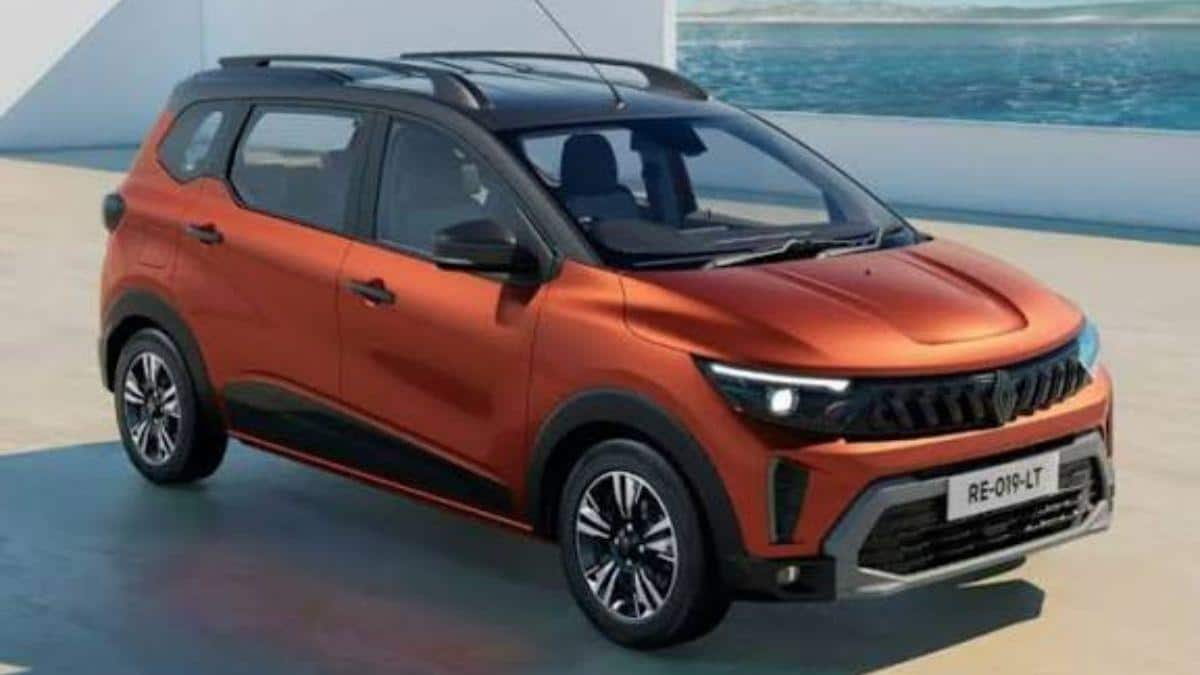
The Nissan Gravite and the Renault Triber are of course similar in many aspects but here we will talk about the differences. The major changes are some of the styling differences inside out. The biggest difference is the front end which has a different look with a new DRL lighting signature, new grille and large lettering on the bonnet plus a new bumper along with c shaped elements at the front and rear. The wheels are also different in design. The rear styling also has similar changes but less apparent while it's less distinctive than the front in terms of the changes vs the Triber. One more difference is the colour options where the Gravite differs with options such as Forest Green, Onyx Black, Blade Silver, Metallic Grey and Snow White. The interiors are largely the same save for the Nissan logo and some small changes owing to the upholstery. The seating configuration is the same and like the Triber, the Gravite has good space for something under 4m while the third row is small but for its size is surprisingly decent. Luggage space with all rows up is less of course. Engine and Pricing Difference The engine is also shared with the Triber which is a 1.0 NA petrol with a 5 speed manual gearbox and an AMT. Finally the biggest change is also the price as the Gravite is cheaper than the Triber to the tune of more than Rs 10,000. The Gravite then has some styling changes and importantly is cheaper than the Triber.

Scientists warn melting ice could release 5,000-year-old superbug that resists 10 modern antibiotics

Romanian scientists have revived a 5,000-year-old bacterium, Psychrobacter SC65A.3, from Scărișoara Ice Cave, revealing resistance to 10 modern antibiotics. The discovery highlights natural, ancient origins of antibiotic resistance and warns that melting ice could release genes into contemporary bacteria. At the same time, these cold-adapted microbes hold potential for new antibiotics, enzymes, and biotechnological innovations, underscoring both risk and opportunity.

Why Australia is spreading sheep’s wool on barren land to save soil

Australian farmers are finding a new use for surplus sheep's wool. This low-value wool is now being spread on drought-hit fields. It helps soil retain moisture and rebuilds its structure. This approach is showing measurable gains in soil health. It also creates new markets for wool and supports rural jobs. This innovative practice is gaining attention globally.

Nissan Gravite Launched And Claims To Be The Most Affordable MPV To Run 

Nissan has unveiled the new Gravite compact MPV. It is a sub 4m MPV and claims to be the most affordable MPV with a 40 paise per km cost.  Nissan Gravite Features The Gravite is Nissan's version of the Triber and comes with different styling to mark it out.  There is a different grille and new look bumper plus large Gravite lettering on the bonnet like the upcoming Tekton.  The Gravite is launched at Rs 5.65 lakh.  Inside, it gets a decent sized touchscreen and features like cruise control and cooled glove box plus front/rear sensors, wireless charging, walk away lock and approach unlock plus rain sensing wipers and more.  Six airbags are standard on the car along with more safety features.  The engine is a 1.0l NA petrol and comes with AMT and manual gearbox.  The AMT is more fuel efficient at 19.6 kmpl while the manual is less efficient at 19.3 kmpl.  The Gravite will be one of the three launches of this year and will be followed by the Tekton and a 7 seater SUV.  The pricing and the features makes this the most affordable MPV right now and also a car with proper three row seating.  Nissan will also bolster the dealer network for this car going forward.  The Gravite will compete the Renault Triber obviously and the Maruti Suzuki Ertiga to some extent.

Ramadan 2026 Moon Sighted In Saudi Arabia, Here's When Holy Month Will Commence In India

Ramadan, the ninth month of the Islamic lunar calendar (Hijri), has been marked by crescent moon sightings in parts of the Gulf, signalling the beginning of the holy month in the region. The observance, also known as Ramzan, Ramzaan or Ramazan, begins with the sighting of the “Hilal” (crescent moon) and ushers in a period of fasting, prayer and reflection for Muslims worldwide. Moon Sighting Timeline The crescent moon was expected to be visible in Gulf countries such as Saudi Arabia and the UAE on Tuesday, February 17, at around 6:20 PM local time. In India, the Hilal is anticipated to be sighted on Wednesday, February 18, between 6:15 PM and 6:45 PM, which would determine the start of Ramadan in the country. Typically, Gulf nations announce the beginning of Ramadan a day before India, in line with regional moon sighting traditions. Announcements From Other Countries In the Philippines, the National Commission on Muslim Filipinos (NCMF) declared that Ramadan will begin on February 19 after confirming that the crescent moon was not sighted. In its official statement, the Commission said: “As the national government agency tasked with providing accurate information regarding the concerns and welfare of Muslim Filipinos…hereby announces that, based on the results of the moon sighting activities conducted by the NCMF, in coordination with the Bangsamoro Autonomous Region in Muslim Mindanao Darul Ifta and various Ulama groups, as well as the Philippine Atmospheric Geophysical and Astronomical Services Administration, the Moon (Hilal) was not sighted.” Oman has also announced February 19 as the first day of Ramadan after the crescent was not sighted in accordance with its traditional lunar observation process. Iranian authorities are expected to make their announcement following lunar observations, with Ramadan likely to commence on either Thursday, February 19, or Friday, February 20. Meanwhile, the skies over Tumair are under close observation, with the Ramadan 1447 crescent moon being monitored. Preparations Underway As the holy month approaches, authorities in Ras Al Khaimah have stepped up security and traffic patrols around places of worship and markets. Measures include strict action against begging, public awareness initiatives and round-the-clock emergency preparedness to ensure community safety. In India, preparations are visible in markets such as Srinagar, where shopkeepers are stocking dates and dry fruits. Vendors are arranging their goods in anticipation of increased footfall as families prepare for the month of fasting. With the sighting announcements unfolding across regions, communities are awaiting confirmation of the first day of Ramadan 2026.

Jetour T2 Hybrid SUV Hits Regulatory Roadblock In India: What It Means For JSW Motors

JSW Motors’ ambitious entry into India’s passenger vehicle market has encountered an early setback, with regulatory concerns threatening to slow the launch of its much‑anticipated Jetour T2 plug‑in hybrid SUV.  The model, which was expected to arrive around the festive season of 2026, is now facing uncertainty amid India’s stringent rules governing Chinese investments and technology collaborations. For JSW Group, which already operates in the electric vehicle space through its joint venture with MG Motor India, the Jetour T2 represents the centrepiece of a new independent automotive vertical. Unlike its partnership-driven ventures, JSW Motors is positioned as a standalone brand that will retail vehicles under its own nameplate, reported Cartoq. However, before the first unit reaches Indian roads, the company must navigate a complex regulatory landscape. Regulatory Scrutiny Over China-Linked Ties The primary hurdle confronting the Jetour T2 is not engineering readiness but geopolitical oversight. Although JSW is setting up a manufacturing facility in Chhatrapati Sambhajinagar (Aurangabad), Maharashtra, the SUV’s supply chain is understood to be deeply integrated with Chinese components and technical inputs. The Jetour T2 originates from Chery Automobile, a major Chinese automaker. Under India’s current Foreign Direct Investment (FDI) framework, particularly Press Note 3, any investment or significant technology collaboration involving countries that share a land border with India requires prior government approval. Industry reports indicate that JSW’s arrangement with Chery is under careful review. Policymakers have been cautious about potential indirect market entry routes that could allow Chinese manufacturers to operate in India through licensing or brand partnerships with domestic conglomerates. This regulatory environment has introduced uncertainty into the project timeline, especially if key approvals relating to technology transfer or component imports are delayed. What Makes The Jetour T2 Significant? If cleared for launch, the Jetour T2 would occupy a relatively unique space in the Indian SUV market. Positioned in the Rs 30-40 lakh bracket, the vehicle stands apart from conventional petrol and diesel rivals by offering plug‑in hybrid (PHEV) technology. The SUV pairs a 1.5‑litre turbo‑petrol engine with an electric motor and a substantial battery pack, reportedly around 26.7 kWh. This configuration is expected to deliver an all‑electric driving range exceeding 100 km, allowing daily urban commutes on battery power while retaining petrol support for longer highway drives. The hybrid strategy mirrors broader industry trends, with companies such as Maruti Suzuki and Toyota increasingly investing in electrified powertrains as a transitional solution between internal combustion and full battery electric vehicles. Beyond efficiency, the Jetour T2’s appeal lies in its rugged design and off‑road credentials. With approximately 220 mm of ground clearance, a 700 mm water‑wading capability and a sophisticated four‑wheel‑drive system incorporating limited‑slip differentials, the SUV is positioned as a lifestyle off‑roader rather than a purely urban crossover. For JSW, the Jetour T2 is not an isolated launch but part of a wider market positioning strategy. The company is seeking to establish a strong presence in the premium SUV segment, an area currently dominated by established nameplates. Alongside the T2, MG, JSW’s existing partner brand in India is preparing to expand its own large SUV portfolio. With the Gloster already competing in the full‑size SUV segment and reports suggesting an even larger model in development, the strategy appears aimed at offering multiple alternatives within the same price band. By combining feature‑rich offerings, hybrid efficiency and robust dimensions, the broader portfolio could present a diversified challenge to entrenched competitors. However, this roadmap hinges on regulatory clarity. Timeline Under Pressure The festive season of 2026 had been viewed as a strategic launch window, particularly the Diwali period, when vehicle sales traditionally peak. Any delay in securing approvals for component imports or technical collaboration could push the debut into 2027. Such a postponement would not only affect sales projections but could also shift competitive dynamics in a segment where new launches are frequent and consumer expectations are evolving rapidly. For Indian buyers, the situation presents a dual narrative. On one hand, the delay could stall the arrival of a technologically advanced SUV that promises both efficiency and capability. On the other, it underscores the government’s firm stance on investment scrutiny and local value creation under the broader ‘Make in India’ framework. For JSW Motors, the coming months will be critical. The company’s ability to align its global sourcing strategy with domestic regulatory expectations will determine whether the Jetour T2 remains a promising blueprint or becomes a delayed ambition.

Maruti Suzuki eVitara Price Revealed, But With A Battery Rental Twist. Details Here

Maruti Suzuki eVitara: Maruti Suzuki has finally revealed the entry pricing of the eVitara in India. The eVitara is its first electric car for India, and prices start at Rs 10.99 lakh with the BaaS (Battery as a Service) programme. The eVitara comes in three variants: the base Delta, the mid-range Zeta, and the top-end Alpha. Bookings are at Rs 21,000. Do keep in mind that the Rs 10.99 lakh is with the BaaS pricing, along with an additional price of Rs 3.99 per km for battery rental. This is for the Delta trim with the 49kwh battery pack, and the rest of the pricing has not been announced yet. Charging is complimentary for the first year, and the home charger is also part of this cost. Maruti Suzuki eVitara Battery Options & Variants The eVitara comes with a smaller battery pack, with the base variant having the 49kwh battery pack and the 61kwh battery pack. The rest of the two variants are available with the larger 61kwh battery pack. Colours on offer include 11 options like Opulent Red, Bluish Black, Arctic White, Grandeur Grey, Splendid Silver, Nexa Blue, plus new dual-tone colours like Land Breeze Green, Splendid Silver, Opulent Red, and Arctic White. Maruti Suzuki eVitara Range, Charging & Features The larger battery pack has a claimed range of 543km, and the car has a 5-star BNCAP safety rating as well. The other big highlight is the charging, where there are over 2000 charging points across more than 1100 cities. Via the e for Me app, Maruti Suzuki says that there would be a charger every 10 kms. There are also 1500 ev workshops. Features also include ADAS level 2, 7 airbags, sunroof, ventilated seats, powered driver seat and more. The eVitara also has a buyback scheme with a 3-year/45,000 km plan, which offers up to 60 per cent Assured Buyback value and a 4-year/60,000 km plan, which has a 50 per cent Assured Buyback value.

ABP Live Budget Traveller: Dreaming Of Foreign Trips? These Visa-Free Destinations Are Surprisingly Affordable

Planning an international holiday often begins with excitement, and quickly turns into paperwork. Visa appointments, documentation, and waiting periods can make overseas travel feel expensive even before you book your tickets. But what if you could skip the visa queue and still explore stunning beaches, vibrant cities, and diverse cultures without stretching your budget? For Indian passport holders, several beautiful destinations offer visa-free entry, making global travel simpler and more affordable. When you remove visa costs and formalities, you not only save money but also gain flexibility in planning your trip. From tropical islands to bustling Asian capitals and Caribbean coastlines, here are some budget-friendly visa-free countries that deserve a spot on your 2026 travel list. ALSO READ: ABP Live Budget Traveller | 10 Cheap Travel Hacks Every Traveller Must Know Fiji (Image Source: Canva) If an exotic island escape is on your wishlist, Fiji offers visa-free entry for Indian travellers. Known for its postcard-perfect beaches, coral reefs, and relaxed village life, this South Pacific destination is ideal for snorkelling, kayaking, or simply soaking in the serenity beneath swaying palm trees. While flight tickets may take up a larger portion of your budget due to the longer distance, the absence of visa fees and the unforgettable natural beauty make Fiji a worthwhile experience for those seeking something extraordinary. Thailand (Image Source: Canva) Thailand continues to be a top choice among Indian travellers, and for good reason. With visa-free access, it offers everything from the energetic streets of Bangkok to the scenic beaches of Phuket, Krabi, and Koh Samui. Accommodation options suit every kind of traveller, from backpacker hostels to upscale resorts. Street food is both delicious and inexpensive, and domestic flights within the country are often affordable. Whether you’re exploring ancient temples or snorkelling in crystal-clear waters, Thailand proves that an international holiday doesn’t have to break the bank. Malaysia (Image Source: Canva) Malaysia stands out for its seamless blend of Malay, Chinese, and Indian influences. From the modern skyline of Kuala Lumpur to cool highlands and sandy islands, the country offers diverse experiences at reasonable prices. Public transport is efficient, accommodations are budget-friendly, and street food such as nasi lemak and char kway teow adds flavour to your journey without inflating costs. For travellers who enjoy city life, rainforests, and beaches in one trip, Malaysia is a practical and enriching choice. Mauritius (Image Source: Canva) Mauritius offers Indian passport holders visa-free travel to one of the Indian Ocean’s most scenic islands. Clear waters, coral reefs, and coastal lagoons attract beach lovers, while waterfalls, wildlife parks, and multicultural towns provide variety beyond the shoreline. With Creole, Indian, and French influences shaping its culture, Mauritius feels both familiar and unique. Skipping the visa process means more time and budget to spend on water sports, boat rides, and exploring local cuisine. Philippines (Image Source: freepik) The Philippines has emerged as a popular visa-free option for Indian tourists. With over 7,000 islands, it offers dramatic limestone cliffs, turquoise waters, waterfalls, and lively coastal towns. Destinations like Palawan, Boracay, and Cebu are known for diving and beach hopping. Affordable ferries and hostels make it easier to manage travel costs, making the Philippines a strong contender for adventure seekers looking for a cost-effective international escape.