Language Settings
Select Website Language
newshunt
newshunt

Filters

Channels
Topics
Other Filters

Who is Hansika Motwani’s ex-husband Sohael Khaturiya?

Actress Hansika Motwani and businessman Sohael Khaturiya have officially divorced after a Mumbai court granted their mutual consent separation. Their nearly three-year marriage reportedly ended due to lifestyle differences. The couple, who transitioned from close friends to partners, had a grand wedding in Jaipur in December 2022, which garnered significant social media attention.

‘Nothing Left In Iran, War Will End When I Want’: Donald Trump’s Big Claim On Middle East Conflict

US President Donald Trump has said the ongoing war with Iran could end “soon”, claiming there is “practically nothing left to target” and that the conflict could end whenever he decides. Speaking in a brief phone interview with the news outlet Axios, Trump said the conflict was progressing faster than expected and suggested that US forces had inflicted significant damage on Iranian targets. His remarks come amid continuing military operations and growing debate within the United States about the objectives and long-term consequences of the conflict. ‘Ahead Of Timetable’ In the interview, Trump described the campaign as “going great” and claimed US forces had already exceeded their initial expectations. “We are way ahead of the timetable,” he said, adding that the damage inflicted on Iranian targets had surpassed what officials initially believed possible within the original six-week operational plan. Trump suggested the scale of the strikes had significantly weakened Iran’s military capacity, leading him to argue that the conflict could conclude sooner than anticipated. Criticism & Domestic Concerns Despite the President’s optimistic assessment, critics have questioned the clarity of Washington’s strategy in the conflict. Opponents argue that the administration’s objectives have shifted several times since the start of the war, raising concerns about the long-term direction of the campaign. Public opinion in the United States also appears divided. Recent surveys indicate that many Americans remain sceptical about the war and are concerned about the potential for a prolonged military engagement. The developments come as international observers continue to monitor the conflict closely, amid fears that the fighting could escalate further and affect stability across the wider Middle East region.

Tisca Chopra mourns mother Pammi Arora’s demise

Actress Tisca Chopra is mourning the passing of her mother, Pammi Arora. Arora, a beloved teacher, passed away on March 7. Chopra shared a heartfelt tribute, highlighting her mother's 'Mitti Pao' philosophy of letting go of troubles. She remembered her mother's kindness, humor, and creative spirit. Arora's influence on Chopra's life and career was significant.

Iran Women's Football Team Stranded, Asylum Offered After Anthem Protest

Reported by: Farid Zuchrinata with DPAE, AP Members of the Iranian women's national football team landed in Malaysia on Wednesday after their Asian Cup elimination and are awaiting a flight home as Iran's airspace remains closed amid US and Israeli strikes. They were received in Kuala Lumpur by Iran's ambassador to Malaysia, Valiollah Mohammadi, and are staying in a hotel while travel plans are finalized. Anthem protest and asylum offer Six players and one staff member are staying in Australia after accepting humanitarian visas offered by the Australian government. Another player initially accepted Australia's asylum offer but changed her mind at the last minute. The team was offered asylum after some players remained silent during the Iranian national anthem before their opening match — a gesture that led Iranian state television to call them "wartime traitors." Fearing possible persecution if they returned home, the Australian government offered the squad humanitarian visas. Some members, officials told the Associated Press, were not granted visas — reportedly because of ties to Iran's paramilitary Revolutionary Guard. After the opening game, the players sang the anthem in subsequent matches but have not publicly explained their actions or shared their views. 'Come home' — Iran's foreign minister Iran's foreign ministry spokesman, Esmaeil Baqaei, wrote on X: "Don't worry — Iran awaits you with open arms. Come home." Australian Home Affairs Minister Tony Burke said the team members who chose to stay would not face a legal battle for permanent residency and would receive health, housing, and other support in Australia. Disclaimer: This report first appeared on Deutsche Welle, and has been republished on ABP Live as part of a special arrangement. Apart from the headline, no changes have been made in the report by ABP Live.

Sivakarthikeyan gets emotional, praises wife Aarthy

Actor Sivakarthikeyan became emotional at the 'Thaai Kizhavi' success bash. He recalled a touching moment with director Sivakumar Murugesan's father. Sivakarthikeyan credited his wife Aarthy for managing all his finances, admitting he doesn't know his account balance. He highlighted her crucial role in his production company's success. Fans praised his recognition of her support.

Oil Price Surge: Germany, Japan, Others Tap Reserves Amid Middle East Tension

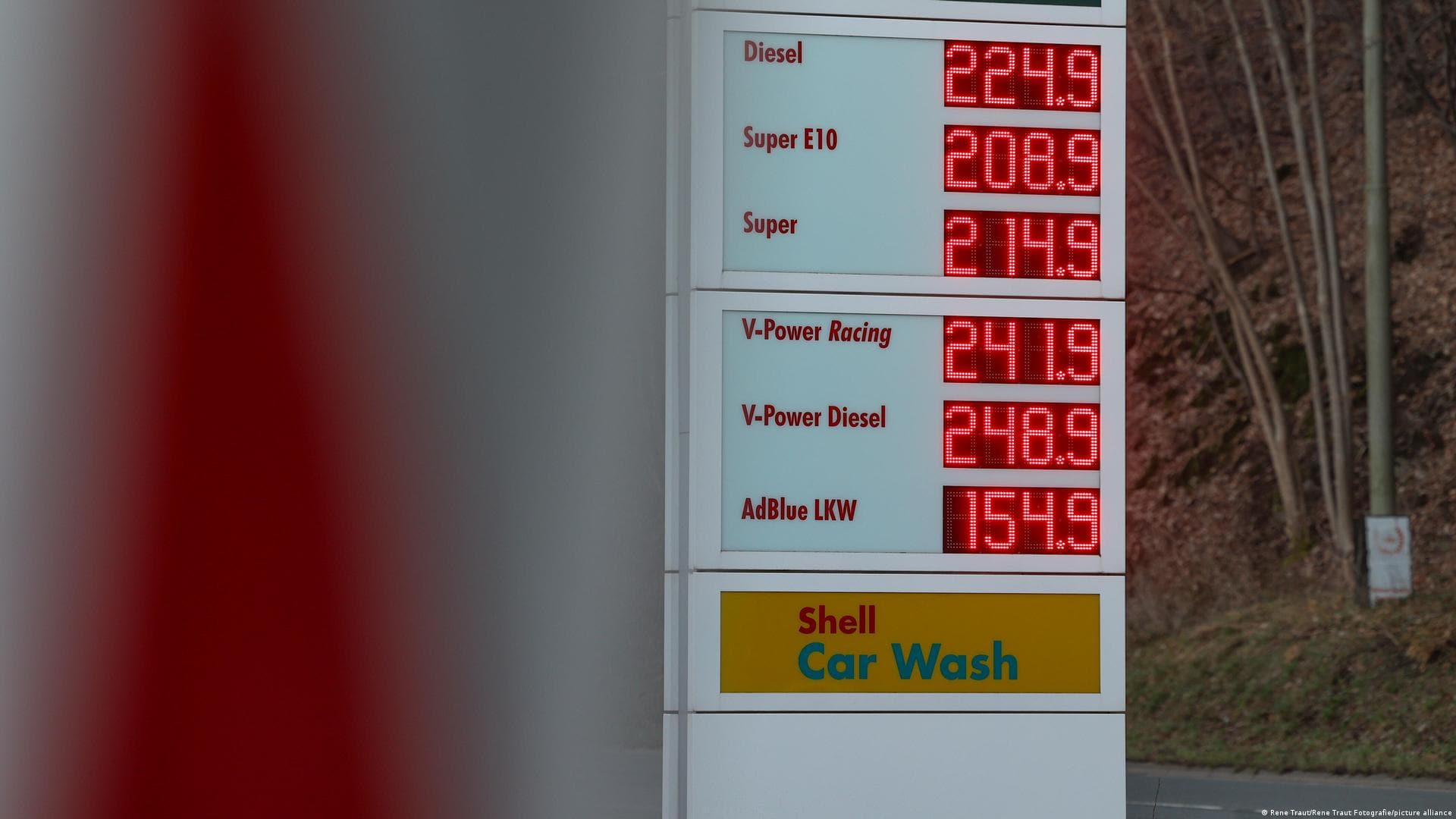
Reported by: Mark Hallam with AFP, dpa, Reuters | Edited by: Richard Connor Coordinated efforts to keep oil prices and fuel prices at filling stations in check began to emerge on Wednesday in Germany and elsewhere. The moves come amid the fast-rising prices caused by the attacks on Iran and wider conflict in the region. Germany, Austria, Japan, France, Spain all signal movement German Economy Minister Katherina Reiche called a lunchtime press conference in Berlin, a day after Finance Minister Lars Klingbeil had said the government was open to releasing some of its reserves. Reiche told reporters that the IEA had asked its members to free up 400 million barrels of oil in total from national reserves. "We will meet this request and do our part, because Germany stands behind the most important tent of the IEA, collectively solidarity," Reiche said. She said Germany planned to contribute 2.4 million metric tons of oil in total. Reiche said that although there was no shortage in Germany at present, the legal requirement for releasing reserves, this was the case in other parts of the world already. At around the same time, Austria's government said it would limit increases in diesel and gasoline prices at fuel stations to once per day and that it would take part in international plans to release some of the oil reserves. Japan's government issued a similar statement, with one of the worse-hit countries saying it would not wait for others and would start releasing reserves as early as Monday. "Without waiting for a formal decision on coordinated international stock releases with the IEA, Japan has decided to take the lead in easing supply and demand in the international energy market by releasing strategic reserves as early as the 16th of this month," Prime Minister Sanae Takaichi Takaichi told reporters on Wednesday. French Economy Minister Roland Lescure said that the flurry of announcements "are without any doubt part of an extremely coordinated approach." After talks between G7 ministers on Tuesday, experts at the International Energy Agency (IEA) were charged with debating the pros and cons of releasing some oil reserves and presenting their findings to EU and Western governments. Spanish Energy Minister Sara Aagese said that the recommended release from the IEA would be more than twice as large as the release at the beginning of Russia's full scale invasion of Ukraine four years ago. Germany following 'Austrian model' to limit filling station price hikes Reiche also told reporters in Berlin on Wednesday that the government would follow what she called the "Austrian model" and seek to limit fuel station operators to just one price increase each day. She said she was trying to counter what Germany's cartel office has described as the "rocket and feather effect" in its investigation of pricing practices. It had argued that opportunistic filling stations would increase prices like a "rocket" taking off as the base oil price rose, but then only reduce them again like a "feather" falling back to earth. "Fuel prices rise amid higher crude oil costs extremely quickly, the rocket, and then sink again amid falling costs only very slowly, the feather. We want to break through this mechanism," Reiche said. There will be no limitations on how often petrol stations can reduce their prices. Reiche however did not specify when this change would come into force. She said it would first require alterations to existing German cartel laws. She said the coalition government parties would try to identify an existing legislative bill to which the move could be attached, in a bid to expedite its passage in parliament. How much oil is being released, where do prices currently stand? Reuters news agency reported, citing IEA sources, that the plan was to initially release 100 million barrels, as part of a broader move to release 400 million barrels over time. After Russia's invasion of Ukraine, 183 million barrels were released from national reserves in two tranches, first in March and again in April of 2022, with Germany releasing almost 6.5 million barrels at that time. Oil prices have risen fairly sharply since the attacks on Iran and the subsequent fighting in the Gulf region, with oil deliveries through the Strait of Hormuz severely impacted. However, prices are fairly far adrift of the highs of more than $100 per barrel they had reached early on Monday. As of Wednesday morning, a barrel of Brent Crude was selling for roughly $90 (roughly €77.50), compared to roughly $68 the same time last month. Fuel prices have risen at filling stations in most of the world as a result. What rules govern German oil reserve releases? An organization called the Petroleum Stockpiling Association controls Germany's oil reserves and answers to the Federal Minisrtry for Economic Affairs and Energy. It is required to ensure that German maintains reserves equivalent to 90 days of its net oil imports; in other words, enough oil to offset a three-month period where no oil imports at all are possible. When selling reserves, it must charge market prices. Germany only imported around 6% of its crude oil from the Middle East last year, according to figures published this week, with Norway, the US, Libya, Kazakhstan and the UK its top five providers. The main criterion to be taken into account when deciding whether to release supplies is whether there is "a disruption to the physical supply of petroleum/petroleum products." It is not permissible to release reserves with the primary intention of reducing prices, rather to control and manage supply and availability. Disclaimer: This report first appeared on Deutsche Welle, and has been republished on ABP Live as part of a special arrangement. Apart from the headline, no changes have been made in the report by ABP Live.

8th Pay Commission: How High Could Minimum Govt Pay Go? Rs 46,000 Estimate Explained

 The Indian government has begun consultations for the 8th Central Pay Commission, a major review that will determine future salaries, pensions and allowances for millions of central government employees. The Ministry of Finance has invited suggestions from employees, pensioners, staff unions and other stakeholders as part of the consultation process. Inputs can be submitted through an online portal until April 30, 2026. The exercise marks the first stage in the formation of the new pay structure, which will affect lakhs of government employees and pensioners across the country once the commission submits its recommendations. Consultation Process Begins The government formally notified the Terms of Reference for the 8th Pay Commission on November 3, 2025. The commission has been given 18 months to submit its recommendations. If accepted, the proposals could revise the pay structure, allowances and pension framework for around 50 lakh central government employees and nearly 69 lakh pensioners. Officials said the consultation phase will allow employees, pensioners, staff unions and other stakeholders to provide suggestions before the commission undertakes detailed deliberations. There has been speculation about the possible increase in salaries under the new revision. Analysts say that if a higher fitment factor is adopted, the minimum basic salary could rise significantly from the current level. However, government officials have clarified that no decision has yet been taken on salary levels or the timeline for implementation. Financial provisions for any revised pay structure will only be made after the commission submits its report and the government approves its recommendations. Previous Pay Commissions At A Glance 1st Pay Commission (1946-47) Minimum Basic Salary: Rs 55 Maximum Basic Salary: Rs 2,000 Compression Ratio: 1:36.4 2nd Pay Commission (1957-59) Minimum Basic Salary: Rs 80 Maximum Basic Salary: Rs 3,000 Compression Ratio: 1:37.5 3rd Pay Commission (1972-73) Minimum Basic Salary: Rs 196 Maximum Basic Salary: Rs 3,500 Compression Ratio: 1:17.9 4th Pay Commission (1986) Minimum Basic Salary: Rs 750 Maximum Basic Salary: Rs 8,000 Compression Ratio: 1:10.7 5th Pay Commission (1996) Minimum Basic Salary: Rs 2,550 Maximum Basic Salary: Rs 26,000 Compression Ratio: 1:10.2 6th Pay Commission (2006) Minimum Basic Salary: Rs 7,000 Maximum Basic Salary: Rs 80,000 Compression Ratio: 1:11.4 7th Pay Commission (2016) Minimum Basic Salary: Rs 18,000 Maximum Basic Salary: Rs 2,50,000 Compression Ratio: 1:13.9 What Comes Next Pay commissions have periodically revised government salaries in India since the first one was established in 1946. Over time, these reviews have steadily increased the minimum and maximum basic pay for government staff. Under the 7th Pay Commission, implemented in 2016, the minimum basic salary was raised to Rs 18,000, while the maximum basic salary was set at Rs 2,50,000 per month. The consultation process for the 8th Pay Commission is expected to continue over the coming months before the commission begins its detailed review of pay structures, allowances and pensions. For now, the government says the consultation stage is only the first step in a long process, and any changes to salaries will take effect only after the commission submits its report and the recommendations are approved.

Asian Weightlifting C'ships in India postponed due to Middle East conflict

The Asian Weightlifting Championships in Ahmedabad have been postponed from April 1–10 to May 12–17, 2026 due to the ongoing conflict in West Asia. The Asian Weightlifting Federation said the change was made to ensure safe travel and participation for all teams, as airspace disruptions in parts of the Middle East and Gulf region have affected international flights.