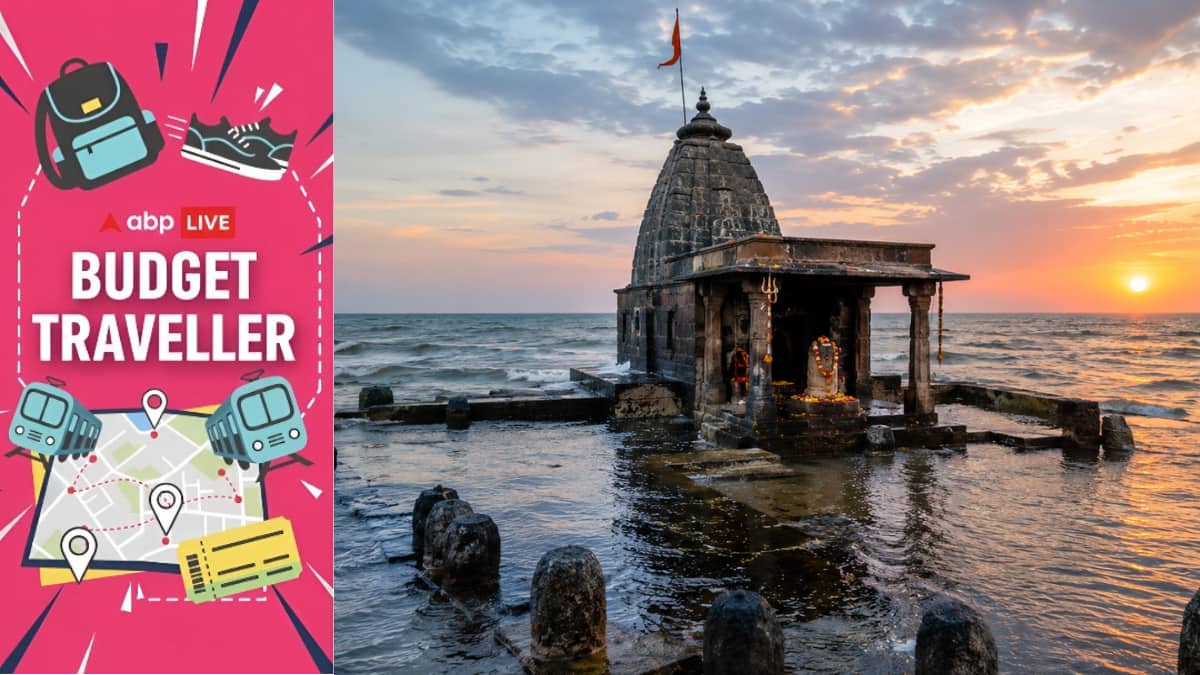
Imagine visiting a temple that appears and disappears with the changing tide. At Gujarat’s Stambheshwar Mahadev Temple in Kavi Kamboi, the Shiva shrine is submerged during high tide and becomes accessible again as the waters recede. This unusual meeting of faith and nature has made the temple popularly known as the ‘Disappearing Shiva Temple’. Located near the Gulf of Khambhat in Bharuch district, the temple attracts devotees who come to witness the tidal phenomenon and offer prayers to Lord Shiva. However, visitors should plan carefully because access to the shrine depends on the day's tide cycle.
Stambheshwar Mahadev Temple
The temple is located at Kavi Kamboi in Jambusar taluka of Gujarat's Bharuch district. The official temple website describes the shrine as being at the Mahi-Sagar Sangam Teerth and says the Shivling is associated with Lord Kartikeya. The present temple structure is generally described by travel sources as around 150 years old, while the religious tradition associated with the Shivling is considered much older. The temple is particularly unusual because seawater reaches the shrine during high tide. The Bharuch district administration also notes that the Shivling is submerged during high tide and visible during low tide.
ALSO READ | ABP Live Budget Traveller: Long Weekend Ahead? Budget-Friendly Places Near Delhi To Explore
Where Is Stambheshwar Mahadev Temple?
Stambheshwar Mahadev Temple is situated in Kavi Kamboi village, Jambusar taluka, Bharuch district, Gujarat. The temple website says it is around 53 km from Vadodara by road via Jambusar, with the shrine about 30 km from Jambusar. The Bharuch district administration places the temple around 45 km from Bharuch.
Stambheshwar Mahadev Temple History And Legend
The temple's religious tradition is associated with the story of Lord Kartikeya and the demon Tarakasura. According to the temple's account, Kartikeya felt remorse after defeating Tarakasura, who was a devotee of Lord Shiva. Lord Vishnu advised him to worship Shiva as a way of atonement. The tradition says Kartikeya then had three Shivlings created and installed them at different sacred sites. Stambheshwar is identified with one of these shrines. The temple's website also associates the story with references in the Skanda Purana. These accounts are part of Hindu religious tradition and should be understood as mythology rather than independently verified historical events. Some other local traditions connect the site with the Pandavas, while accounts of the present structure's history vary. Rather than treating these versions as established historical fact, they are best described as legends associated with the shrine.
Why Does The Temple Disappear?
The most striking feature of Stambheshwar Mahadev is its relationship with the sea. During high tide, seawater covers the shrine, and the Shivling becomes inaccessible. When the tide falls, the water recedes, and the temple becomes visible again. The phenomenon occurs because of the temple's location in a tidal coastal area, while devotees view the recurring seawater abhishek as a deeply spiritual experience. The temple's official website describes the sea's twice-daily movement over the shrine as a form of natural abhishek.
The Unique Tidal Experience
The disappearing-and-reappearing phenomenon is the main attraction for visitors. At low tide, devotees can approach the shrine for darshan and rituals. As the tide rises, seawater gradually surrounds the temple until access is no longer possible. The timing is not fixed at the same hour every day because tides change according to the date and lunar cycle. Visitors should therefore check the latest tide information before travelling, rather than relying on a fixed daily schedule. The temple website provides a dedicated tide-timing section. (Stambheshwar Mahadev Shrine)
Best Time To Visit Stambheshwar Mahadev Temple
For a comfortable trip, the cooler months from November to February are generally preferable. However, devotees visiting specifically to witness the disappearing-temple phenomenon should prioritise the low-tide window for that particular day. Avoid planning your arrival based solely on a generic afternoon timing. The safest approach is to check the latest tide schedule before setting out and leave enough time to reach the temple before the access window closes. During religious occasions such as Shravan and Mahashivratri, the temple can attract larger crowds, so additional travel time may be useful.
ALSO READ | ABP Live Budget Traveller | 5 Amazing Places In South India You Can Explore Under ₹15,000
How To Reach Stambheshwar Mahadev Temple
From Vadodara: The temple website places Kavi Kamboi about 53 km from Vadodara by road via Jambusar. Public transport options include travelling towards Jambusar and then arranging the onward journey to Kavi Kamboi. Current listings show multiple Vadodara-Jambusar bus services, with some journeys taking around two hours.
From Bharuch: The district administration lists Stambheshwar Mahadev at approximately 45 km from Bharuch. A road journey by taxi or private vehicle is the most straightforward option for the final stretch.
Stambheshwar Mahadev Travel Budget
The overall cost depends heavily on where you start and whether you make it a day trip or stay overnight. For a budget traveller starting from Vadodara, a rough estimate could look like this:
-
Bus to Jambusar: around Rs50–Rs150 one way, depending on the service. One current GSRTC listing shows fares from Rs48.
-
Jambusar to Kavi Kamboi: keep around Rs200–Rs500 per person for local/shared transport, depending on availability and whether you are travelling alone.
-
Food: approximately Rs200–Rs400 per person for a simple day.
-
Budget stay in Bharuch: roughly Rs1,100–Rs2,000 per night for lower-cost options, although prices vary by date and availability. Current hotel listings show budget stays from around Rs1,100–Rs1,700 in some searches.
-
Local transport: keep another Rs200–Rs500 as a buffer.
Approximate Budget
Day trip from Vadodara: Rs700–Rs1,500 per person
One-night budget trip: Rs2,000–Rs3,500 per person
These are indicative estimates, not fixed fares. Private taxis, peak-season accommodation and festival crowds can push the total higher.
Important Things To Know Before Visiting
Because the shrine is affected by the tide, do not attempt to enter the water or approach the temple when the tide is rising. Follow instructions from temple staff and local authorities. Also, do not assume that a tide time found online for another date will apply to your visit. Tide timings change daily, so check the latest information before travelling. The temple's official website also states that oil, rather than milk, is used for abhishek at the shrine, so devotees should follow the temple's current ritual guidelines.
Why Stambheshwar Mahadev Is Special
Stambheshwar Mahadev combines a striking natural phenomenon with centuries of religious tradition. The temple's regular disappearance beneath the sea and reappearance at low tide has given it a distinctive place among Gujarat's pilgrimage destinations. For devotees, the rising sea is seen as a form of nature's abhishek. For travellers, it offers an unusual spectacle that demonstrates how dramatically the coastline can change with the tide. Either way, checking the tide schedule before visiting is essential to experiencing the shrine safely and respectfully.