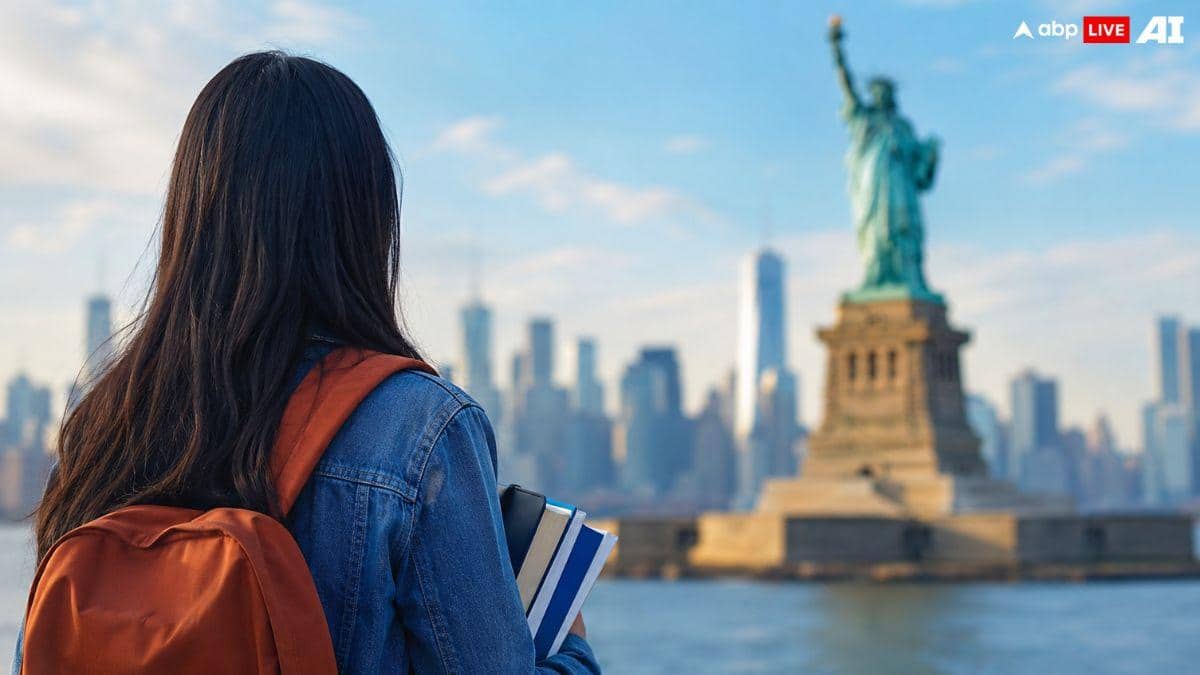
For years, the US offered Indian students a fairly familiar proposition: study at an American university, gain work experience through Optional Practical Training (OPT), and, for those who qualified, try to transition to an H-1B visa and build a longer-term career in the country.
That pathway is becoming less predictable.
At the same time, a large majority of Indian students planning to study abroad say they do not necessarily see a foreign degree as a ticket to permanent migration. According to the third Student Global Mobility Index (SGMI) published by Oxford International, 81 per cent of Indian students who plan to study abroad expect to return to India after completing their education, reported The Financial Express.
The finding comes as the US, one of the most popular destinations for Indian students, has introduced a series of changes affecting student visas, immigration status and post-study employment.
Together, the trends point to a changing equation: Indian students continue to value international education, but the traditional idea of studying in the US and then staying on to work is facing greater uncertainty.
Foreign Degree, Then Back Home?
The SGMI report is based on 17,925 core responses, along with around 2,400 additional responses covering areas including course choices, family background and post-graduation plans.
Its findings suggest that studying overseas is increasingly being viewed by Indian students as a way to gain international exposure, skills and an overseas qualification rather than necessarily as a permanent move abroad.
Around 15 per cent of respondents said they planned to look for a job after graduation, although the survey does not clarify whether those jobs would be in India or overseas.
Another notable shift is visible in how students are making their study-abroad decisions. Self-motivated applications increased from 29 per cent in 2023-24 to 49 per cent in 2025-26.
The overall findings are global, but they assume particular significance for Indian students considering the US as immigration and student visa policies continue to change.
The US Study-To-Work Route Is Becoming Less Certain
The traditional US route has relied heavily on the ability of international students to remain in the country after graduation through OPT.
The programme allows eligible international students to work for 12 months after graduation, while STEM students can generally receive an additional 24 months. For many Indian students, OPT has served as a bridge between an F-1 student visa and the H-1B work visa.
But several developments over the past 18 months have made that journey more complicated.
In March 2025, thousands of international students saw their records in the Student and Exchange Visitor Information System (SEVIS) terminated, with some cases involving minor traffic violations or past political activity. The State Department said by January 2025 that it had revoked more than 8,000 student visas, while separate tracking later put 2025 SEVIS terminations at around 4,700 to 4,736, alongside at least 6,000 revoked F, M and J visas.
The move triggered more than 100 lawsuits, after which a federal judge in Northern California issued a nationwide injunction ordering many of the records to be restored.
Also Read : Bank Holidays This Week (August 10-16): SBI, HDFC, ICICI, PNB To Remain Closed On These Days
Visa Interviews, Social Media Checks Add To Uncertainty
The uncertainty extended to students who were yet to enter the US.
On May 27, 2025, the State Department paused the scheduling of new visa interviews for F, M and J applicants worldwide. The pause lasted around three weeks, covering a period that normally sees a high volume of student visa applications between May and August.
A few weeks later, another change affected the visa application process. From June 18, 2025, F, M and J applicants were required to make their social media accounts public so that US consular officers could review them.
Officials were instructed to look for what was described as “potentially derogatory” material. Students who declined to cooperate could have their applications treated as “evasive”.
Travel restrictions also expanded. An executive order issued on June 4, 2025, blocked visa issuance to nationals of roughly 12 to 19 countries, including Iran, Libya, Somalia and Afghanistan. A further proclamation issued in December 2025 expanded restrictions to 39 countries as well as the Palestinian territories, taking effect on January 1, 2026.
The latter move also introduced a “Hold and Review” policy affecting some pending USCIS applications, including OPT and STEM OPT applications, for people from the affected countries.
H-1B Route Also Faces A Higher Cost
For students hoping to remain in the US after graduation, the H-1B pathway has also become more difficult.
In September 2025, the White House introduced a $100,000 fee on new H-1B petitions filed from outside the US. Twenty states subsequently challenged the move in federal court.
US Citizenship and Immigration Services partly changed the policy in late October 2025 for people who were already inside the US immigration system.
Separately, a new cap limited foreign students to 15 per cent of a university's total student population, while no single country could account for more than 5 per cent.
Given the size of the Indian student population in the US, such restrictions could have a particularly significant bearing on Indian applicants.
A New Vetting System And A Four-Year Limit
The US immigration system has also moved towards more centralised monitoring.
On December 5, 2025, USCIS launched a new Vetting Centre bringing together checks involving visas, school records and border information.
Then, in July 2026, the Department of Homeland Security finalised another major change by ending the decades-old “duration of status” system.
Under the new rules, international students will generally be limited to four years unless they obtain a formal extension. The changes also introduce new restrictions concerning changes of major and transfers between institutions.
DHS Secretary Markwayne Mullin said the rule would ensure students “remain focused on their primary purpose: completing their studies and returning home.”
The administration's scrutiny of student status also continued into 2026. A second wave of SEVIS terminations took place in March 2026 under what officials called a “one-strike” policy.
A terminated SEVIS record can immediately affect a student's legal status, potentially creating complications around OPT, university transfers and returning to the US. Students generally have a 60-day grace period to try to resolve such issues.
Also Read : 100% US Tariff Threat: India's Exporters Brace For Fresh Trade Shock Over Russian Oil
Indian Students Are Already Feeling The Impact
The changing policy environment is reflected in student visa numbers.
F-1 visas issued to Indian students fell 69 per cent in June and July 2025, with 12,776 visas issued compared with 41,336 a year earlier.
Overall approvals for Indian students during the 2025 peak season fell 62 per cent year-on-year, while US international student enrolment is estimated to have dropped by around 20 per cent in 2026.
With around 372,000 Indian students currently studying in the US, changes to the student visa and immigration system have potentially significant implications for one of the country's largest international student groups.
A Different Equation For Indian Students
The contrast is striking. On one side, the US route from university to employment and long-term stay has become increasingly uncertain, with tighter scrutiny and new restrictions affecting different stages of the journey.
On the other, Oxford International's SGMI suggests that 81 per cent of Indian students planning to study abroad already expect to return home after completing their education.
That does not mean international education has lost its appeal. Instead, the data points towards a potentially different objective: gaining a global education and experience before bringing those skills back to India.
For students considering the US, however, the decision now involves more than choosing a university or course. The evolving rules around visas, student status, OPT and post-study employment have become an increasingly important part of the calculation.